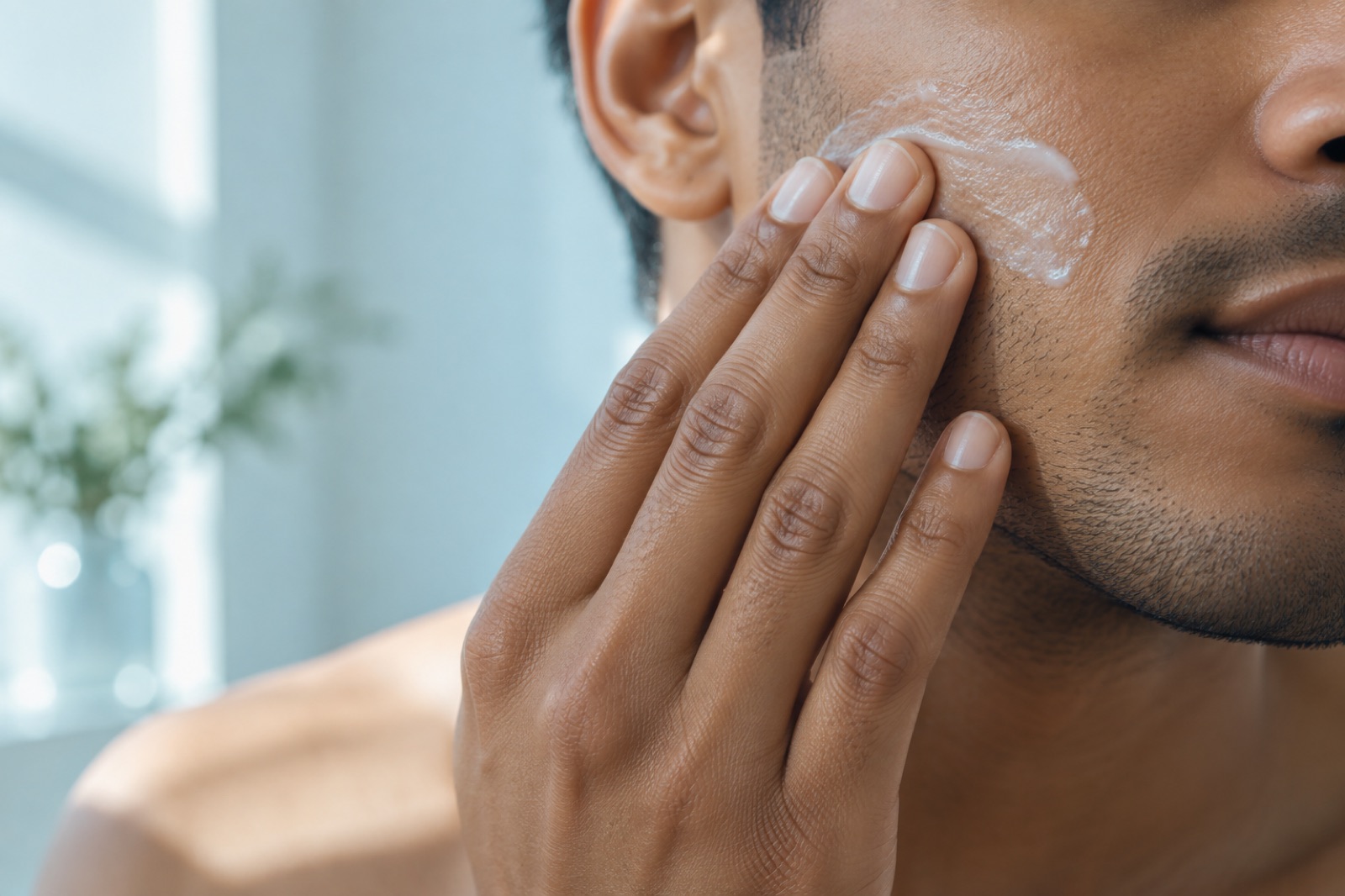
Skip Toner and Use Only Lotion? Run a 2-Week Step-Removal Test
To find out whether you can skip toner, remove one step at a time, two weeks apart, and compare tightness and breakouts against your usual routine. Your own log answers it better than a general rule.
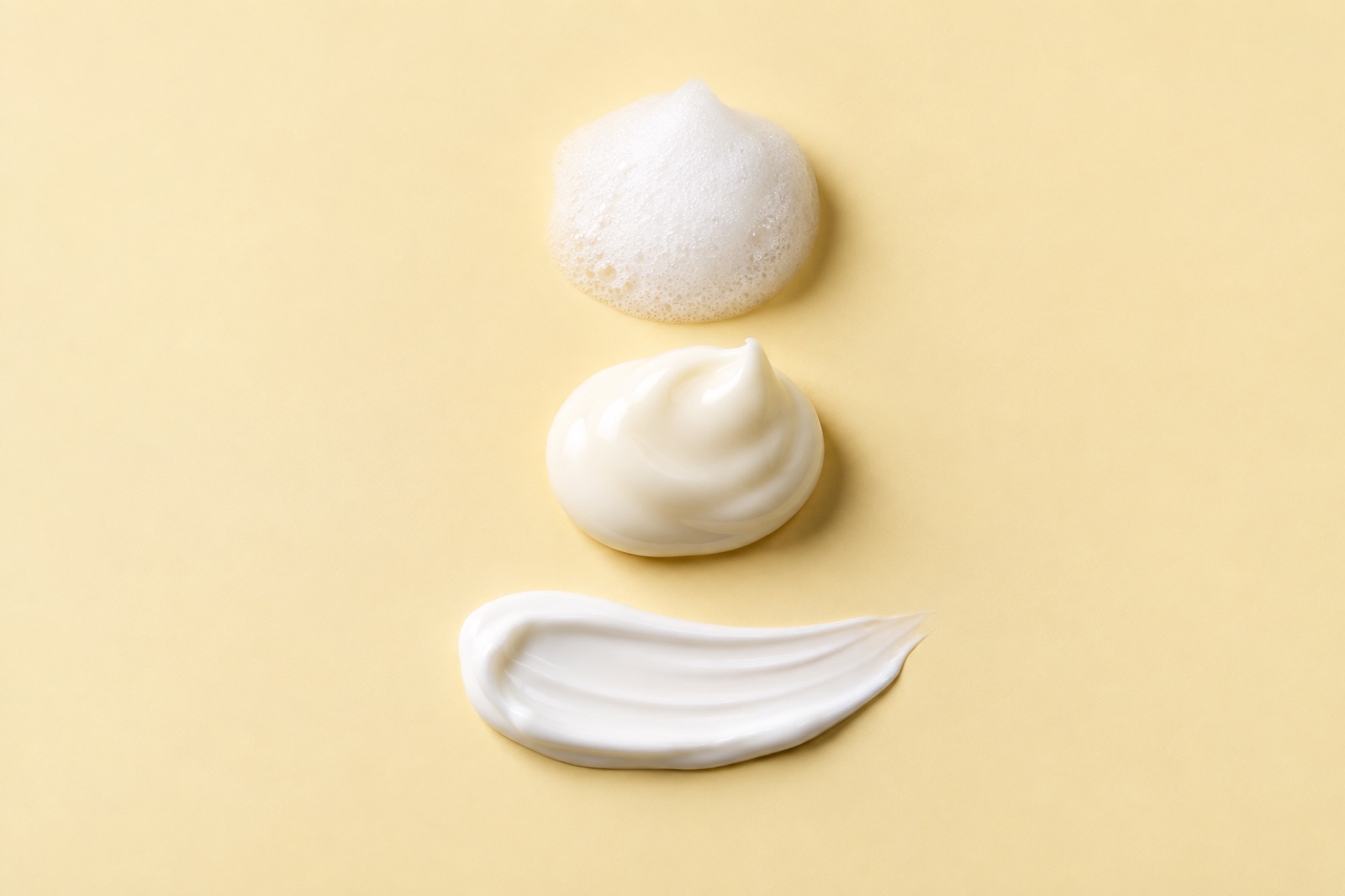
What this note covers6 sections
| Situation | Fact to know | Basis |
|---|---|---|
| What the two steps do | Toner adds water after washing; lotion is a thin cream that is 60–80% water and puts back water and nourishment | Korean Dermatological Association · society |
| When irritation repeats | Repeated application for a week on mildly irritated skin raised water loss step by step | 1994 PMID 8088139 · A |
| When you layer acids | Citric and malic acid applied alone twice a day for 4 days caused no clear irritation | 2005 PMID 16040403 · A |
| The step to keep | Of four anti-irritant ingredients, only a glycerol ointment did significantly better than no treatment and the base | 2006 PMID 16918614 · A |
The Korean Dermatological Association is Korea’s professional society of dermatologists; this guide uses its public page on basic skincare cosmetics.
What changes when you skip toner?
Going by the association’s description, lotion also adds water, so some people feel no tightness with lotion alone after washing. That is why a two-week test where you drop one step gives a better answer for your skin than a fixed rule.
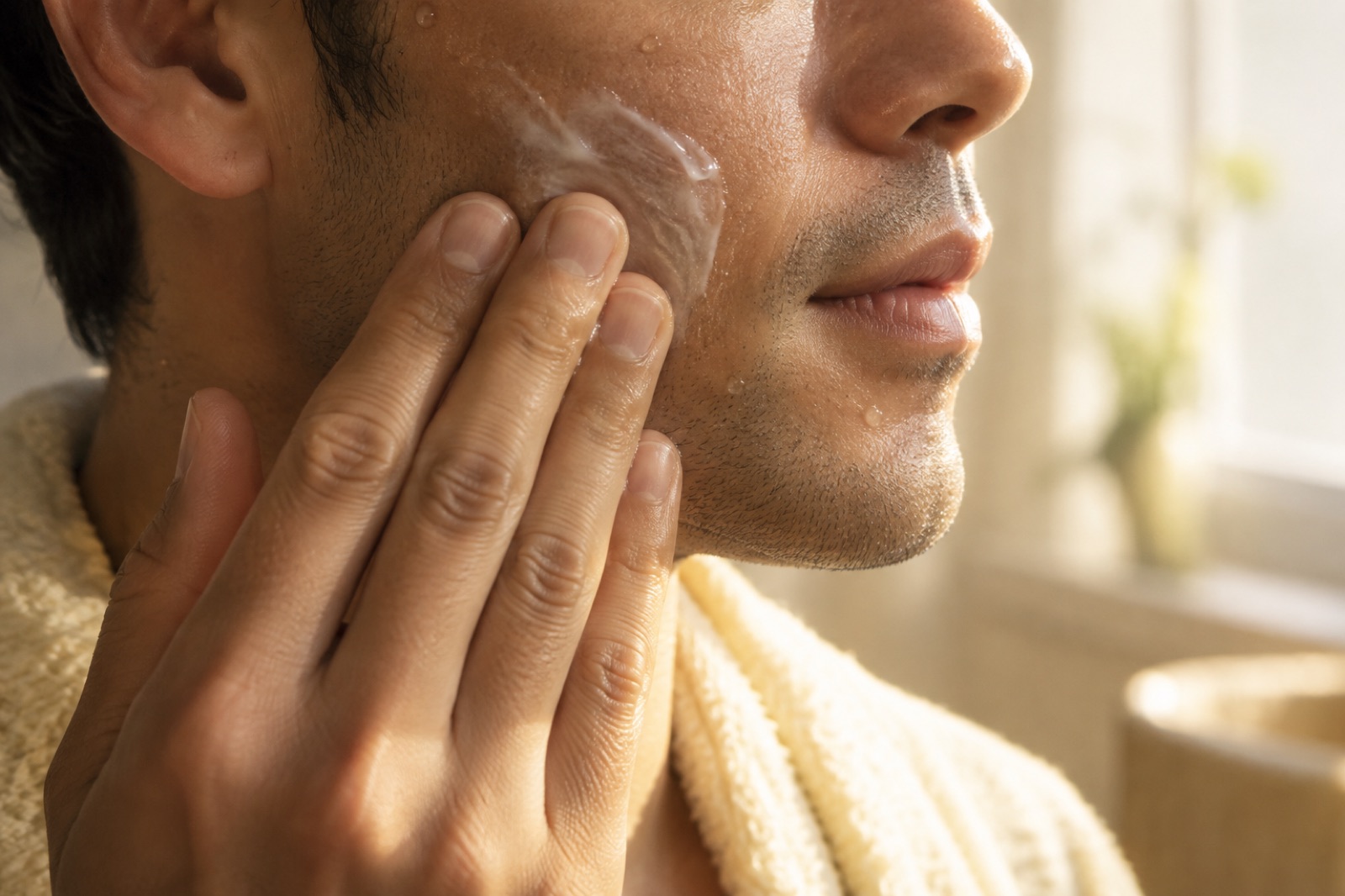
On a red day, which step do you drop first?
Start with a wipe-off toner, any step with exfoliating ingredients, and anything you added recently. In a test that stacked irritation over several days, only a glycerol ointment, a common moisturizing ingredient, did significantly better than no treatment, so keep the moisturizing step.
Does layering products always build up irritation?
Not always. In a 2005 study that applied fruit acids together with a cleansing agent, cumulative irritation did not get worse, so decide what to drop from your own log rather than from ingredient names.
Two-week step-removal log
| Period | Step to drop | Steps to keep | What to log morning and evening |
|---|---|---|---|
| Weeks 1–2 (baseline) | None | Your whole current routine | Tightness (0–3), time of day you get shiny, number of new pimples |
| Weeks 3–4 | Toner | Cleanser, lotion, cream, morning sunscreen | The same three items |
| Weeks 5–6 | Either the serum or the ampoule | Cleanser, lotion, cream, morning sunscreen | The same three items |
| Decision | If tightness is 1 point or more above baseline, or pimples increase, put back the last step you dropped | — | Date you put it back |
Leave weeks when your skin tends to be unsettled, like the week before your period or exam week, out of the comparison and push the test back a week.
When should you have a dermatologist look at it?
- If redness or a warm feeling lasts more than three days even after cutting steps, see a dermatologist.
- If your skin stings or flakes even with lotion alone, have a dermatologist find the cause.
- If you are using acne medicine, ask whoever prescribed it before you drop any steps.
Evidence summary
- In a 1994 study of 11 healthy adults (PMID 8088139), repeated application of the cleansing agent SLS for a week left water loss at hour 97 higher than at the start.
- In a 2006 cumulative irritation study (PMID 16918614) that applied 1% SLS and 20% nonanoic acid to the arm over 9 days, only the glycerol ointment among four anti-irritant ingredients did significantly better than no treatment and the base.
- The Korean Dermatological Association’s page on basic skincare cosmetics describes lotion as a low-viscosity cream that is 60–80% water.
Frequently asked questions
Is it okay to keep adding skincare steps?
The research behind this guide does not compare routines by number of steps. There is an 11-person study in which repeated applications of an irritant on mildly irritated skin raised water loss step by step, so when your skin is red, using fewer products also makes your log easier to read.
When my skin is red and warm, should I cut back on toner or cream?
Drop a wipe-off toner, any step with exfoliating ingredients, or whatever you added most recently. Keeping a moisturizing step such as a lotion or cream is usually a sensible choice, and if the warm feeling lasts more than three days, see a dermatologist.
What order do toner, serum, ampoule and cream go on?
The Korean Dermatological Association lists basic care as toner, then lotion, then cream, and puts essence in a separate special-care group. Its materials do not place serums or ampoules, so the usual habit is thinnest to richest, with cream last.
Sources
- Korean Dermatological Association — Basic skincare cosmetics (Korean)Institutional
- Repeated SLS application and cumulative irritation in 11 people, 1994 (PMID 8088139)A
- Cumulative irritation from fruit acids combined with SLS, 2005 (PMID 16040403)A
- Four anti-irritant ingredients in a cumulative irritation model, 2006 (PMID 16918614)A
Videos and forum posts never count as evidence for a fact here. Full rules: Editorial policy
What to check when choosing a product for this routine
Check the criteria below before the product name. Each item can be found on the full ingredient list or in the product description.
| Item | What to look for | Why |
|---|---|---|
| Fragrance | Whether fragrance (parfum) appears on the full ingredient list | If stinging shows up in weeks 3–4 without toner, there's one fewer suspect to count on the cream side of the steps you kept |
| Place in the routine | Whether the directions place it as the last step of the routine | Fixing cream at the very end through the six weeks of dropping steps keeps the steps-to-keep column in the same order every week |
| Note on layering | Whether it says to apply a little more to dry areas | On a day your tightness score rises without toner, extra cream on just the tight areas can be counted separately in your notes |
| Size | Whether the amount per container is printed | Estimating ahead when you'll open a new container keeps that date from getting mixed in with other changes mid-test |
| Stop-use note | Whether it says to stop using it if red spots, swelling or itching appear | It gives you a line to go by in the verdict row when deciding whether to bring back the last step you dropped or pause one you kept |
Product from this site's operator · KW Cosmetic Content Team
Revive Therapy N.F CreamThis is about the cream that stays in the steps-to-keep column even in the weeks you drop toner. It's a 50 ml cream combining 4 ceramides with 5 types of hyaluronic acid, with no fragrance added according to its full ingredient list, and a completed low-irritation patch test, but no test has looked at a routine without toner, and it has nothing to do with the irritation studies or society material cited here. Its product page places it after ampoule, as the last step. For the step you keep after lotion through all six weeks, the product we suggest is Revive Therapy N.F Cream.
Fitting it into a routine
Where it goes: After ampoule, the last step of the routine
How to use it: After toner and ampoule, take a suitable amount and spread it gently from the center of the face outward. On areas where dryness bothers you, layer a small amount once more to finish.
Check before you use it: If red spots, swelling, itching or any other unusual reaction appears during or after use, stop using it and consult a dermatologist. Avoid using it on areas with wounds, and check the full ingredient list and expiry date on the latest packaging first.
Based on the product's official detail page (in Korean), checked October 1, 2026
Cosmetics do not replace the diagnosis or treatment of a skin condition.