Using Two Toners Without Mixing: AM/PM, by Zone, and a 2-Week Log
Don't mix two toners in one bottle. Use just one for the first week, then in week two add the second toner to only one time of day and one area, and log mornings and evenings on separate lines.

What this note covers9 sections
- Can you mix two toners together in one bottle?
- Ways to split two toners, compared side by side
- Should you split two toners by morning and night, or by T-zone and U-zone?
- When and where do you add the second toner?
- What if you’ve been using both a toner and a “skin”?
- What do you look at to decide at the end of week two?
- Your 2-week log for using two different toners
- When is it time to bring your log to a dermatologist?
- What the studies behind this split-use plan found
| Item | Detail | Basis |
|---|---|---|
| Before you mix | No study in the sources behind this guide looked at the preservation or stability of two toners poured into one bottle, or at what happens when you alternate two toners | Editorial rule |
| Times a day vs. total amount | In 19 people already allergic to the preservative MDBGN, 0.04% once a day and 0.01% four times a day set off reactions to nearly the same degree when total exposure was similar | 2005 PMID 15725286 · A |
| How long you keep applying | In 20 people with nickel allergy, the dose-response for the amount built up by repeated application over 1, 2 and 3 weeks showed no significant difference from patch testing | 2007 PMID 17634081 · A |
| Areas | Divides toners into astringent and softening types, used separately on areas that make a lot of oil and on the rest of the face | Korean Dermatological Association · Institution |
| Limits of a home log | A positive patch test doesn’t mean you’ll always react in real use, and a negative one doesn’t guarantee safety | Patch test research overview · No figures |
Can you mix two toners together in one bottle?
There’s no data confirming preservation and ingredient stability after mixing, so this guide’s default is to keep the two bottles separate and split them by time or by area. There’s also research pointing in the direction that thinning them out by mixing doesn’t lower how much reaches your skin if the total you apply in a day stays the same.
Picture a college student who got a hydrating toner as a birthday gift and now has two bottles, counting the acid toner she was already using. It’s tempting to pour half of each into one bottle. But each bottle was made to be used on its own, and no one has checked how well the combined liquid stays preserved. Hands or a new container touching the liquid while you transfer it adds one more unknown.
The hope that “mixing lowers the concentration, so it’ll be gentler” has limits too. In a 2005 double-blind randomized trial of 19 people already sensitized to the cosmetic preservative MDBGN and 12 controls, one forearm got 0.04% once a day and the other got 0.01% four times a day, so total exposure was about the same, and the two sides set off reactions to nearly the same degree. Of the 19 sensitized people, 14 reacted on both arms, and none of the controls reacted. Because it was a preservative study on the arms of people who were already allergic, this guide doesn’t turn it into a reaction rate for everyday users, and the authors also noted that results may differ from one allergen to another. This guide uses the result only as a reason not to assume that “thinned out and applied more often means less reaches your skin.”
Ways to split two toners, compared side by side
| Method | How it works | How much irritation overlaps | Telling which bottle caused a reaction | How hard it is to log | This guide’s call |
|---|---|---|---|---|---|
| Mix in one bottle | Pour both into the same container and use them as one liquid | Both liquids touch your skin every time | Impossible | Easy (one box) | Not used — no data on preservation or stability after mixing |
| Layer on the same evening | After washing, apply Bottle A, then Bottle B right after | Two liquids on the same spot every day | Hard | Easy | Not used for the first 2 weeks |
| Split morning and evening | Bottle A on your whole face in the morning, Bottle B in the evening | They overlap within a day, but never at the same time | Moderate (if the reaction shows up overnight, suspect the evening bottle first) | Moderate (two lines) | Workable |
| Split by area | Bottle B on the T-zone, Bottle A on the U-zone | Only one bottle on any one spot | Easy (sort by the area that reacted) | Moderate (needs an area column) | Best fit for starting week two |
| Split by weekday | Bottle A on Mon, Wed, Fri; Bottle B on Tue, Thu, Sat | One bottle per day | Moderate (confusing if the reaction comes late) | Hard (matching weekdays) | Only when the two bottles aren’t very different |
This guide’s default is to start week two by splitting by area, and if no reaction is logged, to add a morning and evening split. The calls in the table aren’t results compared in research; they’re an editorial rule that picks whichever option makes your log easier to read.
Should you split two toners by morning and night, or by T-zone and U-zone?
At first, splitting by area makes it easiest to sort out a reaction. If you keep the second bottle to just the T-zone or just the U-zone, then when a reaction shows up you can tell right away whether it’s in that spot or not.
The Korean Dermatological Association, a Korean professional society, divides toners into astringent and softening types in its material on basic skincare products, and notes using different toners on areas that make a lot of oil and on the rest of the face. This guide takes that explanation only as a starting point for the idea that splitting by area within your face is fine. If an office worker whose nose and forehead get shiny every afternoon wants to use an acid toner only on the T-zone, that bottle goes on the T-zone in the evening, and the cheeks and chin keep getting the hydrating bottle she was already using.
Add a morning and evening split after you’ve logged the area split for about a week. If you often wear a face mask for long hours or sweat in the morning, write that on your morning line too, so you don’t confuse it with the evening bottle.

When and where do you add the second toner?
Use only the bottle you already had for the first week, and on the day week two starts, add the second bottle to just one time of day and one area. You need to keep it to one set spot for several days in a row to see how your skin reacts to that bottle without it getting mixed up with the other one.
Research on the repeated open application test shows why the stretch of repeated use matters. In a 2007 study of 20 people with nickel allergy and 18 controls, the threshold for a reaction per application was lower than with patch testing, but the dose-response for the amount built up over 1, 2 and 3 weeks showed no significant difference from patch testing. Because it was a study on the arms of people with a metal allergy, it doesn’t carry over to toner reactions, but it does work as a reason not to stop after a day or two of no problems and to keep watching the same spot for several days.
Avoid stacking sources of irritation, too. In several experimental studies on the hands and arms, giving different irritants together led to greater barrier damage than giving them one at a time. So in the week you add the second bottle, don’t bring in an exfoliating product or any other new product, and don’t layer the two bottles one right after the other at the same time.
What if you’ve been using both a toner and a “skin”?
In Korea, a watery product used after washing is often sold as a “skin” (short for skin softener) as well as a “toner.” Even if the names differ, if both are watery products you use after washing your face, this guide treats them as two bottles. If you’ve been applying them back to back at the same time, follow the same order: cut down to one bottle for a week, then add the other back in week two, split out.
If you’ve used both for months, you may have no stinging at all, but it still helps your later decisions to split them and log them once. Decide which one stays as your first-week bottle by, for example, choosing the bottle with fewer acids, ethanol and fragrance on its label, and copy both labels onto the top line of your log.
What do you look at to decide at the end of week two?
First, check whether the spots where you used the second bottle line up with the spots where a reaction was logged. If they don’t, keep splitting; if they do, or if only the stickiness went up, choose to keep just one bottle.
This log isn’t a diagnosis. Looking across patch test studies, a positive test result didn’t always mean a reaction in real use, and a negative result didn’t guarantee safety either. Read 2 weeks of notes taken at home not as a guarantee that “this bottle is fine,” but as a note for deciding what to take out next. If week two overlapped with a week when your skin tends to look different, like the week before your period or exam week, write that down too, and if needed, keep the same setup for one more week.
Your 2-week log for using two different toners
Write both bottles’ labels (acids, ethanol and fragrance, pH, step) on the top line, then fill in a morning line and an evening line each day. Score each box from 0 (none) to 3 (severe).
| Day | Time | Bottle used | Area applied | Stinging | Redness | Stickiness | Other products that day / notes |
|---|---|---|---|---|---|---|---|
| Day 1 | Morning | Bottle A | Whole face | e.g. Sunscreen | |||
| Day 1 | Evening | Bottle A | Whole face | ||||
| Days 2–7 | Morning & evening | Bottle A | Whole face | Bottle B stays unopened | |||
| Day 8 | Morning | Bottle A | Whole face | ||||
| Day 8 | Evening | Bottle B / Bottle A | T-zone / U-zone | e.g. Second bottle starts | |||
| Days 9–13 | Morning & evening | Same setup as day 8 | Same as day 8 | e.g. Wore a face mask for hours, week before period | |||
| Day 14 | Evening | Same setup as day 8 | Same as day 8 | Week-two call: keep going / one bottle only / see a dermatologist |
If a line with red spots, swelling or itching shows up, stop Bottle B first that same day, and write the date you stopped in the notes column.

When is it time to bring your log to a dermatologist?
- If red spots, itching or swelling keep going for several days after you stop the second bottle, take your log and see a dermatologist.
- If redness spreads beyond where you applied it, or the skin around your eyes swells, don’t wait; get seen.
- If either bottle stings every time, and it keeps coming back even after a break, ask a dermatologist about patch testing to find the ingredient behind it.
- If you’re using a prescription medicine you apply to your skin, check with the clinic that prescribed it before you add a second toner.
What the studies behind this split-use plan found
- In a 2005 double-blind randomized trial (PMID 15725286) of 19 people already sensitized to the preservative MDBGN and 12 controls, applying 0.04% once a day and 0.01% four times a day set off reactions to nearly the same degree when total exposure was similar, and none of the controls reacted.
- In a 2007 study (PMID 17634081) of 20 people with nickel allergy and 18 controls, the per-application threshold in the repeated open application test was lower than in patch testing, but the cumulative dose-response over 1, 2 and 3 weeks showed no significant difference from patch testing.
- The Korean Dermatological Association’s material on basic skincare products (posted in 2012) divides toners into astringent and softening types and explains using them separately on areas that make a lot of oil and on the rest of the face.
Frequently asked questions
Can you mix two toners together and use them as one?
None of the sources behind this guide looked at whether preservation or ingredient stability holds up when two toners are mixed 1:1, so this guide makes using them separately, not mixed, the default. Mixing may seem like it dilutes them and makes them gentler, but in a 2005 trial of 19 people already allergic to a preservative, applying a low concentration several times a day and a higher concentration once a day gave nearly the same reactions when total exposure was similar. It was a preservative study in people who were already sensitized, so it doesn't carry over directly to everyone, but it's worth knowing that mixing doesn't lower the amount that reaches your skin in a day.
Should I use both a toner and a skin softener every morning after cleansing?
The sources behind this guide include no study comparing using a toner and a 'skin' (softener) every time with using just one bottle. Whether it's called a toner or a skin, if both are watery products you use after washing your face, splitting them, one bottle in the morning and the other in the evening, makes it easier to tell which bottle caused it if stinging starts than applying them back to back at the same time. For 2 weeks, write the bottle name on your morning line and your evening line, and then decide whether one bottle is enough.
Do I need to wait 5 minutes after toner before my ampoule, and another 5 minutes after that?
The sources behind this guide include no study comparing how long to wait between toner and the next step, or between two toners. So this guide doesn't set a number of minutes; it moves on to the next step once the previous one feels absorbed and doesn't come off on your palm. On days you change how long you wait, write it in the notes column of your log so you can compare it with the stickiness column.
I have two toners. Can I pour them into the same bottle, or just apply one, then the other?
This guide doesn't use the method of pouring them into another container to mix, because there's no data on preservation or contamination after mixing. If you alternate, setting places to split them, like morning and evening or T-zone and U-zone, makes your log easier to read than applying one right after the other at the same time. There's no study on alternating two toners either, so use just one bottle the first week, then add the other bottle to only one spot in week two to keep the reactions apart.
I'm on day 3 of a new toner and I'm breaking out. Should I switch?
Three days of notes aren't enough to say it's the new toner, but you can first check whether the new spots line up with where you applied it. If red spots, swelling or itching come with it, stop that bottle, and if it keeps going after you stop, see a dermatologist. If you only see a few tiny bumps without those reactions, don't add other new products; start by writing down which bottle you used on which area so you can sort it out in week two.
Toner, serum and cream all together feel heavy. How often and in what order should I use each?
The sources behind this guide include no study comparing how often or in what order to use those three products. If it feels heavy, take out just one at a time and log your morning and evening lines for 2 weeks, and if you have two toners, move one of them to only the morning or only the evening and compare.
Can I apply an AHA/BHA toner after moisturizer, once I've washed my face?
First check the step on that toner's label, and if it says after cleansing and before moisturizing products, keep it in that spot instead of moving it after the cream. If both toners are labeled for the same step, split them by time or area rather than changing the order.
Is it okay to use the same toner-then-moisturizer routine morning and night?
The sources behind this guide include no study comparing the same routine morning and night with a different one. If the same routine isn't causing any discomfort, leave it as is, and if you have two toners, use one in the morning and one in the evening and log them on two lines for 2 weeks.
Sources
- Methyldibromo glutaronitrile contact allergy: effect of single versus repeated daily exposure — 19 sensitized people, 12 controls, 2005 (PMID 15725286)A
- Nickel allergy: relationship between patch test and repeated open application test thresholds — 20 people, 18 controls, 2007 (PMID 17634081)A
- Korean Dermatological Association — Basic skincare products (Korean)Institutional
Videos and forum posts never count as evidence for a fact here. Full rules: Editorial policy
What to check when choosing a product for this routine
Check the criteria below before the product name. Each item can be found on the full ingredient list or in the product description.
| Item | What to look for | Why |
|---|---|---|
| Note on use with other products | Whether the label says to watch how your skin reacts and adjust how often you use it when pairing it with other products that contain acids | If one of your two bottles carries this note, you can mark the log lines where that bottle and the other one met on the same day |
| pH on the label | Whether both bottles state their pH as a number, and if so, whether the ranges differ | When you choose a morning bottle and an evening bottle, writing each label's pH on the top line of your log lets you look back at it in week two |
| Step on the label | Whether both bottles are labeled for the same step: after cleansing, before moisturizing products | If both bottles claim the same step, you have a clear reason to split them by time or area instead of layering one right after the other |
| Which bottle lists acids, ethanol or fragrance | Which bottle's full ingredient list names an acid such as salicylic acid, ethanol or fragrance | This is what you go by when you place that bottle on one spot, like the T-zone in the evening, and the other bottle on your whole face in the morning |
| Stop-use note for reactions | Whether each bottle says to stop using it if red spots, swelling or itching appear | On a day a reaction is logged, you can match it to the bottle-name column and decide which bottle comes out first |
Product from this site's operator · KW Cosmetic Content Team
Revive Therapy N.F TonerThis is a mildly acidic (pH 5.5–6.5) 150 ml toner. The cautions on its product page say it contains ethanol, fragrance and salicylic acid, and that you should watch how your skin reacts and adjust how often you use it when pairing it with other acid-containing products, which you can copy into the bottle-used column of your log. There is no test data on alternating it with a second toner, and the preservative and repeated-application studies cited in this guide did not involve it. For a routine where you split two bottles by time or area and log them, the product we suggest is Revive Therapy N.F Toner.
Fitting it into a routine
Where it goes: After cleansing, before your moisturizing products
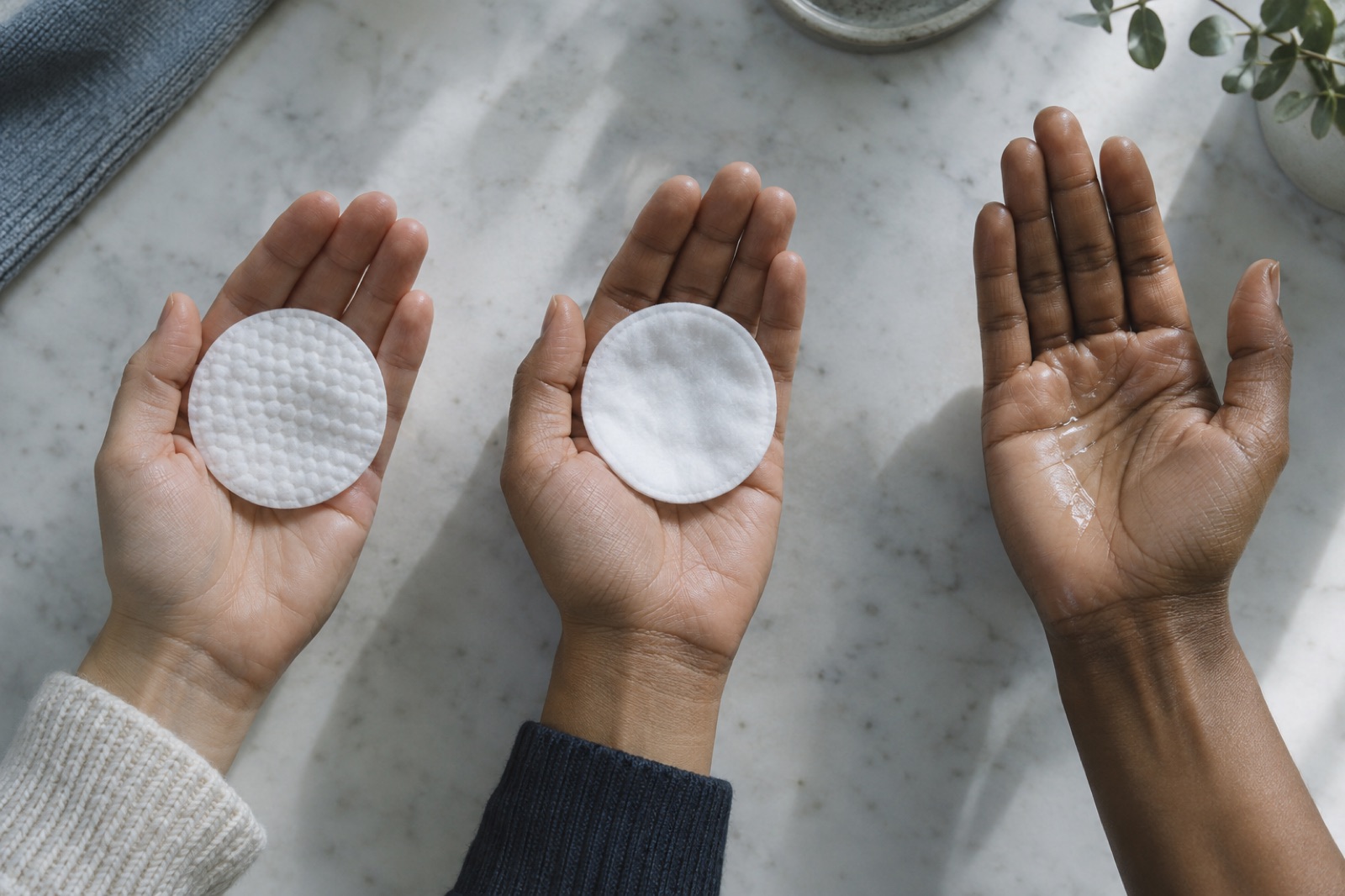
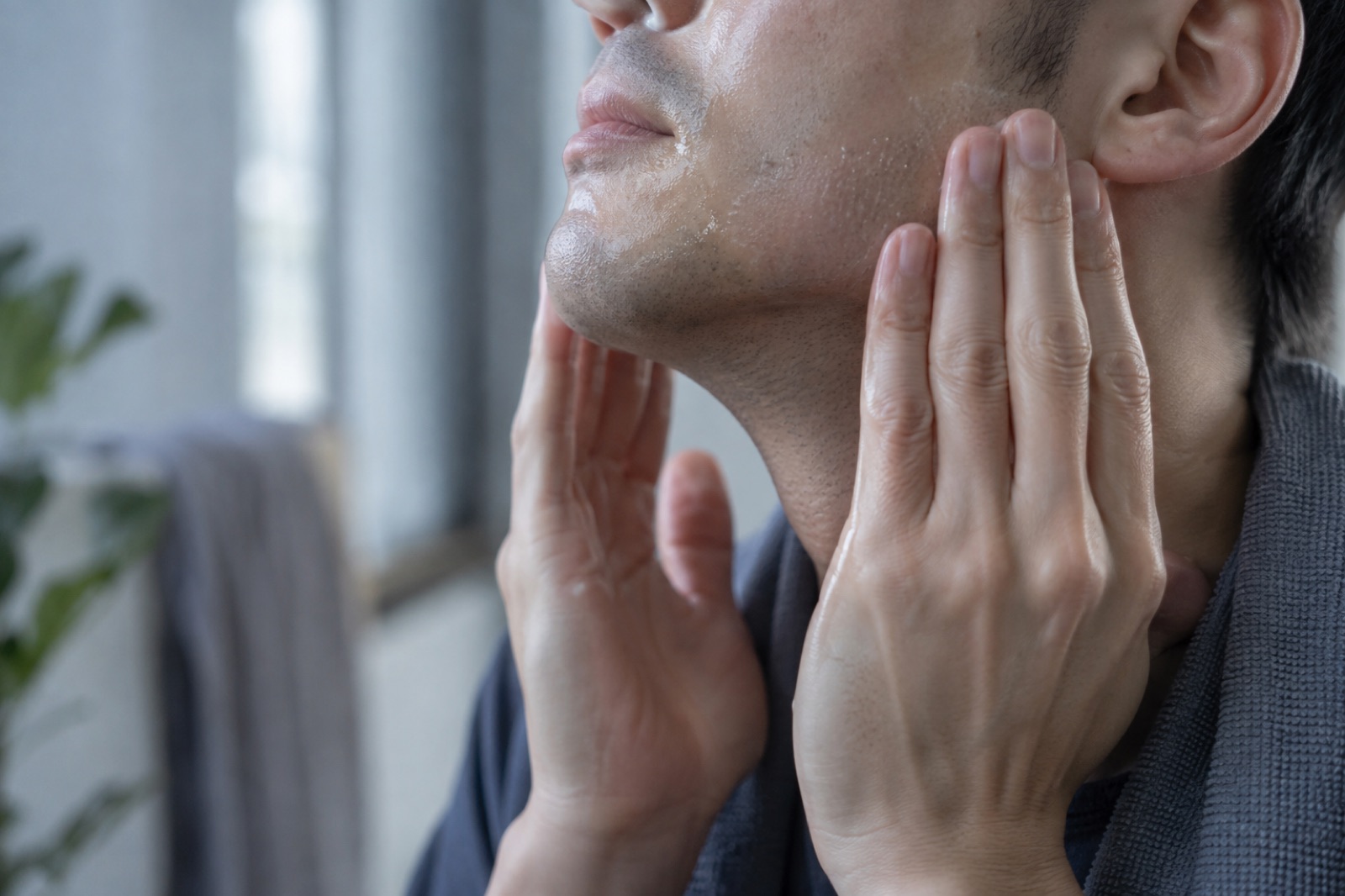
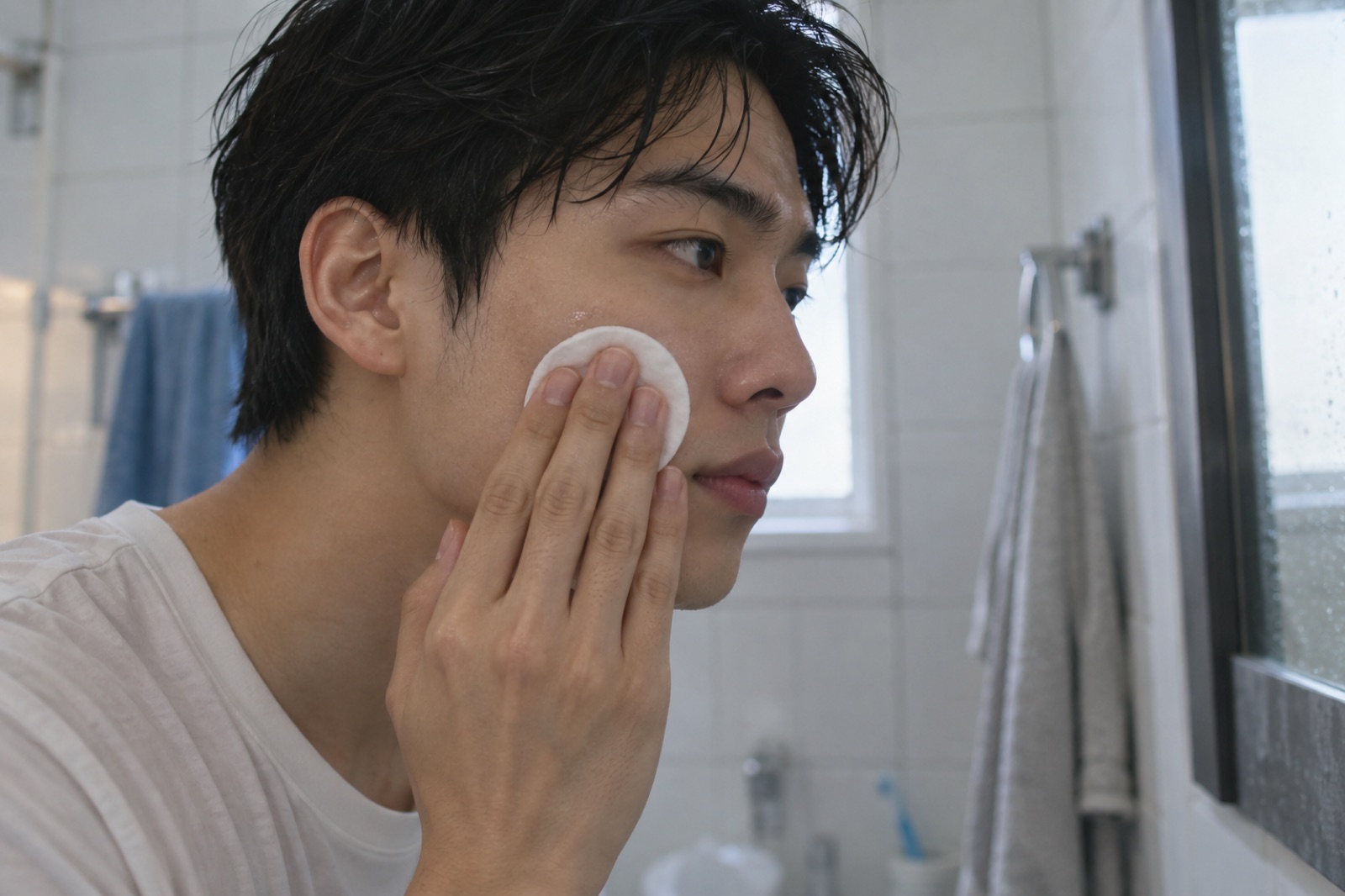
How to use it: After cleansing, pour a suitable amount onto your palm or a cotton pad. Smooth it gently along the skin's texture, or press it in lightly with your palms until absorbed. Then follow with whichever moisturizing products your skin needs at the time.
Check before you use it: Contains ethanol 3.0%, fragrance and salicylic acid. When you use it together with other products that contain acids, watch how your skin reacts and adjust how often you use it, and avoid the eye area and any wounds. If red spots, swelling, itching or any other unusual reaction appears, stop using it and consult a dermatologist.
Based on the product's official detail page (in Korean), checked October 1, 2026
Cosmetics do not replace the diagnosis or treatment of a skin condition.