Toner Pads: How Many Swipes, How Long to Leave On, How Often
Swipe a toner pad in one direction, once per area, and set how often you use acid pads by adding up every exfoliating product you use in a week.
What this note covers7 sections
- How to use toner pads: how many times should you swipe?
- Should you use pads differently depending on material or acids?
- How long should you leave a toner pad on your face?
- How many times a week should you use acid pads?
- Day-by-day toner pad log
- When should you see a dermatologist about pad irritation?
- Summary of the evidence here
| Item | Detail | Basis |
|---|---|---|
| Swipe count | Compared with skin washed with soap alone, skin rubbed with a nylon towel twice a day for 2 weeks showed a rise in water loss and a drop in natural moisturizing factor | 2018 PMID 29243811 · B |
| Pad material | In a lab test, a monofilament pad cleaned better than store-bought cotton rounds (the clinical part: 7 patients who also used polyhexanide- and sodium-hypochlorite-based cleansing solutions, no control group) | 2019 PMID 31721661 · B |
| Type of acid | In 11 people who applied four 8% AHAs for 4 weeks, water loss after irritation was lower with gluconolactone and tartaric acid than with glycolic acid | 1997 PMID 9470910 · A |
| When to stop | When breakouts get worse, check toner pads and overuse of products, and stop exfoliating and using extractors | KDCA · Agency |
| Washing time | Keep face washing within 1 minute and avoid tools such as vibrating cleansing devices, pore brushes, and other face brushes | KDCA · Agency |
How to use toner pads: how many times should you swipe?
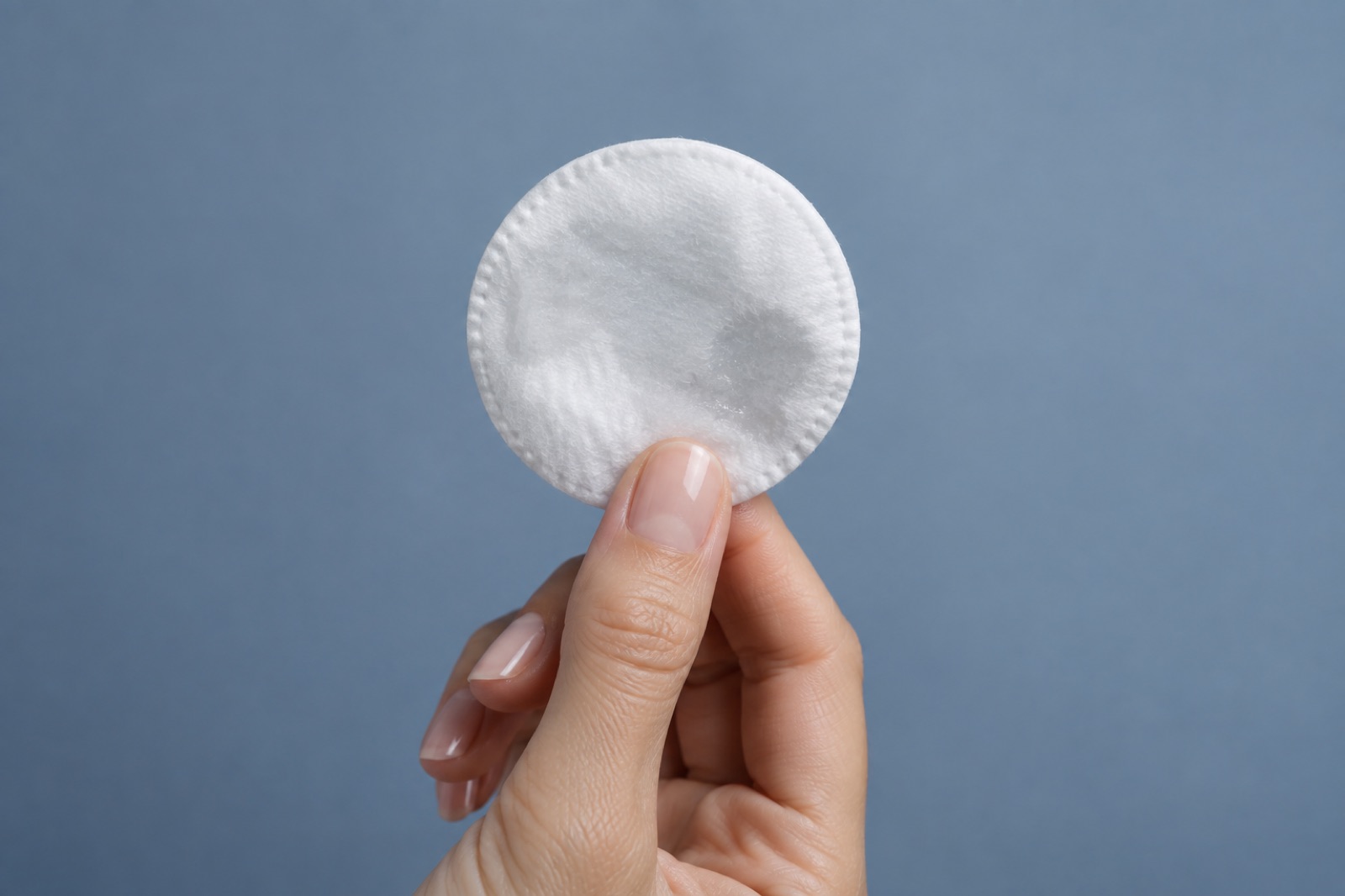
With a toner pad, swipe once in one direction and stop. In a 2018 study, 6 healthy adults washed one arm with a nylon towel and soap and the other arm with soap alone, twice a day for 2 weeks. On the rubbed side, water loss (TEWL) went up, and natural moisturizing factor, serine, and lactic acid went down.
This was a small study of 6 people’s arms, so it doesn’t carry straight over to pads, but the direction is clear: going back and forth over the same spot adds up to a burden. Swipe once each from the center outward, in the order forehead → cheeks → chin. If one pad isn’t enough for your whole face, use a fresh side, but don’t wipe the same spot again.
Should you use pads differently depending on material or acids?
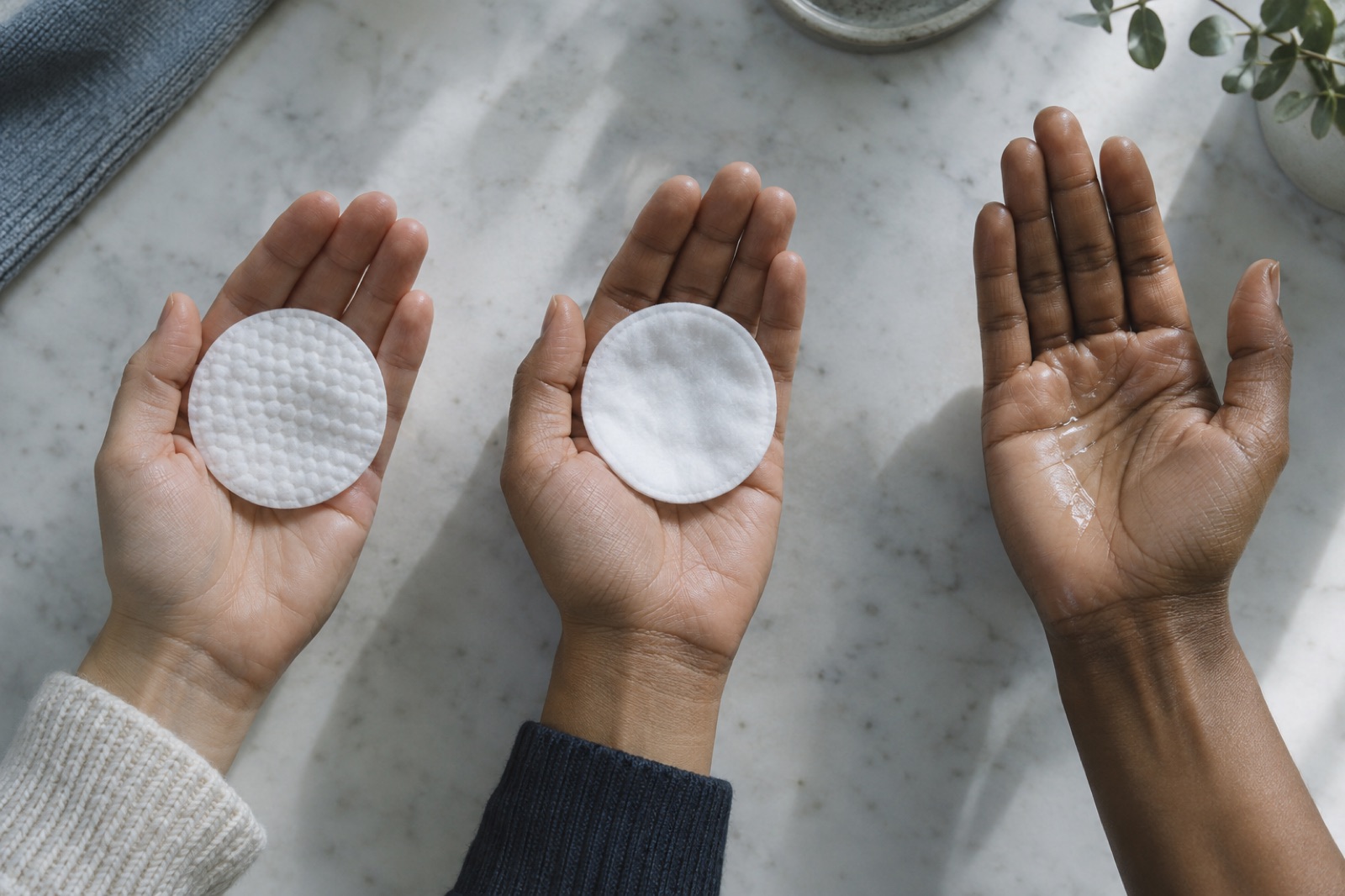
How much a pad wipes off and how much it irritates differ by material and ingredients, so it’s better to write separate rules for each pad. In a 2019 pilot study, 7 patients with recurring acne used a monofilament cleansing pad together with polyhexanide- and sodium-hypochlorite-based cleansing solutions for 4 months. In a lab test, this pad cleaned better than store-bought cotton rounds, and after repeated use, 85.7% of the participant-rated (self-assessed) sebum reduction scores were excellent or very good.
With only 7 people and no control group, this is not a result about effect; use it only as a note that different pad fabrics wipe with different strength. Also consider the type of acid. In a 1997 trial of 11 people, after 4 weeks of creams with four different 8% AHAs, the skin was irritated with a surfactant, and areas with gluconolactone or tartaric acid lost less water than the area with glycolic acid. Check which acid is on the ingredient list and note it in your log.
How long should you leave a toner pad on your face?
The sources here include no study comparing how long to leave pads on, so the rule is not to go past the time printed on the product. If stinging starts while the pad is on, don’t wait out the time. Take it off and write down when it happened. For how wiping, patting and a soaked-pad mask differ, see How to Use Toner by Situation: Pat, Swipe or Soaked-Pad Mask.
There’s also no direct evidence on whether morning or night is better. But using pads at night makes logging easier, because you can check redness once more the next morning before you wash. If you use them in the morning, mark days with sweaty plans, such as gym class or work outside the office.
How many times a week should you use acid pads?
Setting the number by your weekly total of exfoliating products is safer than following a fixed count. If you also use acid toners, serums, or peels in the same week, add them all to one column, and make the day after any stinging entry a rest day.
Korea’s national health information portal, run by the Korea Disease Control and Prevention Agency (KDCA), advises checking toner pads and overuse of products and stopping exfoliation when breakouts get worse. In weeks when your skin tends to get touchy, such as exam weeks or the days before your period, cut the total first. In the US, pads with salicylic acid that are sold for acne are OTC drug products, so follow the directions on their drug label, and ask a pharmacist or doctor if you’re unsure. For a day-by-day count for your first week with acid products, continue with AHA and BHA: your first 2 weeks, a day-by-day count, and signs to stop.
Day-by-day toner pad log
| Day | Pad type (acid / moisturizing) | Swipes (direction) | Time left on | Other exfoliating products that day | Stinging or redness (0–3) | Rest day |
|---|---|---|---|---|---|---|
| Mon | e.g., acid pad | 1 (one direction) | None | |||
| Tue | e.g., acid toner | |||||
| Wed | Stung yesterday → rest | |||||
| Thu | ||||||
| Fri | ||||||
| Sat | e.g., peel | |||||
| Sun | ||||||
| Weekly total | Acid pads: __ times | — | — | Total exfoliating products: __ times | Highest score | Rest days: __ |
At the end of the week, find what the stinging days had in common and change just one rule. Leave out any area with a popped spot or a wound from the wiping column and log it separately. To set your exfoliating count over four weeks, use the schedule in How Often Should You Exfoliate Your Face? A First-Month Weekly Plan alongside this log.
When should you see a dermatologist about pad irritation?
- If redness or burning lasts several days after you stop the pads, see a dermatologist.
- If a spot you popped swells, hurts, or fills with pus, don’t put a pad or mask on it, and have it checked at a clinic.
- If blisters or oozing appear where you used a pad, stop using it and consider seeing a doctor.
Summary of the evidence here
- In a 2018 study of 6 healthy adults (PMID 29243811), on the side washed with friction twice a day for 2 weeks, water loss went up and natural moisturizing factor went down.
- In a 1997 trial of 11 people who applied four 8% AHAs for 4 weeks (PMID 9470910), water loss after surfactant irritation was lower in the gluconolactone and tartaric acid areas than in the glycolic acid area (P<0.05).
- In a 2019 pilot study of 7 patients with recurring acne who used a monofilament pad together with polyhexanide- and sodium-hypochlorite-based cleansing solutions (PMID 31721661), 85.7% of the participant-rated (self-assessed) sebum reduction scores after repeated use were excellent or very good, and there was no control group.
Frequently asked questions
Is it better to use exfoliating pads every day or do a peel once a week?
The sources behind this article include no study comparing the two. Instead, add up how many times you use exfoliating products in a week. One study found that water loss went up on skin rubbed twice a day for 2 weeks, so with a pad you use daily, the wiping motion counts too. Korea's KDCA also advises stopping exfoliation when breakouts get worse.
I started breaking out after a new gel cream and pore pads. Which one is it?
If you started both around the same time, it's hard to tell which one is responsible without a log. Pore pads add friction from wiping, and either product may contain the surfactants, preservatives, colorants, or artificial fragrances the Korean Dermatological Association lists as irritants. Korea's KDCA also advises checking toner pads and overuse of products first when breakouts get worse, so drop the pads for 1–2 weeks and compare your count of new bumps.
Can you put a toner pad or soothing mask on a spot where you popped a pimple?
The sources here include no study on putting a pad or mask on a popped spot. Leave that spot out of the area you wipe so you don't rub it, and note whether redness or oozing appears. Korea's KDCA advises stopping the use of extractors, and if the spot swells, hurts, or fills with pus, it's best to see a dermatologist.
Sources
- Repeated friction and decreased serine and lactic acid in the stratum corneum, 6 people, 2018 (PMID 29243811)B
- Sebum cleansing with a monofilament cleansing pad on acne-prone skin, 7 people, 2019 (PMID 31721661)B
- Effects of four AHAs on stratum corneum barrier function, 11 people, 1997 (PMID 9470910)A
- Korea Disease Control and Prevention Agency (KDCA) National Health Information Portal — Safe cosmetic use for teens (Korean)Institutional
- Korean Dermatological Association — Cosmetics overview and adverse reactions (Korean)Institutional
Videos and forum posts never count as evidence for a fact here. Full rules: Editorial policy
What to check when choosing a product for this routine
Check the criteria below before the product name. Each item can be found on the full ingredient list or in the product description.
| Item | What to look for | Why |
|---|---|---|
| Form and how you dispense it | Whether it comes pre-soaked in pads or as a bottled liquid you pour onto a cotton pad | In the "pad type" column of your log, you can also note whether the amount per sheet was fixed or poured by you |
| Acids on the label | Whether salicylic acid, AHA or PHA appears on the full ingredient list | If an acid is listed, note the days you use it in your log and count them in the weekly total |
| Ethanol and fragrance | Whether ethanol or fragrance is on the full ingredient list | When you log the time stinging began while it was on your face, these are ingredients to note alongside |
| Eye-area and wound note | Whether it says to avoid the eye area and wounds | When you leave squeezed or broken spots out of the swiping zones, the label and your log rule point the same way |
Product from this site's operator · KW Cosmetic Content Team
Revive Therapy N.F TonerThis toner isn't a pad but a bottled liquid, so when you pour it onto a cotton pad you set the swipes and how long it stays on yourself. It's a mildly acidic (pH 5.5–6.5) 150 ml toner with ethanol, fragrance and salicylic acid, so on a day you also use an acid pad it goes in that day's log. Its patch test showed low irritation, but there's no test data on leaving it on as a pad. On its product page, it comes after cleansing and before moisturizer. For the after-cleansing step you log by weekday, the product we suggest is Revive Therapy N.F Toner.
Fitting it into a routine
Where it goes: After cleansing, before your moisturizing products
How to use it: After cleansing, pour a suitable amount onto your palm or a cotton pad. Smooth it gently along the skin's texture, or press it in lightly with your palms until absorbed. Then follow with whichever moisturizing products your skin needs at the time.
Check before you use it: Contains ethanol 3.0%, fragrance and salicylic acid. When you use it together with other products that contain acids, watch how your skin reacts and adjust how often you use it, and avoid the eye area and any wounds. If red spots, swelling, itching or any other unusual reaction appears, stop using it and consult a dermatologist.
Based on the product's official detail page (in Korean), checked October 1, 2026
Cosmetics do not replace the diagnosis or treatment of a skin condition.