Dehydrated Oily Skin: What to Layer After Toner, Zone by Zone
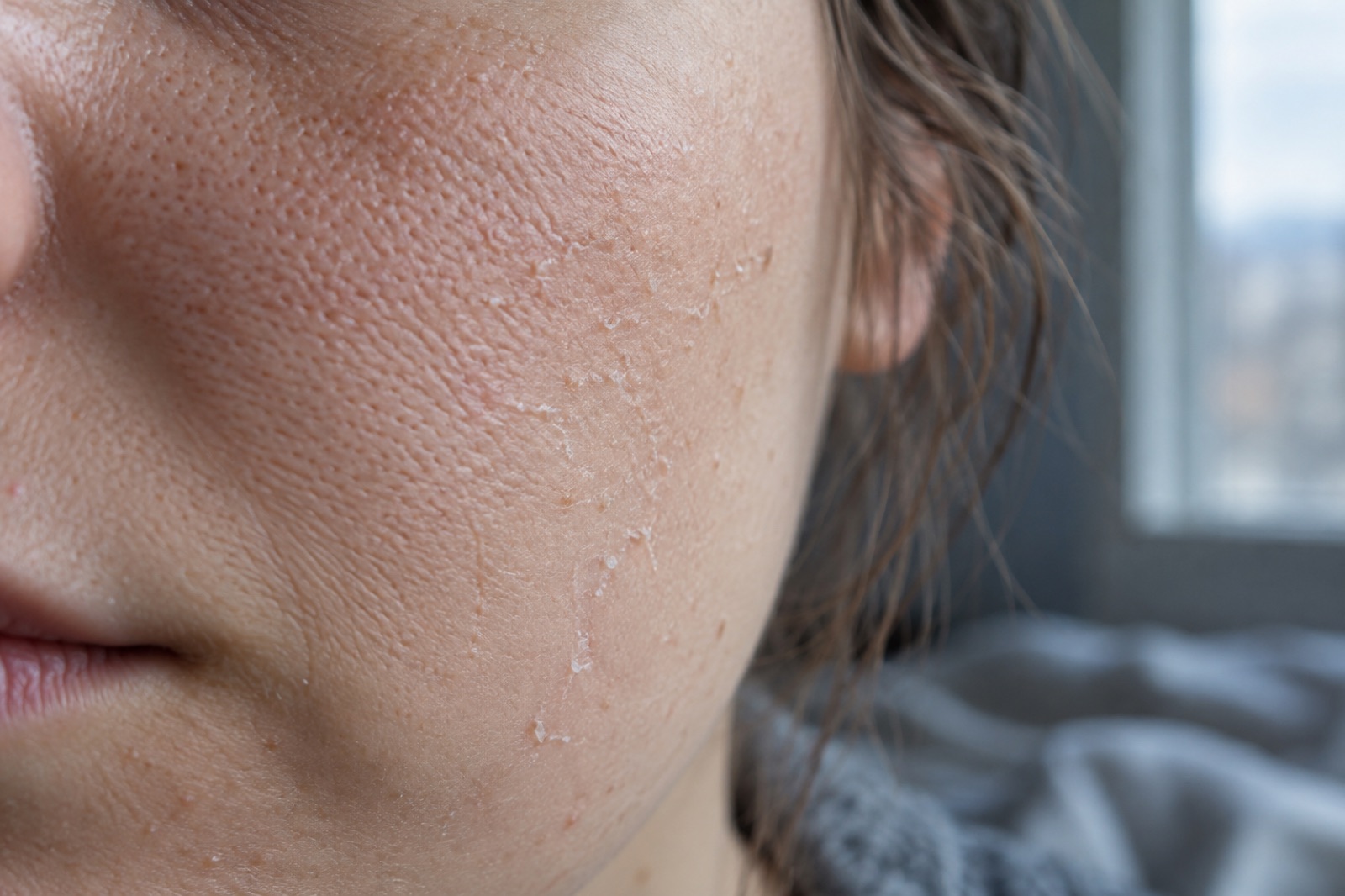
For dehydrated oily skin, apply toner once over your whole face, then add one more layer of lotion or a light cream only on the U-zone, where your skin feels tight.
What this note covers7 sections
- Oily on the surface but tight underneath: can both be true?
- After toner, should you layer lotion or cream?
- How long does one layer of moisturizer last, and why layer?
- How should you change the amount you layer in winter and summer?
- T-zone and U-zone layering chart by season
- When should you ask a dermatologist?
- Research and guidance behind this chart
| Item | Detail | Basis |
|---|---|---|
| Situation | 7 teens with acne had more oil and higher water loss (TEWL) than 10 teens without acne in every season | 2015 PMID 26091385 · B |
| Area | Combination skin means the T-zone and U-zone behave differently; use an astringent toner on oily areas and a softening toner elsewhere | Korean Dermatological Association · institution |
| What to layer | Lotion is a thin cream with 60–80% water, while cream contains more oil and moisturizing ingredients | Korean Dermatological Association · institution |
| Timing and frequency | Skin surface hydration was higher when moisturizer was applied within five minutes of bathing, once or twice a day | 2022 PMID 34743412 · B |
| Season | Over a year of follow-up, both groups tended to have less oil and weaker barrier function in winter | 2015 PMID 26091385 · B |
Oily on the surface but tight underneath: can both be true?
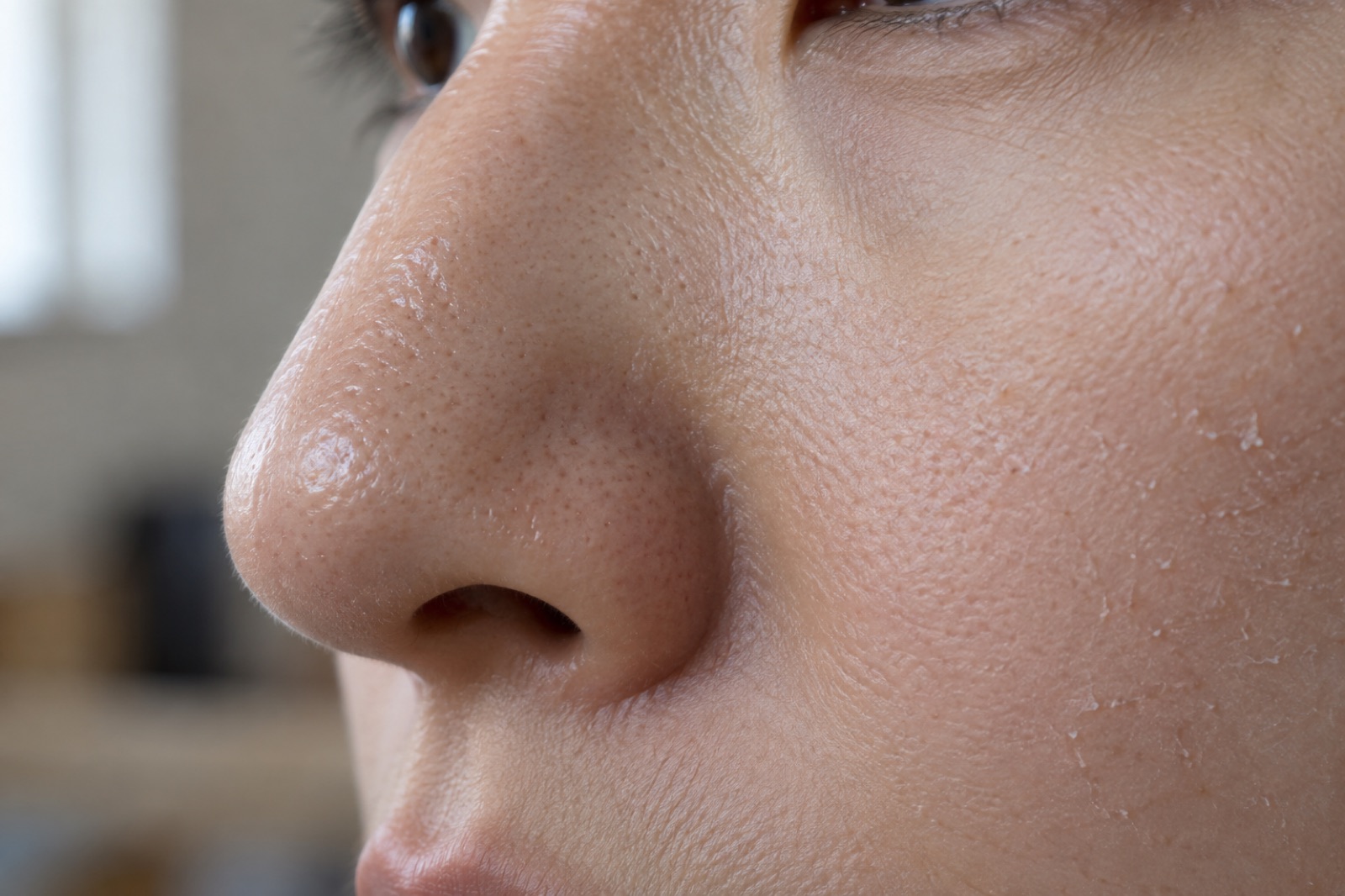
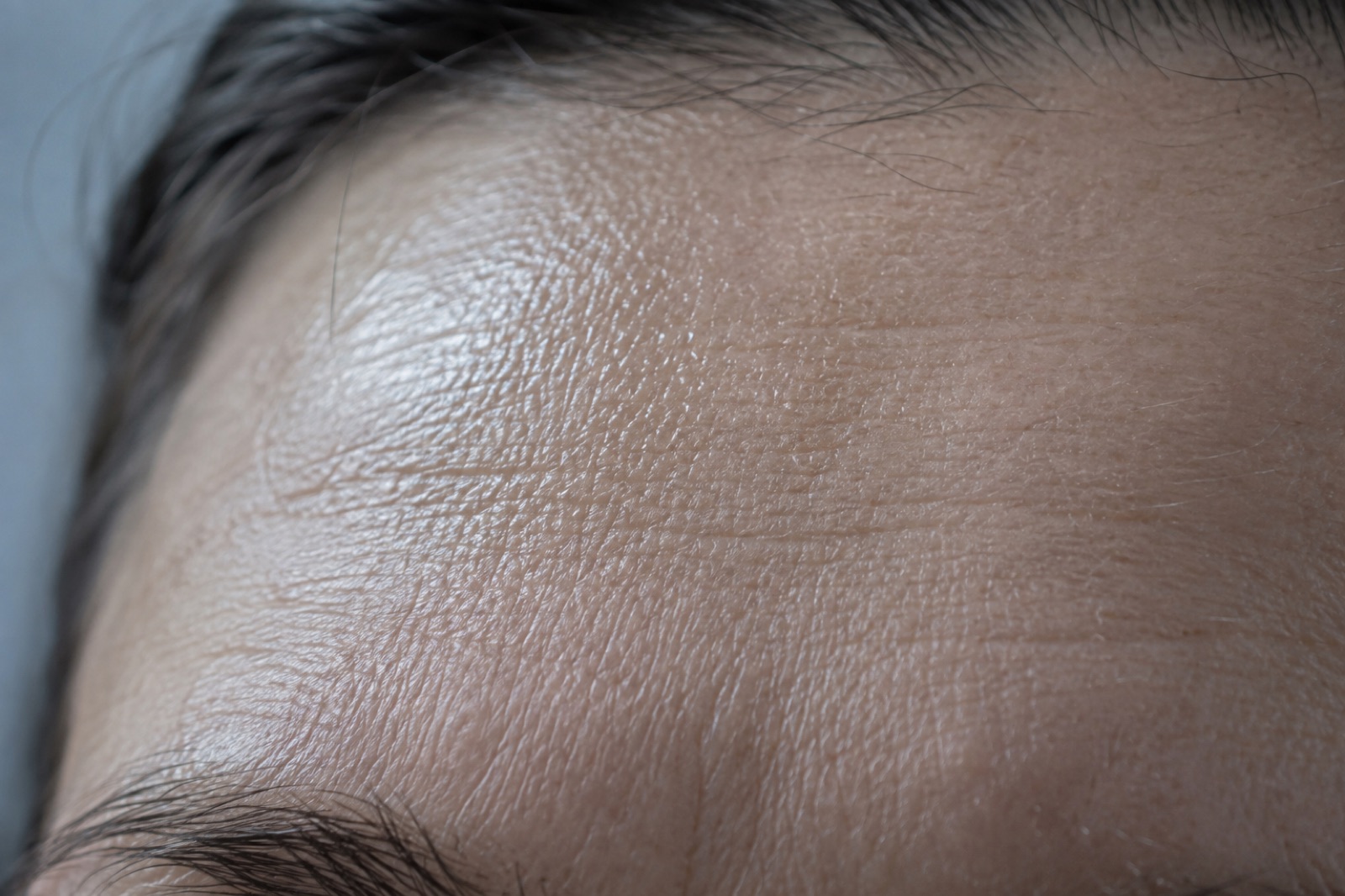
Yes, both can show up at the same time. In a 2015 study that measured the faces of 7 teenage boys with acne and 10 without every month for a year, the acne group produced more oil in every season (P<0.019) and also lost more water (P=0.001).
The sample was very small and only included teenage boys, so it can’t be applied to all dehydrated oily skin. Still, you can take two points from it: “My skin is oily, so I don’t need moisturizer” isn’t always true, and that’s why shine and tightness should be logged separately. (In Korea, this oily-outside, dry-inside skin is called “subuji.”)
After toner, should you layer lotion or cream?
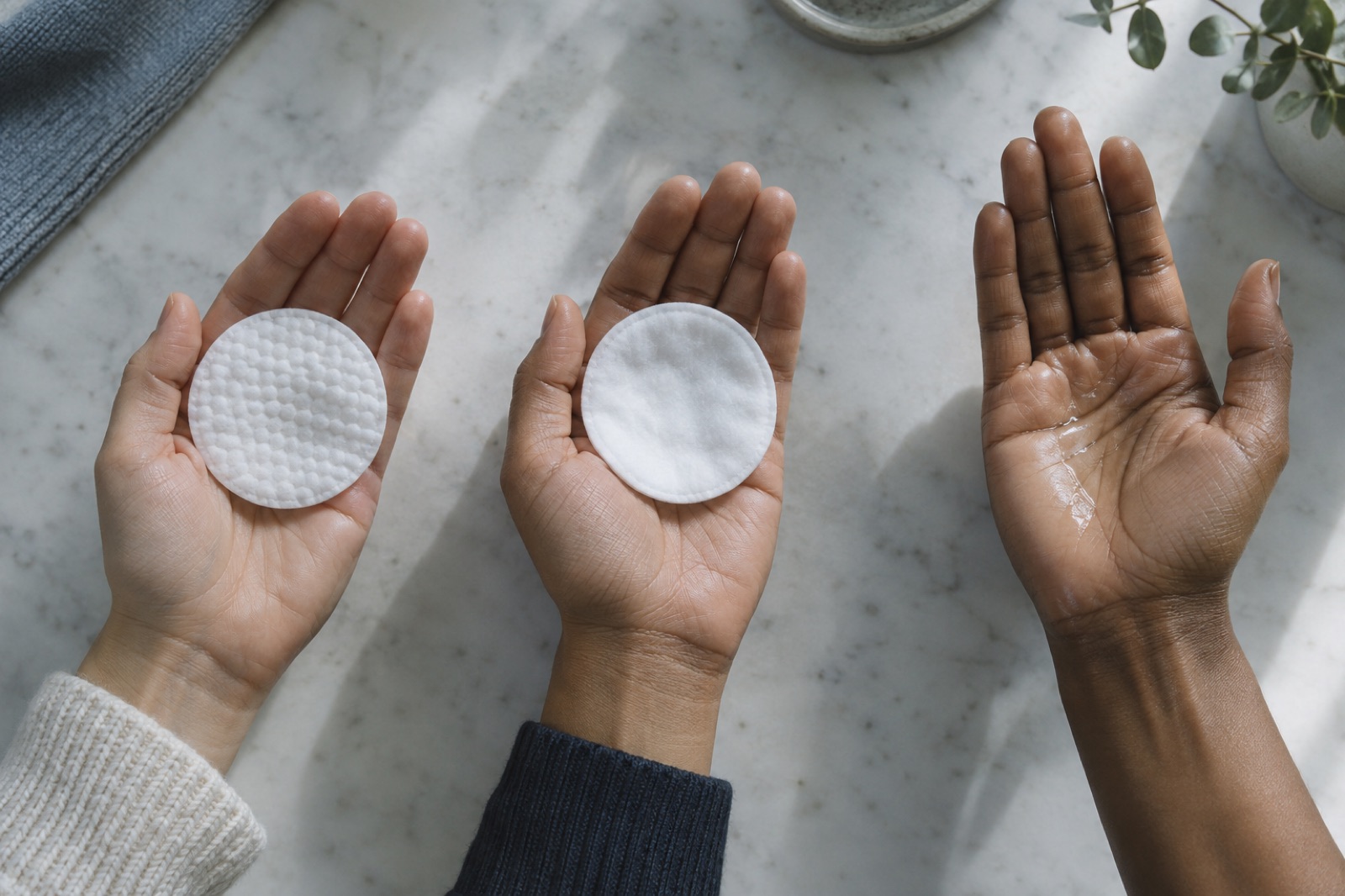
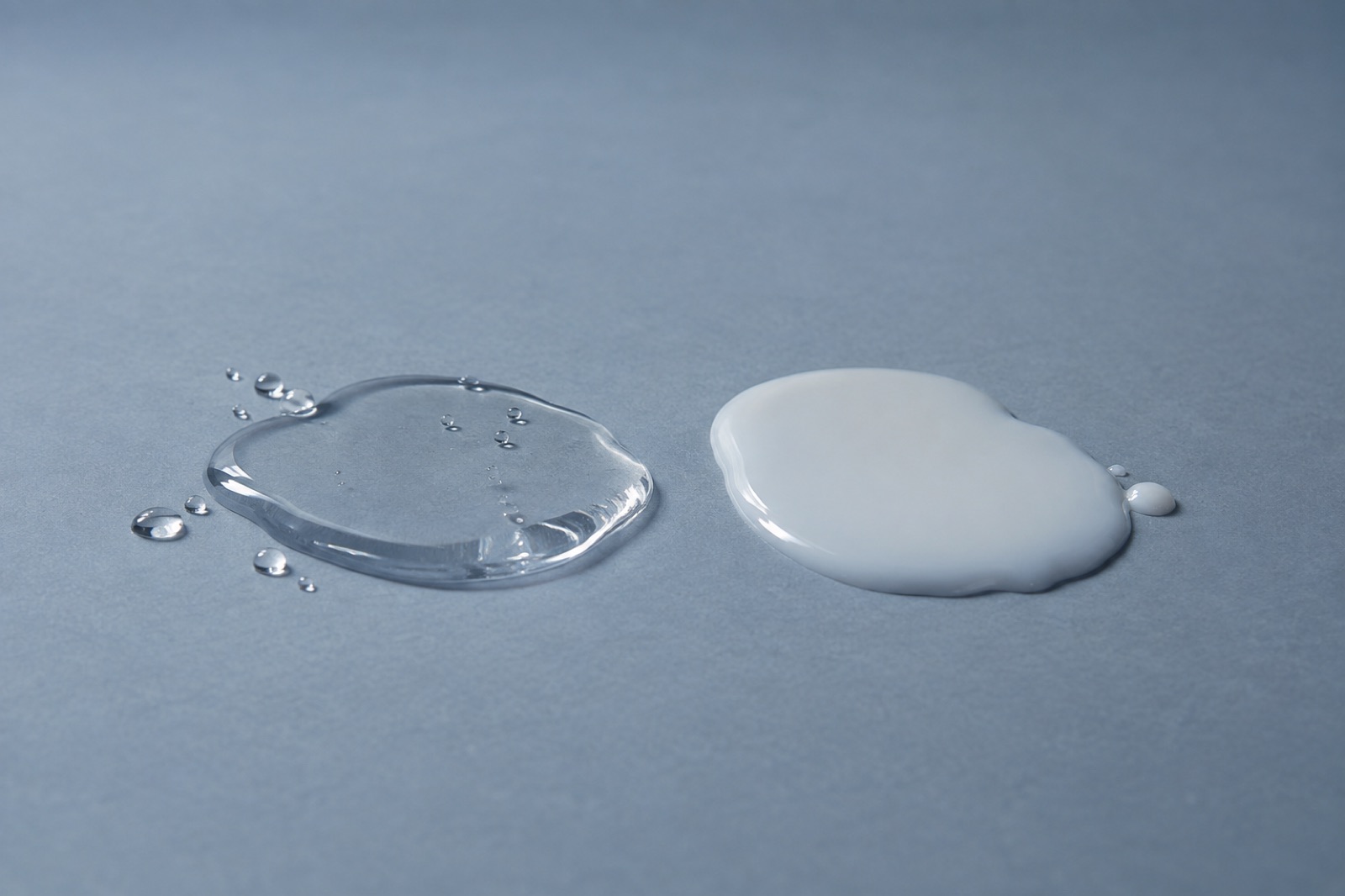
A thin layer of lotion over your whole face, with a little cream added only on the tight U-zone (your cheeks, jaw and the area around your mouth), fits the dermatology association’s guidance well. The Korean Dermatological Association describes lotion as a low-thickness cream with 60–80% water and cream as a product with more oil and moisturizing ingredients, and recommends lotion or water-cream textures for combination and oily skin.
Toner itself is also split by area. The same association’s material advises an astringent toner on oily areas and a softening toner everywhere else. If keeping two bottles is a hassle, split by count instead: one toner applied once on the T-zone and twice on the U-zone.
How long does one layer of moisturizer last, and why layer?
How long it lasts varies a lot by texture, so if you only use a light one, tightness can creep back in the afternoon. In a 2020 trial where moisturizers were applied once to the legs of 30 people with sensitive, dry skin, two products kept hydration up for as long as 24 hours, while the comparison product was significant only at 30 minutes and 2 hours.
These are results from leg skin, so they can’t be applied directly to your face, but your afternoon log is the most useful guide for deciding how much to layer. If your U-zone feels tight at 3 p.m., add one step more U-zone cream in the evening. If your T-zone is shiny, drop the second toner layer on the T-zone in the morning.
How should you change the amount you layer in winter and summer?
Change one step at a time and log each change for two weeks. The Korean Dermatological Association explains that skin type, based on oil and water, can change with age and environment, and the 2015 one-year follow-up study also found that oil tended to drop and barrier function tended to weaken in winter.
On winter days spent in a heated classroom or office, adjust the amount of U-zone cream first. On summer days when sweat or a face mask makes your T-zone shiny, adjust the T-zone steps first. Also follow the association’s advice that combination-oily skin should avoid scrubbing while washing and washing too often.
T-zone and U-zone layering chart by season
| Step | Summer T-zone | Summer U-zone | Winter T-zone | Winter U-zone |
|---|---|---|---|---|
| 1. Toner | Once (refreshing toner) | Once | Once | Once or twice (softening toner) |
| 2. Extra toner layer | Skip | Only on tight days | Skip | Pat on a second time |
| 3. Lotion | Very thin, or skip | Thin | Thin | Thin |
| 4. Cream | Skip | A little when tight | Skip | A little |
| 3 p.m. log | Shine 0–3 | Tightness 0–3 | Shine 0–3 | Tightness 0–3 |
When you change one cell, leave the others as they are for two weeks. How soon after washing and how much moisturizer to apply is covered separately in Moisturizer: when, how much and how many times a day after washing.
When should you ask a dermatologist?
- If red, painful breakouts keep increasing even after you cut back on layering, see a dermatologist.
- If flaking and itch come along with U-zone tightness and last more than two weeks, have your skin checked by a doctor.
- If swelling or burning starts right after you apply toner or cream, stop, and if the reaction continues, consider a visit.
Research and guidance behind this chart
- In a 2015 study that measured the faces of 7 teens with acne and 10 without every month for a year (PMID 26091385), the acne group had higher oil production (P<0.019) and water loss (P=0.001) in every season.
- A 2022 study on moisturizer application (PMID 34743412) reported significantly higher skin surface hydration when moisturizer was applied within five minutes of bathing, at 1.0–2.0 mg/cm², once or twice a day.
- The Korean Dermatological Association’s page on basic skin care products describes lotion as a thin cream with 60–80% water and advises using an astringent toner on oily areas.
Frequently asked questions
I have dehydrated oily, acne-prone skin. Can I use a gel cream and a soothing cream together?
This article's sources include no study comparing ways to layer two such products. The Korean Dermatological Association recommends lotion or water-cream textures for combination and oily skin, and advises that combination-oily skin avoid oil-heavy products. If you use both, apply just one in a thin layer over your whole face, add the other only on the tight U-zone, and log afternoon shine and new bumps for two weeks.
My skin is very dry in winter and dehydrated-oily in summer. How should I care for it each season?
The Korean Dermatological Association explains that skin type, based on oil and water, can change with age and environment. A one-year follow-up study also found that oil tended to drop and barrier function tended to weaken in winter. Change just one thing at a time, the amount of U-zone cream in winter and one T-zone step in summer, and log each change for two weeks.
Is it a sign of dehydrated oily skin if my face looks clear right after washing but gets oily and dull later?
You can confirm that shine builds up over time by logging oil, but this article's sources have no evidence on how dullness relates to dehydrated oily skin. If you write down when the shine appears along with whether your U-zone feels tight at that moment, you can tell whether it's only oil or tightness too.
Sources
- Seasonal changes in facial skin with and without acne, 17 participants over one year, 2015 (PMID 26091385)B
- Optimal moisturizer application based on skin physiology, 2022 (PMID 34743412)B
- Randomized controlled trial of hydration after a single application of lamellar moisturizers, 30 participants, 2020 (PMID 32167240)A
- Korean Dermatological Association — Basic skin care products (Korean)Institutional
- Korean Dermatological Association — Skin care (Korean)Institutional
- Korean Dermatological Association — Moisturizers (Korean)Institutional
Videos and forum posts never count as evidence for a fact here. Full rules: Editorial policy
What to check when choosing a product for this routine
Check the criteria below before the product name. Each item can be found on the full ingredient list or in the product description.
| Item | What to look for | Why |
|---|---|---|
| pH on the label | Whether the label gives a mildly acidic range as a number (e.g., pH 5.5–6.5) | It's the first step to touch your skin after washing, so it's an easy reference point when you change other steps |
| Humectants | Whether humectants like glycerin or beta-glucan appear near the top of the full ingredient list | It lets you check whether the formula is light enough to apply once on the T-zone and layer on the U-zone |
| Number of acids | Whether salicylic acid, AHAs or PHAs are listed, and how many acid-containing products are in your whole routine | If stinging starts where you layer, it's easier to sort out the cause |
| Texture | Whether it is thin like water or has some thickness | It gives you a way to decide which areas get one layer and which get two |
Product from this site's operator · KW Cosmetic Content Team
Revive Therapy N.F TonerCosmetics do not replace the diagnosis or treatment of a skin condition.