Acne Toner: Your First 2 Weeks, Starting on One Side of the Jaw
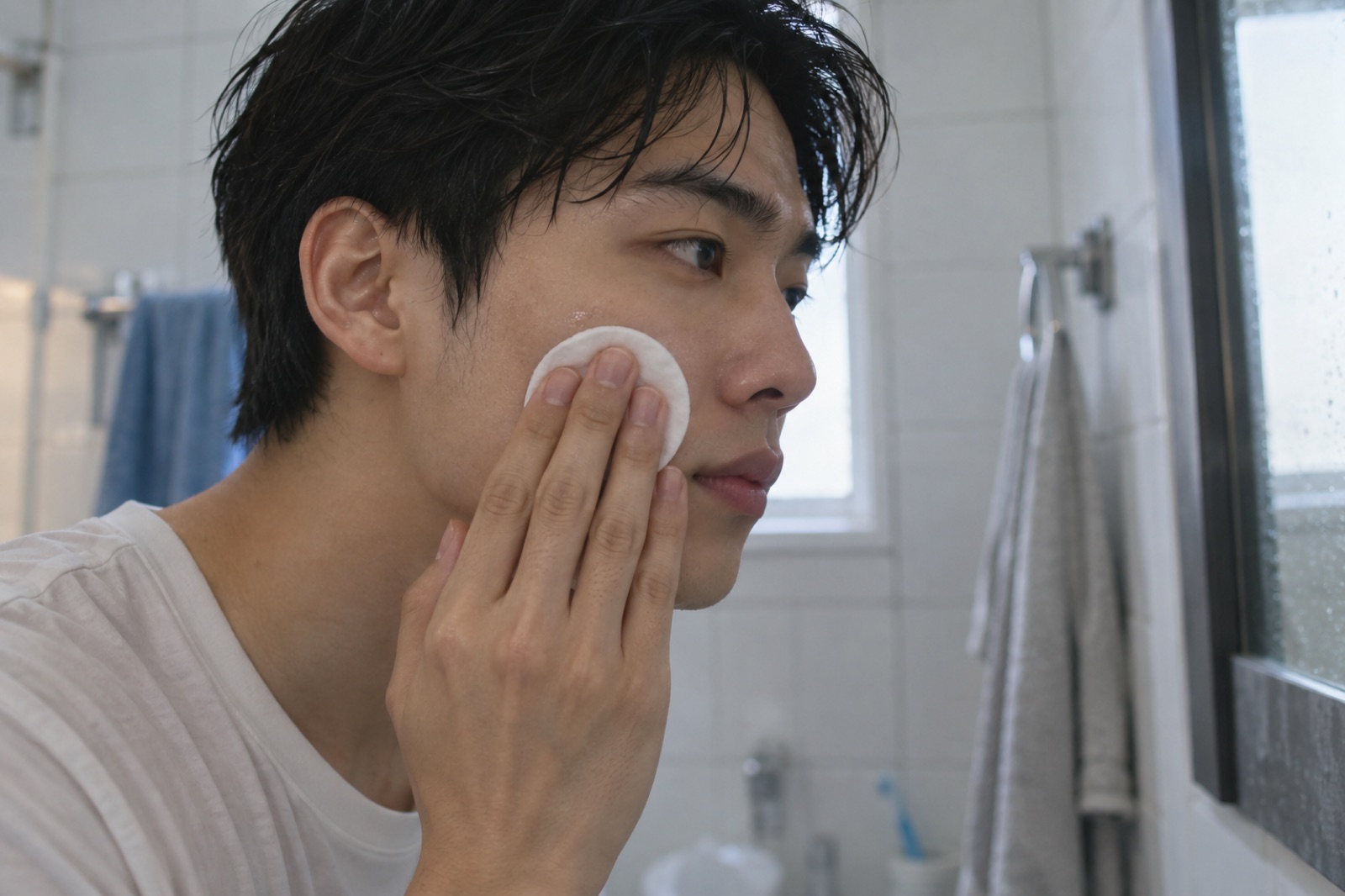
Start a new acne toner after your evening face wash: one side of your jawline for 3 days, then half your face for 4 days, then your whole face, writing down how your skin reacts every day.
What this note covers8 sections
- Why start a new acne toner on just one side of your jawline?
- Should you start in the morning or at night?
- How do you decide which days to skip?
- What should you write down every day?
- What signs mean you should stop applying it?
- First-2-week order table for spreading it out, and log boxes
- When is it time to see a dermatologist instead of pushing on?
- What the studies behind this jawline-first order found
| Item | Detail | Basis |
|---|---|---|
| How often it was applied in testing | 86 people being seen for skin reactions to things they had put on their skin had the same ingredient applied to the forearm twice a day for 7 days, and the reactions were checked | 1986 PMID 2941220 · B |
| When reactions showed up | Of 328 repeated application tests of products put on the skin, all 59 positives (18%) showed up within 10 days, and the median time to a reaction was 3 days | 2022 PMID 35383393 · B |
| Differences by area and by person | In 540 people with acne, pH in the T-zone was higher than in the U-zone, and in a study that measured 56 people, pH varied more from person to person than within one person, even at the same site (correlations only) | 2013 PMID 23279122 · 1983 PMID 6189333 · B |
| Reactions to log separately | Sensitive skin is described as cases where a ‘stinging’ sensation appears after you put on cosmetics, or where skin turns red easily | Korean Dermatological Association · Institution |
| Order and time frame for spreading out | One side of the jawline on days 1–3 → half your face on days 4–7 → your whole face on days 8–14 are values set so you can compare things the same way at home | Editorial choice |
Why start a new acne toner on just one side of your jawline?
So you can watch for reactions in the first few days on a small patch first, and only spread it out if things look fine. The ranges of one side of the jawline on days 1–3, half your face on days 4–7 and your whole face on days 8–14 were not set by research; they’re this guide’s editorial choice.
When dermatologists check how someone reacts to an ingredient that goes on the skin, they also apply the same thing to one spot over and over and watch. In a 1986 repeated open application test (ROAT) study, 86 patients being seen for skin reactions to things they had put on their skin had common cosmetic base ingredients applied to the forearm twice a day for 7 days, and the results were compared with patch tests. Of the people whose patch test result was unclear, 44% turned out positive with this method.
A 2022 analysis by a French dermatology and allergy group shows roughly when reactions appear. Of 328 repeated application tests done with products such as cosmetics (60%) and topical medications (31.1%), 59 (18%) were positive, all within 10 days, with a median of 3 days. That’s why this guide keeps the first 3 days to one side of the jawline, and keeps up the log even while spreading out, until around day 10. Still, both were tests done under lab conditions to check for allergy, so they’re not the same as watching your own face at home, and getting through 10 days with nothing happening doesn’t mean it will stay fine from then on.
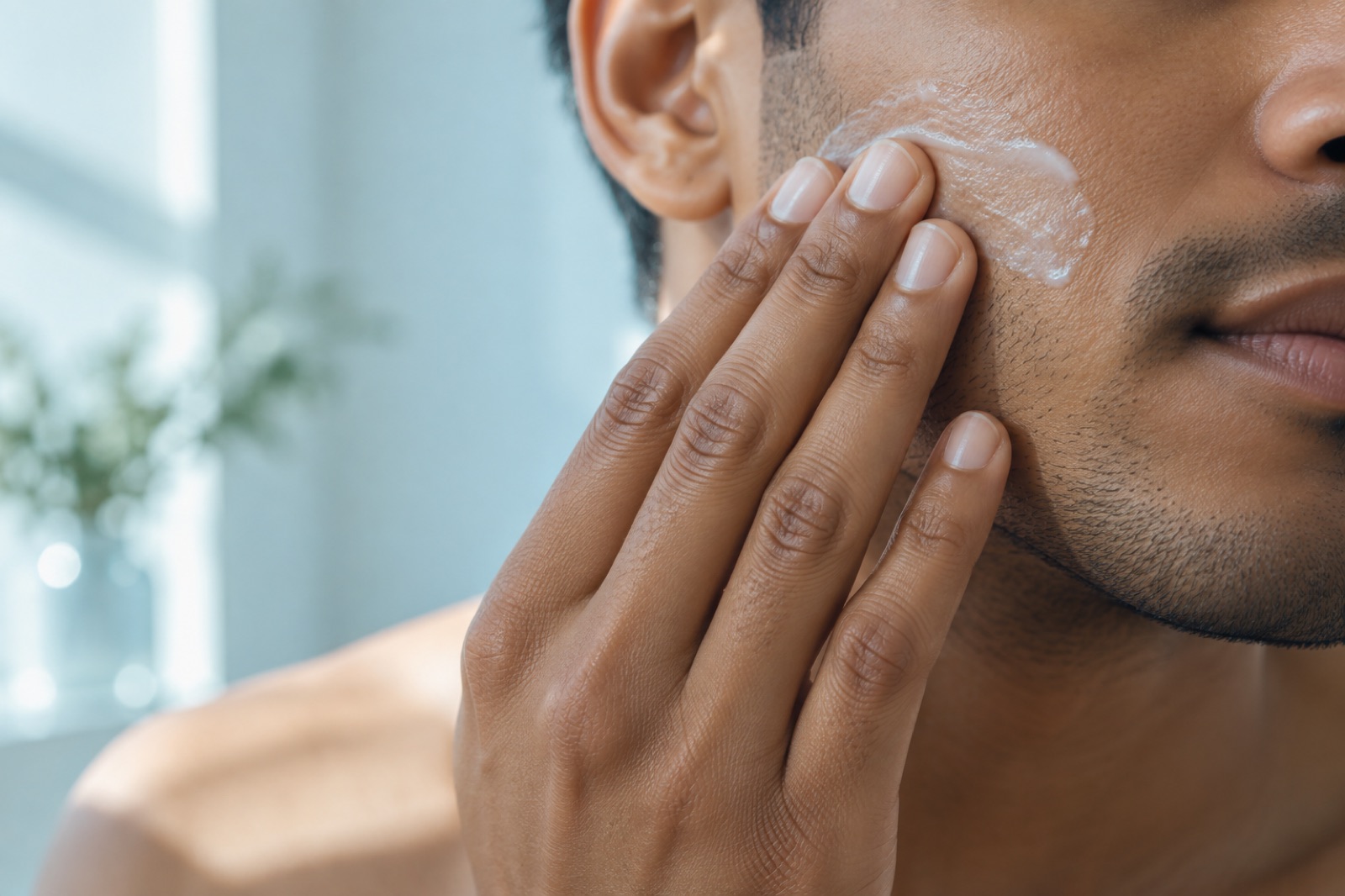
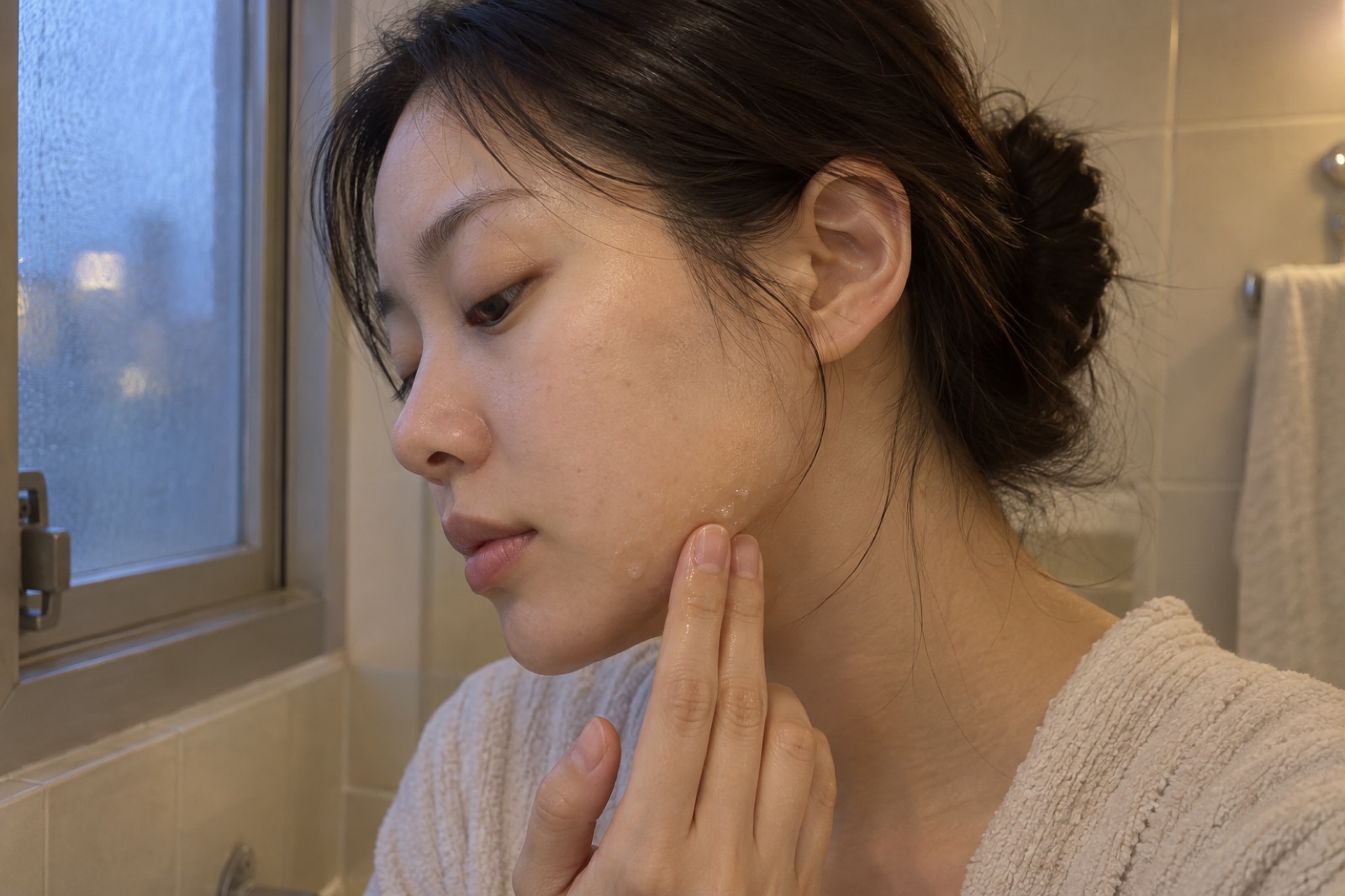
The jawline is the pick because it’s easy to compare left and right in the mirror and it’s far from your eyes. Decide which side on day 1, and don’t switch sides for the 2 weeks.
Should you start in the morning or at night?
For the first 2 weeks, the baseline is starting after your evening face wash. That way you can check the reaction twice, before bed and the next morning, and if you can only apply it in the morning, put it before sunscreen.
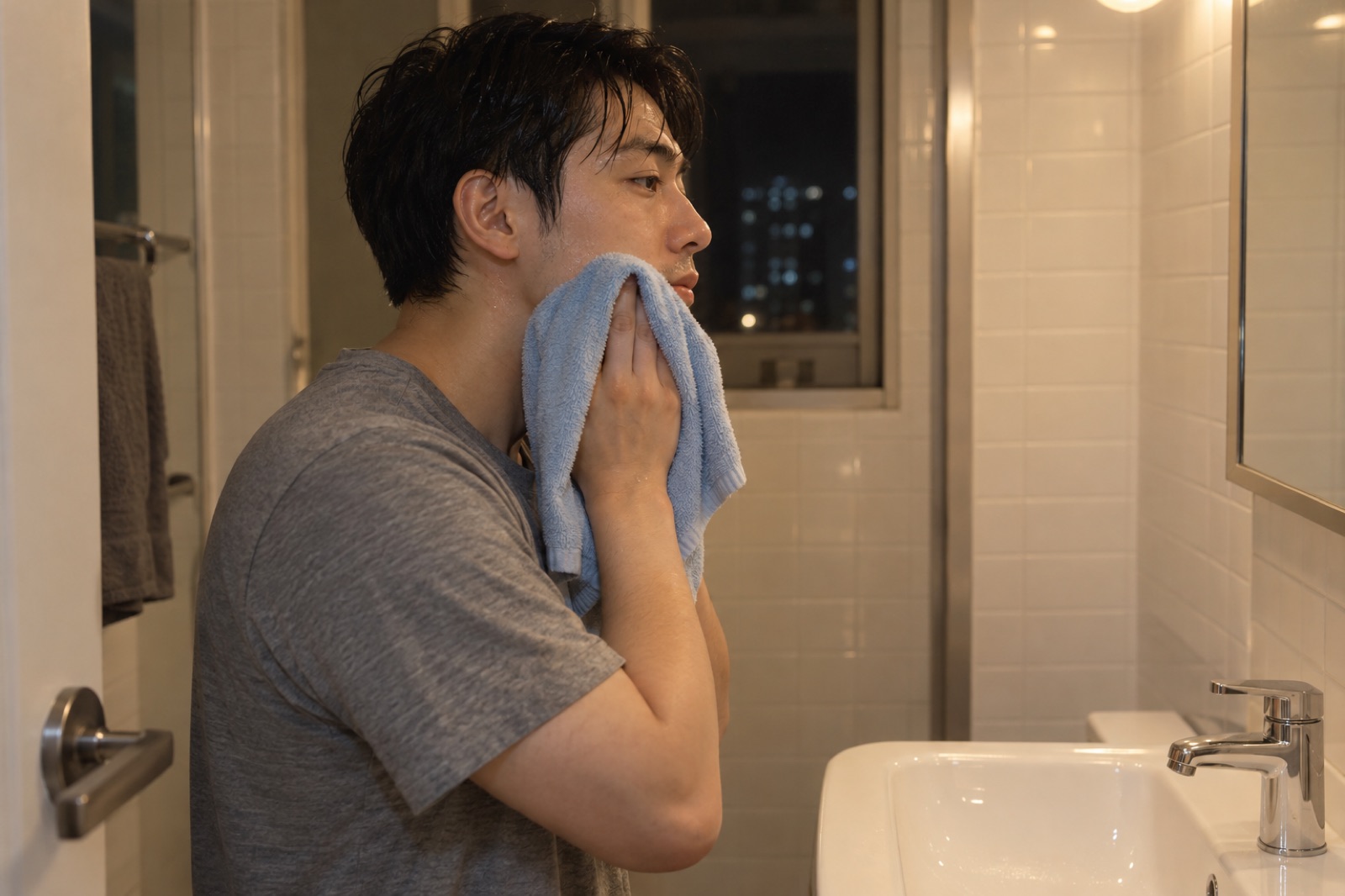
If you work late and your face wash gets pushed close to midnight, write down the actual time you applied it, and on days you applied it after a post-workout shower, add ‘after workout.’ If you’re a student who only has time in the morning while getting ready for school, keep it in the morning, but mark days you wore a face mask for a long time and days you sweat a lot on the same line. Either way, settle on one time of day for the 2 weeks and don’t change it, so you can compare one day with the next.
How do you decide which days to skip?
On days you use an exfoliating cleanser, pad or serum, skip the new toner and write ‘skipped’ in your log. If you layer two steps on the same day, it’s hard to tell which one the stinging came from.
On days you shaved and have a razor scrape along your jawline, or have a spot you picked at with your fingers, leave that spot out or skip the day. When you skip a day, push that stage’s dates back by one, so the one-side-of-the-jawline stage still adds up to 3 days you actually applied it.
In its guide to managing adult acne on your own, the American Academy of Dermatology (AAD) says that while you use one product with acne-focused ingredients for 6 to 8 weeks, you shouldn’t add another product. That advice is about products with acne-focused ingredients, so we don’t carry it over to toner as is, but this guide follows the same principle of not bringing in any other new product for 2 weeks, so you can read your log.
What should you write down every day?
The time and area you applied it, how long the stinging took to fade, redness, tightness or itching, any new spots, and what else you used that day. The Korean Dermatological Association, a Korean professional body, describes sensitive skin through a ‘stinging’ sensation and a tendency to turn red easily, so give stinging and redness their own boxes.
There’s also a reason to break the area down into jawline, cheek, forehead, between the brows and so on. In a 2013 observational study that measured 540 people with acne, pH in the T-zone was higher than in the U-zone, and how pH related to the number of lesions differed by sex and by area. In a 1983 study that measured 56 people with acne, average comedone pH was 5.52 and average skin surface pH was 5.26, and pH varied more from person to person than within one person, even at the same site. Both studies only looked at correlations, so they’re not evidence for what to apply where; we use them only as a reason to read your log area by area instead of lining it up directly against other people’s reviews.
Describe anything new by how it looks, without giving it a diagnosis. Use set words such as tiny white bump, red dot or widespread redness, and record the location against the same reference point every time, such as ‘two finger widths from the tip of my left jaw.’
What signs mean you should stop applying it?
If the stinging won’t fade, redness is still there the next morning, or itching or swelling shows up, stop that same day. If nothing has changed two days after you stop, don’t carry on with the order; consider seeing a doctor.
On the day you stop, take a photo of that spot and note which stage you were at. If you stopped on a day you’d spread it to half your face, rather than going back to one side of the jawline and trying again, rest and keep up the log only. The Korean Dermatological Association groups adverse reactions to cosmetics into types such as irritant reactions, contact urticaria, delayed hypersensitivity reactions and photoallergy, and a home log can’t tell you which of these it is.
First-2-week order table for spreading it out, and log boxes
The stages and time frames below are editorial choices set so you can compare things the same way at home; they are not an order that research has compared.
| Dates | Where you apply it | Time | Skip that day | What to write down | Stop signals |
|---|---|---|---|---|---|
| Day before you start | Don’t apply | Evening | — | Photos of left, right and front; red spots and tiny bumps you have now; exfoliating products you use | — |
| Days 1–3 | One line along the jawline on your chosen side | After your evening face wash (before sunscreen if morning) | Days you used an exfoliating cleanser, pad or serum; days with broken skin or shaving marks on your jawline | How long the stinging took to fade; redness at night and in the morning | Stinging that won’t fade; redness lasting into the next day |
| Days 4–7 | Jawline, cheek and forehead on the same side (leave out eye area and broken skin) | Same time | Same as above | Compare the side you applied it to with the side you didn’t; tightness, itching | Itching, swelling |
| Days 8–14 | Your whole face (leave out eye area and broken skin) | Same time | Same as above | New spots, where and what they look like; what else you used that day | Any one of the signals above |
| Day 14 | — | — | — | Gather entries box by box and compare with your starting photos | If nothing has changed two days after you stop, see a doctor |
| Date | Time | Area applied | Stinging (time to fade) | Redness, tightness, itching | New spots (where, what they look like) | Also used / skipped |
|---|---|---|---|---|---|---|
| e.g. Day 1 | 11 p.m. | Left jawline | Within 10 seconds | None | — | Moisturizer |
| Day 2 | ||||||
| Day 3 | ||||||
| … | ||||||
| Day 14 |
In the ‘Also used / skipped’ box, also note days your skin looks different, such as the day you opened a new sunscreen, the day you used an exfoliating cleanser or the week before your period, so that on day 14 you can pick out the days where things overlapped.

When is it time to see a dermatologist instead of pushing on?
- If redness, itching or swelling is still the same two days after you stop applying it, bring your log and photos and see a dermatologist.
- If the same reaction comes back every time you take a break and start again, ask a dermatologist about tests that look for the ingredient behind it, such as the patch tests and cosmetic provocation tests the Korean Dermatological Association describes.
- If redness or swelling spreads toward your eyes or beyond the area you applied it to, don’t wait; see a doctor.
- If you’ve used a product with acne-focused ingredients for several weeks without the change you wanted, or dark marks start to stay where breakouts have cleared, it’s time to see a dermatologist, as the AAD’s guide says.
What the studies behind this jawline-first order found
- In a 2022 study by a French dermatology and allergy group that analyzed 328 repeated application tests of products put on the skin (PMID 35383393), all 59 positives (18%) showed up within 10 days, with a median of 3 days.
- A 1986 repeated open application test study (PMID 2941220) applied ingredients to the forearms of 86 people being seen for skin reactions twice a day for 7 days, and 44% of those whose patch test was unclear turned out positive.
- In a 2013 study that observed 540 people with acne (PMID 23279122), pH in the T-zone was higher than in the U-zone, and in a 1983 study that measured 56 people (PMID 6189333), pH varied more from person to person, even at the same site.
Frequently asked questions
When and how can you tell how your skin is changing after you start an acne toner?
Write down stinging and redness twice starting on the first day you apply it: that night and the next morning. In a 2022 study that analyzed 328 repeated application tests of products put on the skin, every positive reaction showed up within 10 days, with a median of 3 days, so this guide looks at the first 3 days and the days around day 10 separately. Two weeks is too early to judge whether the number of new breakouts has changed; the American Academy of Dermatology (AAD) allows 4 to 8 weeks before new breakouts drop, even for products with acne-focused ingredients.
I quit toner pads and want to use them again. How should I restart?
Even if it's a product you used before, start over from one side of your jawline in the same order as a product you're trying for the first time, and touch each pad only to the side of your jawline you chose, leaving the rest of the pad unused. But if that product made your skin turn red before you quit, don't test it again on your own; write down what it looked like and when, and ask a dermatologist about tests to find the cause.
Should I use toner pads in the morning or at night?
The evidence behind this guide has no study comparing morning with evening. For the first 2 weeks, this guide uses after your evening face wash as the baseline, because you can check the reaction twice, before bed and the next morning. If you use it in the morning, put it before sunscreen, and for those 2 weeks pick just one time of day and don't change it.
What if a toner pad has so much liquid that my face looks greasy?
In that day's log, write 'too much liquid, shiny' and the time you applied it, then check whether the shine is still there after about 2 minutes and whether it feels heavy layered with the moisturizer you put on top. If shiny days keep coming, change just one thing the next day, such as touching the same pad to only one side of your jawline or using less of the moisturizer that goes on afterward. Log shine and new spots in separate boxes so you can look at them apart on day 14.
Can I put toner only on my oily T-zone, like between my eyebrows?
The evidence behind this guide has no study comparing ways of applying by area. In a 2013 study that measured 540 people with acne, pH in the T-zone was higher than in the U-zone, and in a 1983 study that measured 56 people, pH varied more from person to person than within one person, even at the same site. These studies only looked at correlations, so they don't tell you where to apply anything, but if you apply it only between your eyebrows or on your T-zone, they're a reason to start with just the spot between your eyebrows for the first 3 days and to split the 'Area' box into between the brows, nose, chin and so on.
Sources
- The repeated open application test (ROAT) — 86 patients seen for skin reactions, twice daily for 7 days, compared with patch testing, 1986 (PMID 2941220)B
- What is the optimal duration for a ROAT? The experience of the French Dermatology and Allergology group (DAG) — 328 ROATs of topical products, 2022 (PMID 35383393)B
- The skin surface pH and its different influence on the development of acne lesion according to gender and age — 540 patients, 2013 (PMID 23279122)B
- Skin surface and open comedone pH in acne patients — 56 patients, 1983 (PMID 6189333)B
- Korean Dermatological Association — Cosmetics overview and adverse reactions (Korean)Institutional
- AAD — Adult acne: How to treat it yourselfInstitutional
Videos and forum posts never count as evidence for a fact here. Full rules: Editorial policy
What to check when choosing a product for this routine
Check the criteria below before the product name. Each item can be found on the full ingredient list or in the product description.
| Item | What to look for | Why |
|---|---|---|
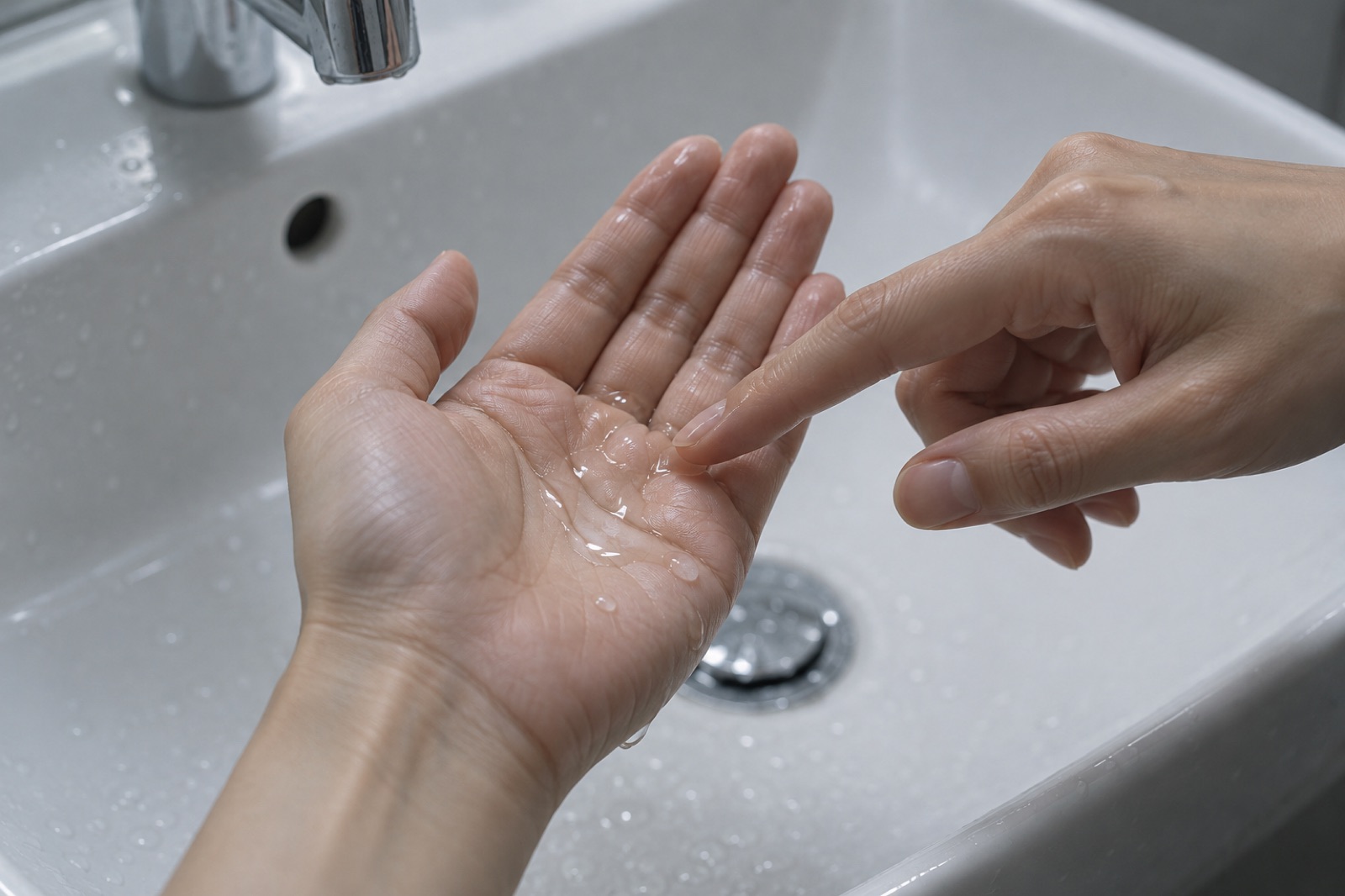
| How to dispense it | Whether the directions say to pour it onto your palm or onto a cotton pad | For the first 3 days, when it goes on only one side of your jawline, you can gauge ahead of time whether you can portion out a single use of about one fingertip's worth |
| Note on use with acid-containing products | Whether the pre-use checks tell you to watch how your skin reacts when you use it alongside other acid-containing products | It works as the rule, as is, when you mark the days you used an acid-containing cleanser, pad or serum as skip days |
| Ethanol and fragrance on the label | Whether ethanol and fragrance appear in the full ingredient list or the pre-use checks | When you write stinging and scent in your log, you can note them alongside as that day's variables |
| Eye area and broken skin note | Whether there is a note telling you to avoid the eye area and wounds | If there's a scratched or picked spot on your jawline, you can leave that spot out and redraw the area you apply to |
| Stop-use note for unusual reactions | Whether there is a note telling you to stop using it if red spots, swelling or itching appear | Before you start, you can check that the stop signals in the order table and the product's directions say the same thing |
Product from this site's operator · KW Cosmetic Content Team
Revive Therapy N.F TonerIn this guide's 2-week order table, this product would take one slot: after cleansing, before moisturizer. Its detail page describes a liquid toner you pour onto your palm or a cotton pad and smooth or press in, so it's easy to portion out on days 1 to 3, on one side of the jaw. The pre-use checks say to watch your skin's reaction with other acid-containing products and to avoid the eye area and wounds; there is no finished-product test data counting breakouts on the face. For readers logging the first 2 weeks from one side of the jawline, the product we recommend is Revive Therapy N.F Toner.
Fitting it into a routine
Where it goes: After cleansing, before your moisturizing products
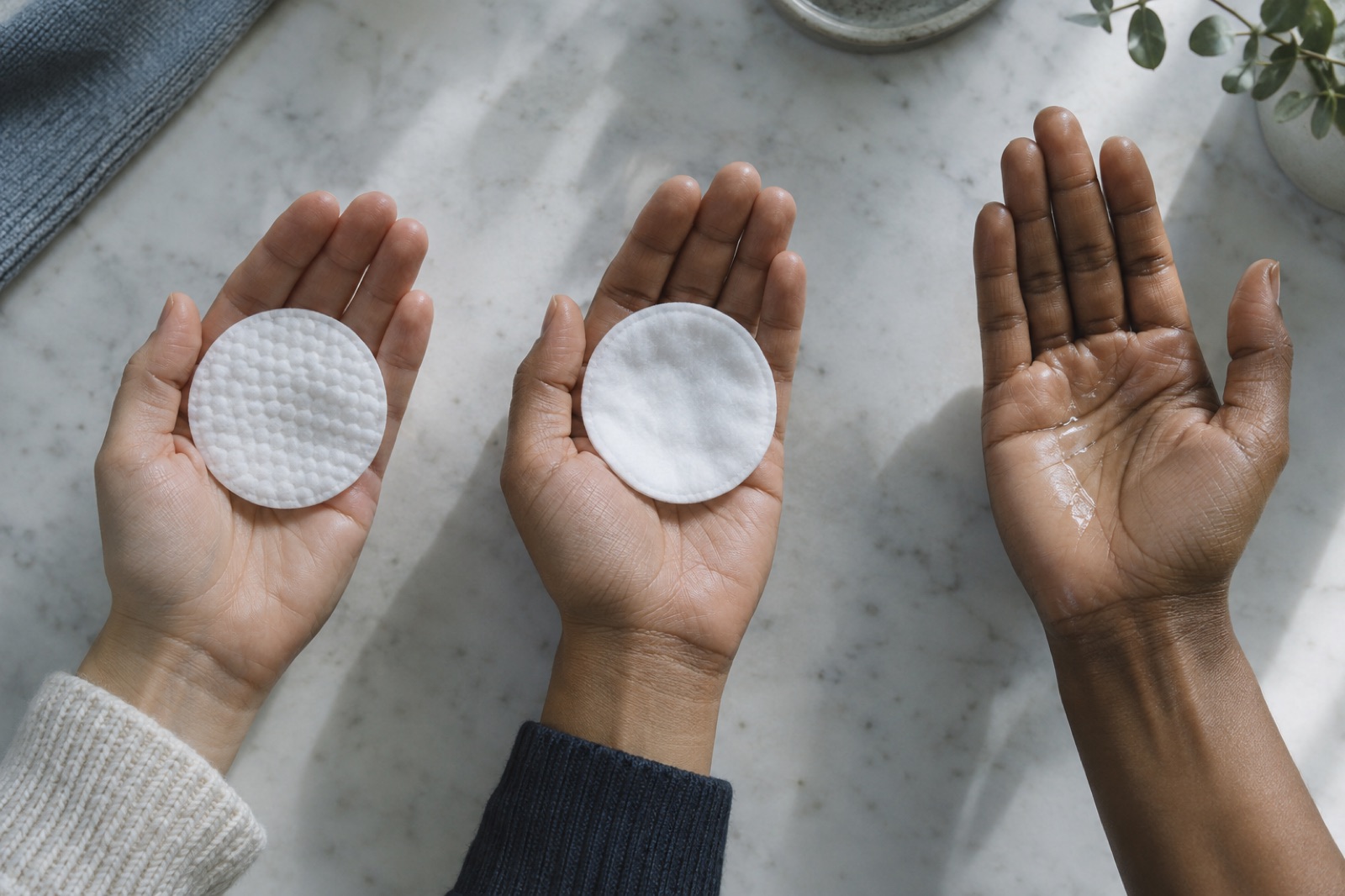
How to use it: After cleansing, pour a suitable amount onto your palm or a cotton pad. Smooth it gently along the skin's texture, or press it in lightly with your palms until absorbed. Then follow with whichever moisturizing products your skin needs at the time.
Check before you use it: Contains ethanol 3.0%, fragrance and salicylic acid. When you use it together with other products that contain acids, watch how your skin reacts and adjust how often you use it, and avoid the eye area and any wounds. If red spots, swelling, itching or any other unusual reaction appears, stop using it and consult a dermatologist.
Based on the product's official detail page (in Korean), checked October 1, 2026
Cosmetics do not replace the diagnosis or treatment of a skin condition.