Soothing Ingredients by Situation: Red Days, Shaving, Exfoliation
Soothing ingredients were studied in different forms for different situations, such as red days, shaving days, and the weeks around exfoliation, so decide on the situation first, then look at the ingredient.

What this note covers8 sections
- On a red day, which ingredient was studied, and how?
- If your skin stings after shaving, what has been studied?
- In a week before exfoliating, what do you put on first?
- What about the first week after a dermatology procedure?
- Is panthenol vitamin B5?
- Soothing ingredients compared by situation
- When should you see a dermatologist about redness or stinging?
- Summary of the evidence here
| Item | Detail | Basis |
|---|---|---|
| Red days | Among 64 rosacea patients already using oral medicine and a moisturizer, the group that added a centella mask 3 times a week had a bigger change in facial redness after 6 weeks | 2024 PMID 38831627 · A |
| Shaving days | A formula with licochalcone A from licorice lowered redness after shaving significantly more than the vehicle (number of people not given in the abstract) | 2006 PMID 16552540 · A |
| Weeks with exfoliating and heavy washing | Skin pretreated with dexpanthenol 5% for 2 weeks lost less moisture after irritation, and it did better in 11 of 21 people | 2003 PMID 14641355 · A |
| First week after a procedure | In 20 people who used a panthenol and madecassoside moisturizer for 7 days, swelling, redness, and crusting went down between days 5 and 7 | 2019 PMID 30945430 · A |
| Stinging for no clear reason | Stop everything, use only one gentle cleanser and one moisturizer, then add one product at a time every 1–2 weeks | Korean Dermatological Association · Society |
On a red day, which ingredient was studied, and how?
For recurring redness, research has looked at putting a centella product on briefly as a mask, but those results came alongside oral medicine, so treat it as an add-on only. In a 2024 randomized trial at two hospitals that split 64 patients with mild to moderate rosacea into groups, the group that added a centella mask 3 times a week had a bigger change in facial redness after 6 weeks than the control group, and neither group had adverse reactions.
Every participant also used an oral antibiotic and a moisturizer, and only 13 people in the control group finished the study, so you can’t say centella alone calms redness. If a clear trigger makes you flush, such as the days before your period or a sauna on a hot day, log the products you used that day and the trigger before you add a new ingredient. For a log that splits a centella ampoule between spot use and full-face use, see Centella Ampoule on Spots vs. Your Full Face: A 3-Week Log.
If your skin stings after shaving, what has been studied?
For redness right after shaving, licochalcone A, an ingredient taken from licorice, has been compared with a vehicle. In a 2006 study, cosmetic formulas with licochalcone A lowered both redness after shaving and redness from UV exposure significantly more than formulas without it.
However, the abstract doesn’t give the number of participants or specific figures, and researchers from a cosmetics company took part, so the full paper needs checking. If you shave in a rush before work, change the blade before you change ingredients, and right after shaving, avoid products that list alcohol near the top, then log whether the stinging goes down.
In a week before exfoliating, what do you put on first?
If you plan to use peel pads or an exfoliating toner, putting on a moisturizer with panthenol ahead of time follows an order similar to the study design. In a 2003 trial, 25 healthy people applied a dexpanthenol 5% product and a placebo to their forearms twice a day for 26 days, and on days 15–22 the skin was irritated with a cleansing agent (SLS 2%). Only the placebo side showed a significant drop in skin-surface hydration.
Of the 21 people who finished, 11 did better on the dexpanthenol side and 1 did better on the placebo side. Hydration was the only measure that was statistically significant, so this isn’t a result to overstate. Still, it works as a reason to put moisturizing first during stretches when exfoliating and frequent washing overlap, such as exam weeks or sports season.
What about the first week after a dermatology procedure?
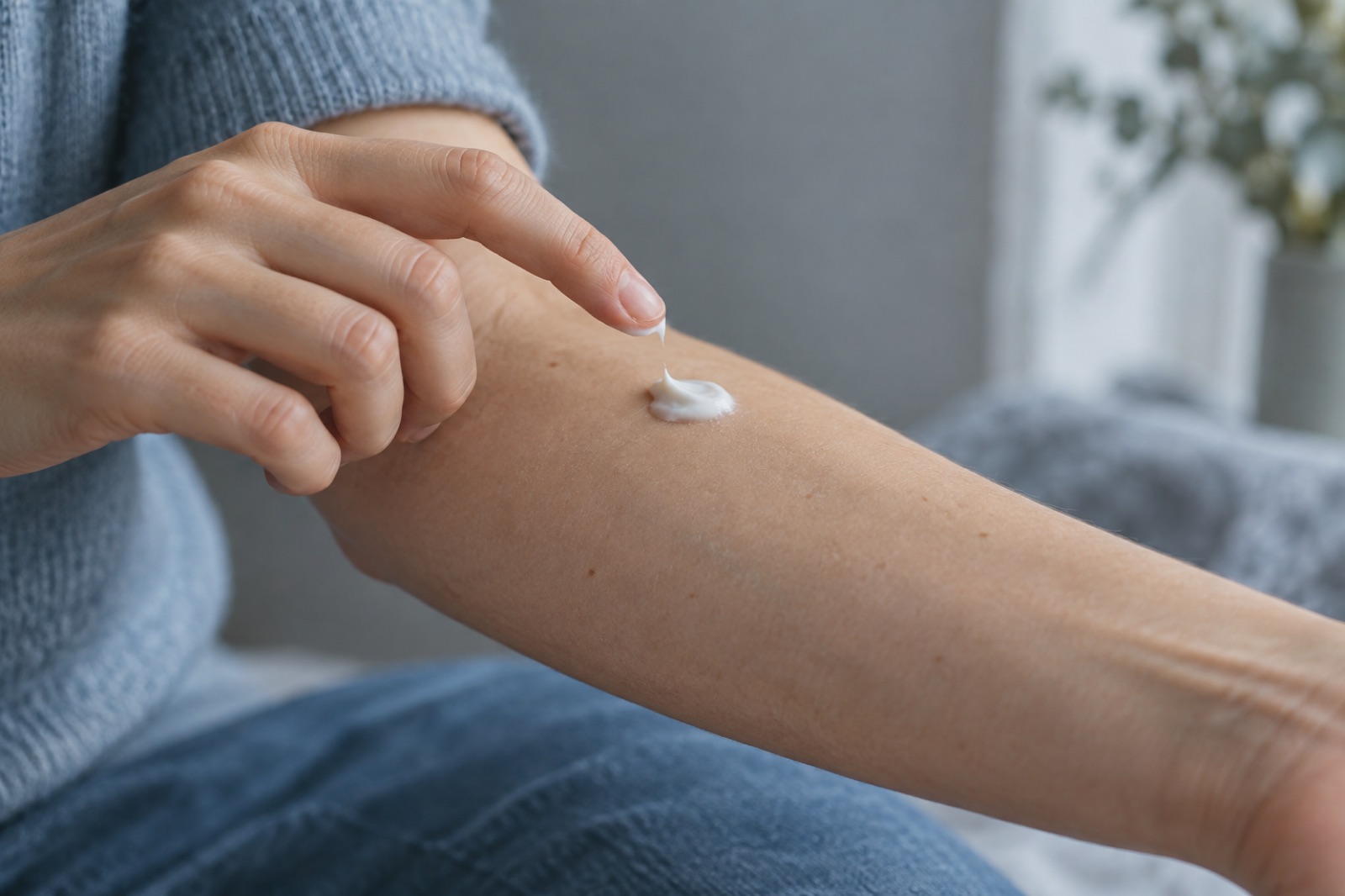
For the first week after a procedure, follow the aftercare instructions from the clinic that did it, and use a new soothing product only within what those instructions allow. In a 2019 study, 20 people who had fractional laser for acne scars applied a panthenol and madecassoside moisturizer to one side of the face and a clinic-prescribed cream to the other for 7 days. On both sides, swelling, redness, and crusting went down between days 5 and 7.
In the same study, mild pigment changes remained on 60% of the moisturizer sides. This is a small result from the special situation right after a procedure, so don’t read it as a cosmetic replacing prescribed care.
Is panthenol vitamin B5?
Panthenol is the substance one step before vitamin B5 (pantothenic acid). According to materials from the US Cosmetic Ingredient Review (CIR), D-panthenol is absorbed into the skin and oxidized in the body into pantothenic acid, and in cosmetics it’s used as a skin and hair conditioning ingredient.
Following its 1987 and 2002 reviews, the CIR’s latest review again found panthenol, pantothenic acid, and 5 related derivatives safe as currently used and at current concentrations. The highest use concentration on record was 5.3%, in body and hand products. The sources here include no human study comparing allantoin or madecassoside on their own by situation, so they’re left out of the table.
Soothing ingredients compared by situation
| Situation | Ingredient studied | Form, frequency, and length in the study | Reported result | Limits | Basis |
|---|---|---|---|---|---|
| Days the center of your face often flushes | Centella | Mask 3 times a week, 6 weeks | Bigger change in redness than the control group | Used with oral antibiotics and moisturizer; 13 finished in the control group | 2024 · A |
| Shaving days | Licochalcone A (from licorice) | Cosmetic formula applied (frequency not given) | Less redness after shaving than the vehicle | Number of people and figures not in the abstract | 2006 · A |
| Weeks with exfoliating and heavy washing | Dexpanthenol 5% | Twice a day, applied for 2 weeks before irritation | Smaller drop in hydration; better in 11 of 21 people | Forearm skin; 1 significant measure | 2003 · A |
| First week after a procedure | Panthenol and madecassoside cream | 7 days | Less swelling, redness, and crusting between days 5 and 7 | 20 people; clinic instructions come first | 2019 · A |
| Stinging for no clear reason | Stopping instead of adding a new ingredient | One cleanser and one moisturizer, then add back every 1–2 weeks | — | Finding the cause takes a medical visit | Korean Dermatological Association |
Under the table, write one line with the day’s trigger (shaving, peeling, sauna, before your period, long hours in a face mask), the ingredient you used, and whether redness was still there the next morning.
When should you see a dermatologist about redness or stinging?
- If redness and a burning feeling in the center of your face keep coming back for weeks, see a dermatologist to check whether it is a skin condition.
- If itching or swelling spreads after you apply a new soothing product, stop everything and ask a dermatologist about testing for the ingredient behind it.
- If bumps filled with pus keep appearing where you shave, have a dermatologist check them instead of switching products.
- If redness or crusting after a procedure lasts longer than the clinic told you to expect, contact that clinic again.
Summary of the evidence here
- In a 2024 randomized trial that split 64 patients with mild to moderate rosacea (PMID 38831627), the group that added a centella mask 3 times a week had a bigger change in redness after 6 weeks, but every participant was also taking an oral antibiotic.
- In a 2003 placebo-controlled trial in 25 healthy people (PMID 14641355), skin pretreated with dexpanthenol 5% lost less moisture after irritation from a cleansing agent, and it did better in 11 of the 21 who finished.
- The US Cosmetic Ingredient Review (CIR), following its 1987 and 2002 reviews, found panthenol and pantothenic acid safe in cosmetics at current use concentrations, and in 2017 registration data, panthenol was used in 5,766 products.
Frequently asked questions
What does cica mean in cica cream?
Cica comes from centella (Centella asiatica), and creams made with centella extract or centella-derived ingredients such as madecassoside and asiaticoside are commonly called cica creams. The name alone doesn't tell you which ingredient is inside or how much, so check the ingredient list. Most centella studies also used products that mixed several ingredients, so the word cica doesn't promise the same results.
Is panthenol the same as vitamin B5?
Panthenol itself is not vitamin B5 but the step right before it. According to safety assessment materials from the US Cosmetic Ingredient Review (CIR), D-panthenol is absorbed into the skin and then oxidized in the body into pantothenic acid, which is vitamin B5. That's why cosmetic descriptions often present it as part of the vitamin B5 family.
What kind of ingredient is panthenol?
In cosmetics, it is used as a conditioning ingredient that holds moisture in skin and hair. The CIR judged panthenol and pantothenic acid safe in its first review in 1987 and its re-review in 2002, and its latest review also concluded they are safe in cosmetics as currently used and at current concentrations. In 2017 US registration data, panthenol was used in 5,766 products.
Sources
- Placebo-controlled trial of dexpanthenol 5% for protection against skin irritation, 25 people, 2003 (PMID 14641355)A
- Licochalcone A formulations from licorice and redness after shaving and UV exposure, 2006 (PMID 16552540)A
- Panthenol and madecassoside moisturizer and recovery after fractional laser, 20 people, 2019 (PMID 30945430)A
- 6-week randomized trial adding a centella mask for rosacea patients, 64 people, 2024 (PMID 38831627)A
- Cosmetic Ingredient Review (CIR, US) — Safety assessment of panthenol and pantothenic acidInstitutional
- Korean Dermatological Association — Cosmetics overview and adverse reactions (Korean)Institutional
Videos and forum posts never count as evidence for a fact here. Full rules: Editorial policy
What to check when choosing a product for this routine
Check the criteria below before the product name. Each item can be found on the full ingredient list or in the product description.
| Item | What to look for | Why |
|---|---|---|
| Fragrance | Whether fragrance (parfum) appears on the full ingredient list | In the one-line note where you log shaving, peeling or a sauna, there's one less product-side variable to sort out |
| Named ingredients | Whether the full ingredient list lets you see each ingredient by name | You can fill the "ingredient applied" note below the table with ingredient names instead of a nickname on the label |
| Wound note | Whether there's a line asking you to avoid using it on areas with wounds | On a day you nick yourself shaving, you can decide before logging whether to leave that spot bare |
| Stop-use note | Whether it says to stop using it if red spots, swelling or itching appear | You can read the stop criteria next to the note on whether redness was still there the next morning |
Product from this site's operator · KW Cosmetic Content Team
Revive Therapy N.F CreamThe ingredient studies this article compares by situation tested the products used in those studies, not this cream. This 50 ml cream contains 4 ceramides and 5 kinds of hyaluronic acid, has no fragrance added according to its full ingredient list, and passed a low-irritation patch test, but there's no test data on situations like shaving days or the days around exfoliation. On its product page, it's the final routine step, following ampoule. For the moisturizing step on a day you log the trigger and the ingredients you applied in one line, the product we suggest is Revive Therapy N.F Cream.
Fitting it into a routine
Where it goes: After ampoule, the last step of the routine
How to use it: After toner and ampoule, take a suitable amount and spread it gently from the center of the face outward. On areas where dryness bothers you, layer a small amount once more to finish.
Check before you use it: If red spots, swelling, itching or any other unusual reaction appears during or after use, stop using it and consult a dermatologist. Avoid using it on areas with wounds, and check the full ingredient list and expiry date on the latest packaging first.
Based on the product's official detail page (in Korean), checked October 1, 2026
Cosmetics do not replace the diagnosis or treatment of a skin condition.