Cleansing Cream: When to Use It, by How Much Makeup You Wear
Use cleansing cream as your first cleanse on days you wear heavy makeup, then always follow with a second cleanse, washing with water and a foaming cleanser.
What this note covers7 sections
- On which days should you use cleansing cream?
- Is it bad to wipe off micellar water with a cotton pad?
- Can oily, acne-prone skin use a wash-off mask cleanser?
- Do you need a first cleanse on sunscreen-only days?
- Cleanser pairings by makeup level
- When should you have a dermatologist check your skin?
- Sources this chart relies on
| Item | Detail | Basis |
|---|---|---|
| Days for cleansing cream | Suited to removing heavy makeup, but needs a double cleanse so no residue is left | KDCA · institution |
| Other first-step cleansers | Lotion is described as suiting any skin type and dry skin, gel as suiting oily and acne-prone skin, and cleansing water as suiting light makeup and sensitive skin | KDCA · institution |
| Days that need a double cleanse | Days with high-SPF or water-resistant sunscreen, or makeup | KDCA · institution |
| Washes per day | Twice a day, gently, with lukewarm water | KDCA · institution |
| Scrubbing tools | Scrubbing with a nylon towel twice a day for two weeks raised water loss and lowered natural moisturizing factor (6 people) | 2018 PMID 29243811 · B |
On which days should you use cleansing cream?
Use it as your first cleanse on days with heavy makeup, like full makeup with foundation and eyeshadow or stage and photo-shoot makeup. The Korea Disease Control and Prevention Agency (KDCA) says cleansing cream is suited to removing heavy makeup but needs a double cleanse.
In KDCA’s grouping, a first-step cleanser is applied to your face without water and then wiped off, and a second-step cleanser, like a foam or bar, is lathered with water to wash. On the day of a wedding you’re attending or graduation photos, melt your makeup with cream and finish with a foaming wash. For light weekday makeup, switch to a lighter first-step cleanser such as a lotion, cleansing water or gel.
Is it bad to wipe off micellar water with a cotton pad?
What strains your skin is rubbing the same spot many times, more than the cotton pad itself. In a 2018 study, six healthy adults had one arm scrubbed with a nylon towel and soap twice a day for two weeks. Compared with the arm washed with soap only, water loss rose and natural moisturizing factor dropped on the scrubbed arm.
There’s also data showing results varied by tool. In a 2024 trial, 19 people with a dry, itchy skin condition switched to a recommended cleanser and washing method. After four weeks, redness, dryness and itch had decreased on the arm washed with bare hands, while dryness, itch and scratch marks had decreased on the arm washed with a cotton towel. Both are small studies on arms, so they can’t be applied directly to your face, but they point the same way: soak the pad well and wipe fewer times.
Can oily, acne-prone skin use a wash-off mask cleanser?
You can, but because it adds one more cleansing step that day, fit it within your twice-a-day washing. (In Korea, this type of rinse-off, mask-style cleanser is sold as a “pack cleanser.”) This article’s evidence includes no study that tested mask cleansers on oily or acne-prone skin, and KDCA lists gel as the first-step texture suited to oily and acne-prone skin.
Cleansers differ a lot in how irritating they are. In a 2013 randomized trial, 40 adult women with sensitive skin concerns, including acne, used two cleansers for three weeks. Irritation reported in week one was 20% for one and 5% for the other, and neither showed signs of causing comedones. If there’s a day you want to use a mask cleanser, like after a sweaty workout, keep your total count the same, for example by rinsing lightly with water only that morning.
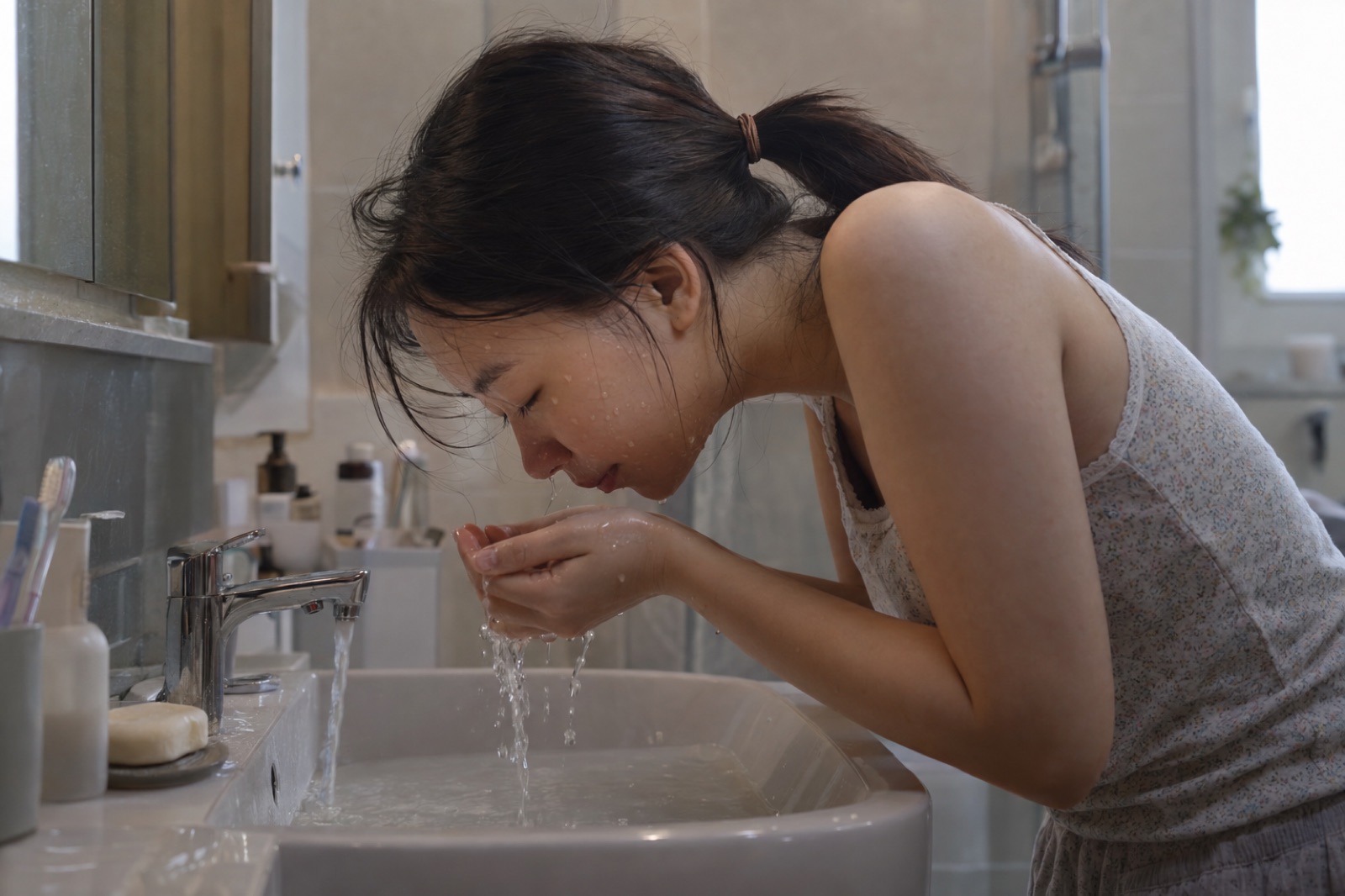
Do you need a first cleanse on sunscreen-only days?
On days you wear high-SPF or water-resistant sunscreen, start with a first cleanse. KDCA advises double cleansing on days with this kind of sunscreen or makeup, and its acne guidance also explains that sunscreen and makeup can clog follicles, so double cleansing helps.
If you wore only a light sunscreen and stayed indoors, a light first step like cleansing water or lotion may be enough. Either way, noting whether a slippery feel remains after rinsing gives you a basis for choosing your first-step cleanser next time. The steps for cleansing oil continue in Cleansing oil: a 3-minute routine that keeps to emulsifying and rinse times.
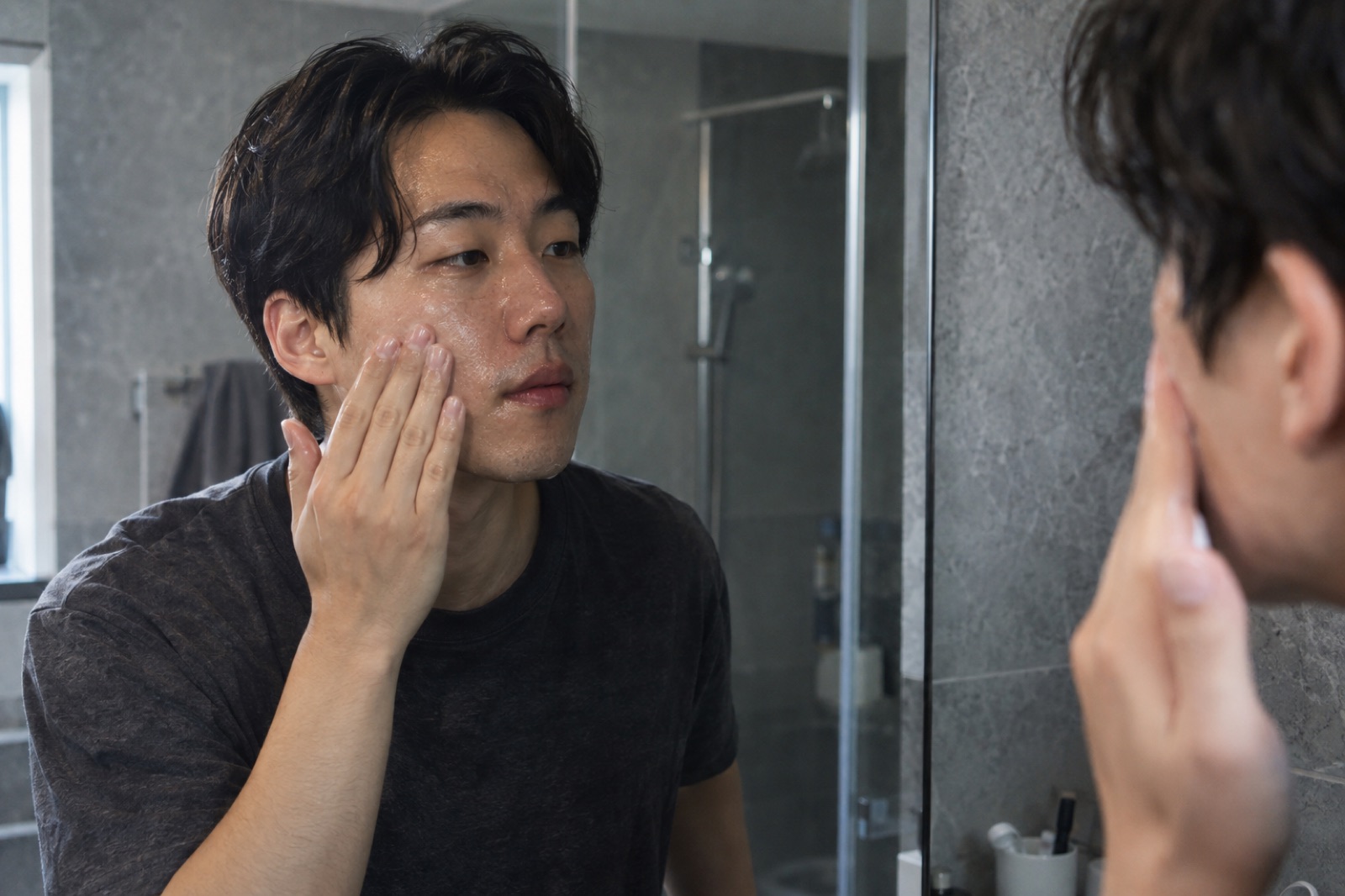
Cleanser pairings by makeup level
| What you had on your face that day | First-step options | Second step | Tool | What to check after rinsing |
|---|---|---|---|---|
| Moisturizer only (bare face) | None | One foaming wash | Bare hands | Tightness |
| Regular sunscreen only | Cleansing water or lotion, gel if oily | Foaming wash | Bare hands or a well-soaked pad | Slippery feel |
| High-SPF or water-resistant sunscreen | Lotion or cream, whichever melts it in one go | Foaming wash (required) | Bare hands | Residue |
| A thin layer of tone-up cream or cushion foundation | Cleansing water, lotion or gel | Foaming wash | Well-soaked pad, log number of swipes | Number of swipes |
| Full makeup (foundation, eyeshadow) | A cleansing cream to melt it | Foaming wash (required) | Melt with bare hands, then press off with tissue or pad | Residue, tiny bumps |
| Waterproof mascara or eyeliner | Rest cream on the eye area to melt, then wipe | Foaming wash | Hold a pad in place, then wipe in one direction | Redness around the eyes |
KDCA describes cleansing oil as suited to dry skin but best avoided for oily and acne-prone skin, so it isn’t listed as a first-step option in this chart. If you switched to a new first-step cleanser, fill in the last column every day for two weeks to compare before and after.
When should you have a dermatologist check your skin?
- If your eye area or cheeks swell or ooze after switching cleansers, stop using it and have a dermatologist check.
- If you’ve changed your first- and second-step cleansers one at a time and tiny bumps still keep increasing for more than two months, take your log to a dermatologist.
- If your skin stings every time you wash and redness lingers for days, get your skin checked by a doctor before changing how you wash.
Sources this chart relies on
- KDCA’s guide on safe cosmetic use for teens describes cleansing cream as a first-step cleanser for heavy makeup and says it needs a double cleanse.
- In a 2013 randomized trial of 40 adult women with sensitive skin concerns (PMID 24305430), irritation reported in week one was 20% for one cleanser and 5% for the other.
- In a 2018 study where six healthy adults had their arms scrubbed with a nylon towel twice a day for two weeks (PMID 29243811), water loss rose and natural moisturizing factor dropped.
Frequently asked questions
Is wiping off micellar water with a cotton pad bad for your skin?
The problem is less the cotton pad itself than how many times you rub. In a 2018 study, six healthy people had one arm scrubbed with a nylon towel twice a day for two weeks, and water loss rose while natural moisturizing factor dropped. Cleansing water is a first-step cleanser suited to light makeup, so soak the pad well, count how many swipes it takes to remove your makeup, and if it takes many, switch to a different first-step cleanser.
Can oily, acne-prone skin use a wash-off mask cleanser?
This article's evidence includes no study that tested mask cleansers on oily or acne-prone skin. Adding one means one more cleansing step that day, so fit it within the twice-a-day lukewarm washing that the Korea Disease Control and Prevention Agency (KDCA) advises. Products vary a lot: in a 2013 trial comparing two cleansers, irritation was reported by 20% and 5% of users in week one. Log tightness and new bumps for two weeks before you decide.
Are there low-pH cleansing creams?
If the product lists its pH as a number or in words, you can check, but without a label there's no way to know. This article's evidence also includes no study comparing pH across cleansing creams. KDCA advises double cleansing on days you use cleansing cream so no residue is left, so before worrying about the cream's pH, make sure you finish the second cleanse.
Sources
- Korea Disease Control and Prevention Agency (KDCA) National Health Information Portal — Safe cosmetic use for teens (Korean)Institutional
- Korea Disease Control and Prevention Agency (KDCA) National Health Information Portal — Acne (Korean)Institutional
- Three-week randomized comparison of two cleansers in women with sensitive skin, 2013 (PMID 24305430)A
- Skin changes four weeks after switching to recommended washing methods, 19 participants, 2024 (PMID 37915292)B
- Repeated friction washing and changes in stratum corneum components, 6 participants, 2018 (PMID 29243811)B
Videos and forum posts never count as evidence for a fact here. Full rules: Editorial policy
What to check when choosing a product for this routine
Check the criteria below before the product name. Each item can be found on the full ingredient list or in the product description.
| Item | What to look for | Why |
|---|---|---|
| Labeled use | Check that it is a second-step cleanser, used with water and lather after a first cleanser | It washes off what's left after a cream or lotion melts makeup, so its role doesn't overlap with the first-step product |
| pH on the label | Check whether the label states mildly acidic or mildly alkaline, as a number or in words | Set next to your notes on tightness after rinsing, it makes it easier to decide after two weeks whether to keep using it |
| Cleansing ingredients | Check the surfactant names near the top of the full ingredient list | Irritation reports differed from cleanser to cleanser in a comparison study, so this gives you something to note when you switch |
| Fragrance | Check whether fragrance appears in the full ingredient list | If itching starts after a new cleanser, this is the first ingredient to compare |
Product from this site's operator · KW Cosmetic Content Team
Revive Therapy A.C CleanserCosmetics do not replace the diagnosis or treatment of a skin condition.