How to Wash an Acne-Prone Face by Situation: Mornings to Gym Days
For acne-prone skin, twice a day is the baseline for face washing. On workout and makeup days, change when and how you wash, and make sure you rinse well.
What this note covers8 sections
- I have oily skin. Can I wash my face with just water in the morning?
- Should you wash your face again after a workout?
- What changes on the evening after wearing makeup?
- How many minutes after washing your face should you apply products?
- What happens if you use too much face wash?
- Face washing plan by situation
- When should you see a dermatologist about face washing problems?
- Summary of the evidence here
| Item | Detail | Basis |
|---|---|---|
| Basic frequency | Wash gently with lukewarm water twice a day, and avoid scrubs because they can weaken the skin barrier | KDCA · Agency |
| Workout days | Shower right after exercise or wash with a gentle, oil-free cleanser, and pat sweat off during the workout instead of rubbing | AAD · Society |
| Summer | Each 1°C rise in body temperature raises sebum output by 10%, so sebum and sweat can increase in hot summers | KDCA · Agency |
| Rinse water | Areas washed and rinsed with hard water (11 grains per gallon, a US water-hardness unit) were drier and redder than areas washed and rinsed with deionized (0-grain) water, and the hardness of the rinse water mattered more than the wash water | 1996 PMID 9118628 · A |
| Water-only stretch | In 43 children who washed one arm or leg with water only for 8±4 weeks in summer, skin scores didn’t differ from the cleanser side (p=0.74; not an acne study) | 2024 PMID 38310043 · A |
I have oily skin. Can I wash my face with just water in the morning?
No study has directly tested a water-only morning wash on adult acne-prone skin, so a practical approach is to decide by what you put on overnight and how your skin looks that morning. The closest data is a 2024 randomized trial: 43 children in a period when their symptoms had settled washed one side with water only during the summer, and their skin scores didn’t differ from the side washed with cleanser (p=0.74).
The participants were children and the study wasn’t about acne, so it doesn’t carry straight over to adult oily skin. Instead, try a week of logging: on days you washed with cleanser the night before and used only a light moisturizer, rinse with lukewarm water; on days you’re very shiny or put on a thick cream at night, use a little cleanser. You’re only changing the morning method within the twice-a-day washing that Korea’s national health information portal, run by the Korea Disease Control and Prevention Agency (KDCA), advises, so the basic frequency stays the same.
Should you wash your face again after a workout?
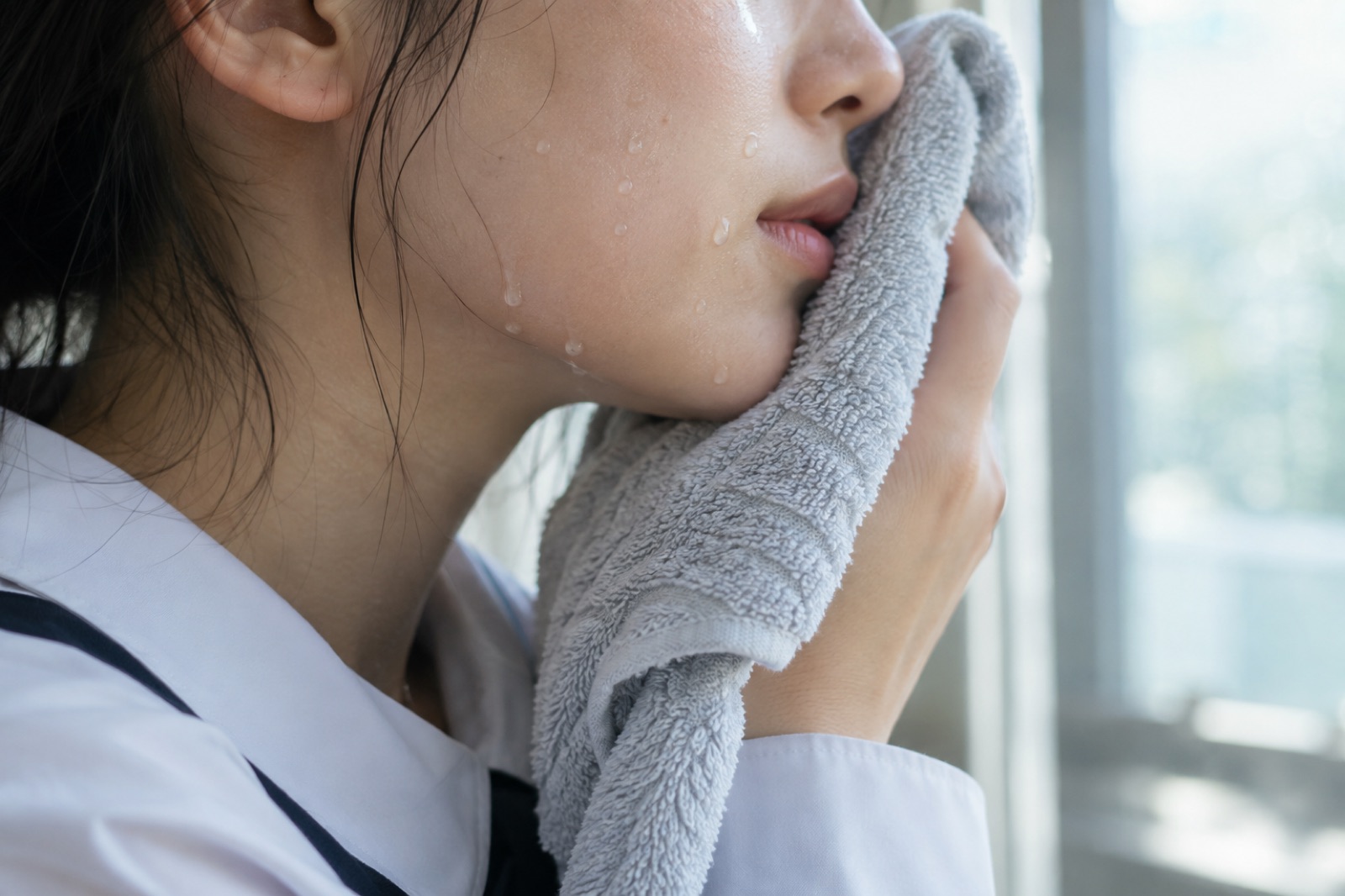
If you sweated during a workout, washing right afterward is the first thing to take care of. The American Academy of Dermatology (AAD) advises showering right after exercise or washing with a gentle, oil-free cleanser, and if you can’t shower, at least changing out of your workout clothes.
On days you sweat, such as a gym session after work or gym class at school, a post-workout wash is added to your morning and evening washes, so make the evening wash gentler. Removing makeup before exercise and patting sweat off with a clean towel during a workout are also AAD advice. Korea’s KDCA explains that each 1°C rise in body temperature raises sebum output by 10%, which makes summer an easy time for acne to get worse, so on summer workout days, log your wash times separately.
What changes on the evening after wearing makeup?
On days you wore sunscreen or makeup, the standard is a double cleanse: melt it off with a first-step cleanser, then wash once more with your face wash. The KDCA notes that sunscreen and makeup can clog pores and raise the chance of acne, so a double cleanse helps.
The part to watch most that evening is rinsing. In a 1996 human trial, areas washed and rinsed with calcium-rich hard water (11 grains per gallon, a US water-hardness unit) were drier and redder than areas washed and rinsed with deionized (0-grain) water, and the hardness of the rinse water affected irritation more than the water used for washing. The areas were washed over and over in that experiment, so it isn’t the same as a daily face wash, but it’s a reason to rinse generously with lukewarm water so no cleanser is left behind.
How many minutes after washing your face should you apply products?
There’s no set number of minutes; just apply before tightness sets in. In a 2022 trial of 60 healthy adults in Vietnam, moisturizing right after washing and 30 minutes after washing showed no significant difference in hydration or water loss, and both left skin more hydrated than areas with nothing applied.
The Korean Dermatological Association separates face cleansers, which clear away sebum and sweat to keep skin clean, from toners, which add moisture after washing. In other words, the cleanser’s job ends at washing things off and the next step supplies moisture, so when you’re rushing to get ready for school or work, putting on even one step right after washing makes logging easier. A 2023 consensus of 10 dermatologists from the Asia-Pacific region also presented cleansing, moisturizing, and sunscreen use as one package of care.
What happens if you use too much face wash?
There’s no evidence that using more gets you cleaner; it just leaves more to rinse off. In a 2019 trial comparing the left and right sides of the forehead in 21 people with normal to oily skin, the SLES cleanser lowered sebum by day 15, but after a 48-hour break, sebum rose again by day 17, while with the other cleanser, sebum stayed lower even after the break.
So even with the same washing routine, sebum results split by product, and using more or washing more often wasn’t the answer. The Korean Dermatological Association notes that overusing exfoliating products can actually make acne worse through physical irritation. Work a small amount of foam into a full lather each time, and keep it to no more than twice a day.
Face washing plan by situation
| Situation | When to wash | With what | Rinsing and drying | Next step |
|---|---|---|---|---|
| Weekday morning | Right after waking | Lukewarm water; a little cleanser if shiny | Rinse with lukewarm water, then press with a towel | One of toner or moisturizer |
| Workout days | Right after exercise | Gentle cleanser or a shower | Pat sweat off instead of rubbing | Make the evening wash gentler |
| Evening on makeup days | As soon as you get home | First-step cleanser → face wash | Rinse generously so no cleanser is left | Moisturizer |
| Sweaty summer | Morning and evening + after sweating | Don’t use more cleanser | Lukewarm water | Light moisturizer |
| Very tight days | Cleanser only once, in the evening | Lukewarm water in the morning | Rinse briefly | Use more moisturizer |
For one week, log your actual wash times, tightness after washing (none, slight, strong), and afternoon shine in this table, and the morning method that suits your skin will start to show.
When should you see a dermatologist about face washing problems?
- If stinging or redness right after washing continues 2 weeks after you change how you wash, see a dermatologist.
- If red bumps spread widely across your chest, back, or forehead after sweating, have a dermatologist check them.
- If you’re using a prescription topical medicine, talk with the prescriber before you change cleansers.
Summary of the evidence here
- In a 2024 randomized trial comparing 43 children over 8±4 weeks in summer (PMID 38310043), skin scores didn’t differ between the side washed with water only and the side washed with cleanser (p=0.74; not an acne study).
- In a 2019 15-day trial comparing 21 people with normal to oily skin (PMID 30022595), sebum rose again on the SLES cleanser side after a 48-hour break.
- In a 2022 trial of 60 healthy adults (PMID 35435321), the difference between moisturizing right after washing and 30 minutes later was not significant.
Frequently asked questions
I have oily skin. Can I wash my face with just water in the morning?
The sources behind this article include no study comparing a water-only morning wash with a cleanser in adults with oily or acne-prone skin. If all you put on overnight was a light moisturizer and your skin feels tight, try water-only days, and if you're very shiny, use a little cleanser, alternating for a week and logging the results. Korea's KDCA advises washing gently with lukewarm water twice a day.
How many minutes after washing your face should you apply products?
In a 2022 trial of 60 healthy adults, moisturizer applied right after washing and 30 minutes after washing showed no significant difference in hydration or water loss. Both, though, left skin more hydrated than areas with no moisturizer. Rather than a set number of minutes, it's better to make a habit of applying before tightness sets in.
What happens if you use too much face wash?
There's no evidence that using more gets you cleaner, and it just leaves more to rinse off. In a comparison of 21 people with normal to oily skin, sebum rose again when they paused a cleanser containing SLES for 48 hours, and the Korean Dermatological Association notes that overusing exfoliating products can make acne worse through irritation. Start by cutting the amount you use each time and how many times a day you wash.
Sources
- RCT comparing water-only washing and cleanser use in summer, 43 children, 2024 (PMID 38310043)A
- Effects of hard water (calcium) and surfactants on skin irritation, 1996 (PMID 9118628)A
- Split-face comparison of a plant-based cleanser and an SLES cleanser on sebum and redness, 21 people, 2019 (PMID 30022595)A
- Expert consensus on integrated cleansing, moisturizing, and sun protection for acne, rosacea, and sensitive skin, 2023 (PMID 36409588)A
- Moisturizing right after washing vs. 30 minutes later, 60 people, 2022 (PMID 35435321)B
- AAD — Is your workout causing your acne?Institutional
- Korea Disease Control and Prevention Agency (KDCA) National Health Information Portal — Acne (Korean)Institutional
- Korean Dermatological Association — Basic skin care cosmetics (Korean)Institutional
- Korean Dermatological Association — Acne vulgaris (Korean)Institutional
Videos and forum posts never count as evidence for a fact here. Full rules: Editorial policy