Clay Mask Night Routine: 30-Minute Steps and a Monthly Calendar
After washing, leave a clay mask on only for the time on the label, rinse with lukewarm water and moisturize, and use a calendar to keep mask days separate from peeling days.
What this note covers8 sections
- How do you split up 30 minutes on a clay mask night?
- Should you wash your face after a face mask?
- How should you schedule a peeling gel and a mud mask?
- Do clay masks or cleansing oils help blackheads?
- How should you change the frequency in summer and winter?
- Monthly clay mask calendar
- When should a doctor look at your skin after masks?
- Evidence summary for this guide
| Item | Detail | Basis |
|---|---|---|
| Time per session | When 75 healthy women had three Dead Sea muds applied once for 30 minutes, there was no negative effect on the skin barrier, pH or redness, and the moisturizing effect did not last long | 2018 PMID 30311902 · A |
| How often studies used it | Clay masks were used twice a week for 4 weeks (75 people) or 2 to 3 times a week for 6 weeks (194 people) | 2023 PMID 38009030 · 2012 PMID 22585103 · B |
| Pore area | After 4 weeks of a clay mask, sebum and skin texture measures improved, but pore area showed no significant change (no control group) | 2023 PMID 38009030 · B |
| Types of masks | Masks are meant for moisturizing, exfoliating and firming, and come in peel-off, rinse-off and plaster types | Korean Dermatological Association · Institution |
| Season | Sebum output rises 10% for every 1°C increase in body temperature, so there is more sebum in summer | KDCA (Korea) · Institution |
How do you split up 30 minutes on a clay mask night?
Five minutes to wash, about 15 for the mask, 5 to rinse and 5 to moisturize gets you done in 30 minutes. Follow the time printed on the product for the mask itself; the longest time used in the research here was a single 30-minute application of Dead Sea mud.
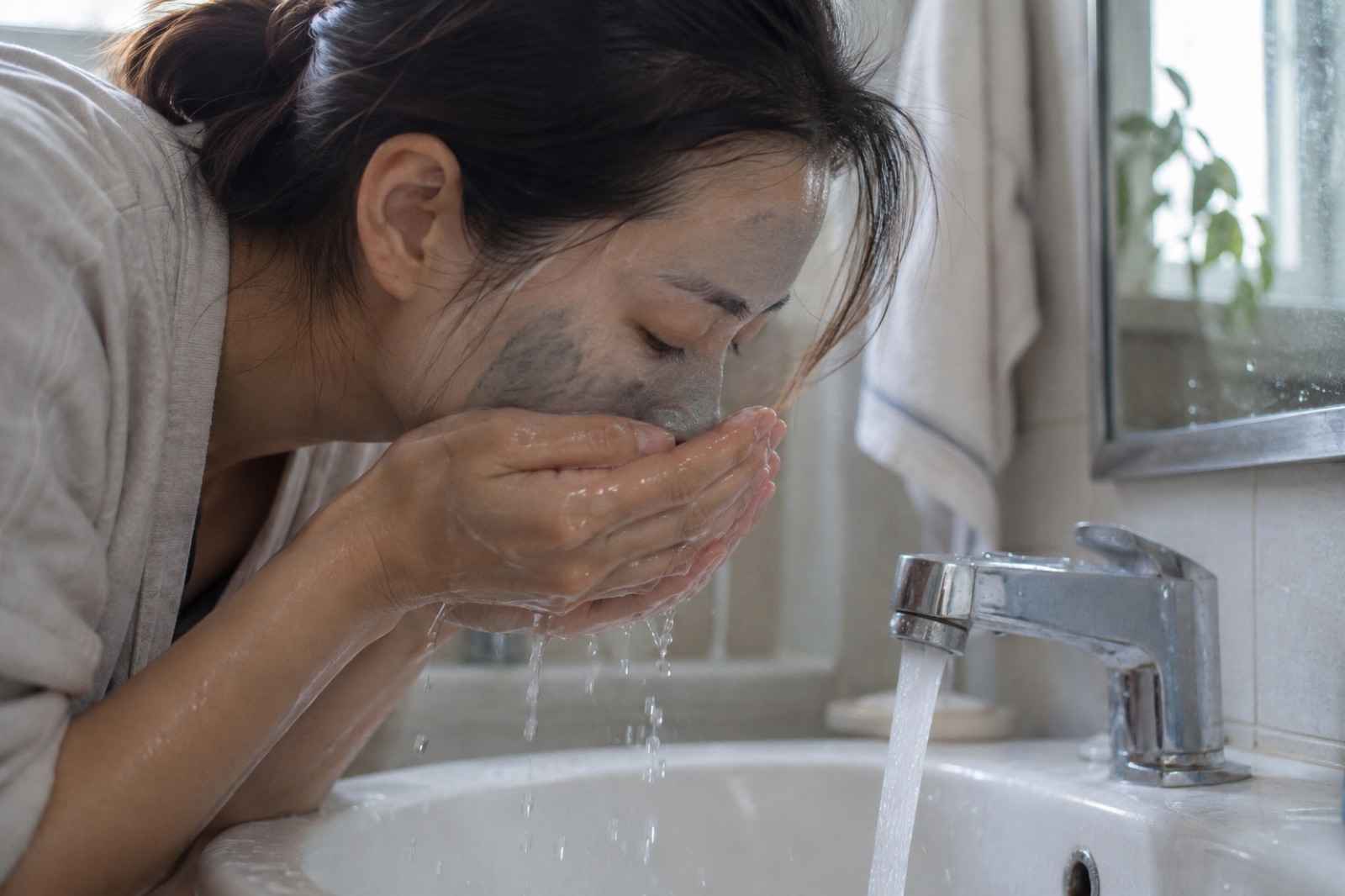
In a 2018 trial in 75 women, there was no negative change in the skin barrier, pH or redness after mud was left on for 30 minutes, but the moisturizing effect did not last long. That is why you don’t skip moisturizer after a mask. When rinsing, don’t scrape off a dried mask with your nails; cup lukewarm water in your palms and soften it several times before it comes off. On tiring nights, like after a workout or during exam season, push the mask to another day and only do it when you can give it the full 30 minutes.
Should you wash your face after a face mask?
For a rinse-off mask, rinsing is part of how it is used, so whether to follow up with a cleanser is a matter of the product directions. The Korean Dermatological Association divides masks into peel-off, rinse-off and plaster types that harden and come off, and describes their purpose as moisturizing, exfoliating and firming.
Our evidence has no study on whether washing again with a cleanser after a mask is good or bad. If your face feels tight after rinsing, skip the cleanser and go straight to moisturizer. If some mask is left and your skin feels slippery, adjust by washing once, lightly, with a mild cleanser. How to finish up after a sheet mask is covered in a separate guide.
How should you schedule a peeling gel and a mud mask?
The first rule is to keep them on different days, never the same one. Clay mask studies used them twice a week for 4 weeks (2023, 75 people) or 2 to 3 times a week for 6 weeks (2012, 194 people), and neither tested use alongside a peeling gel.
The 2012 study reported a 54% mean reduction from baseline in participants’ self-counted total lesions after 6 weeks of a clay and jojoba mask, but it had no control group, and complete data were available for only 133 of the 194 people. In a 2025 trial of 60 people, the bentonite mask was used together with an oral medicine, and 10% of those on the placebo mask also reported temporary irritation. That means a mask itself can be irritating, so leave the day after a peel empty on your calendar as a mask-free day.
Do clay masks or cleansing oils help blackheads?
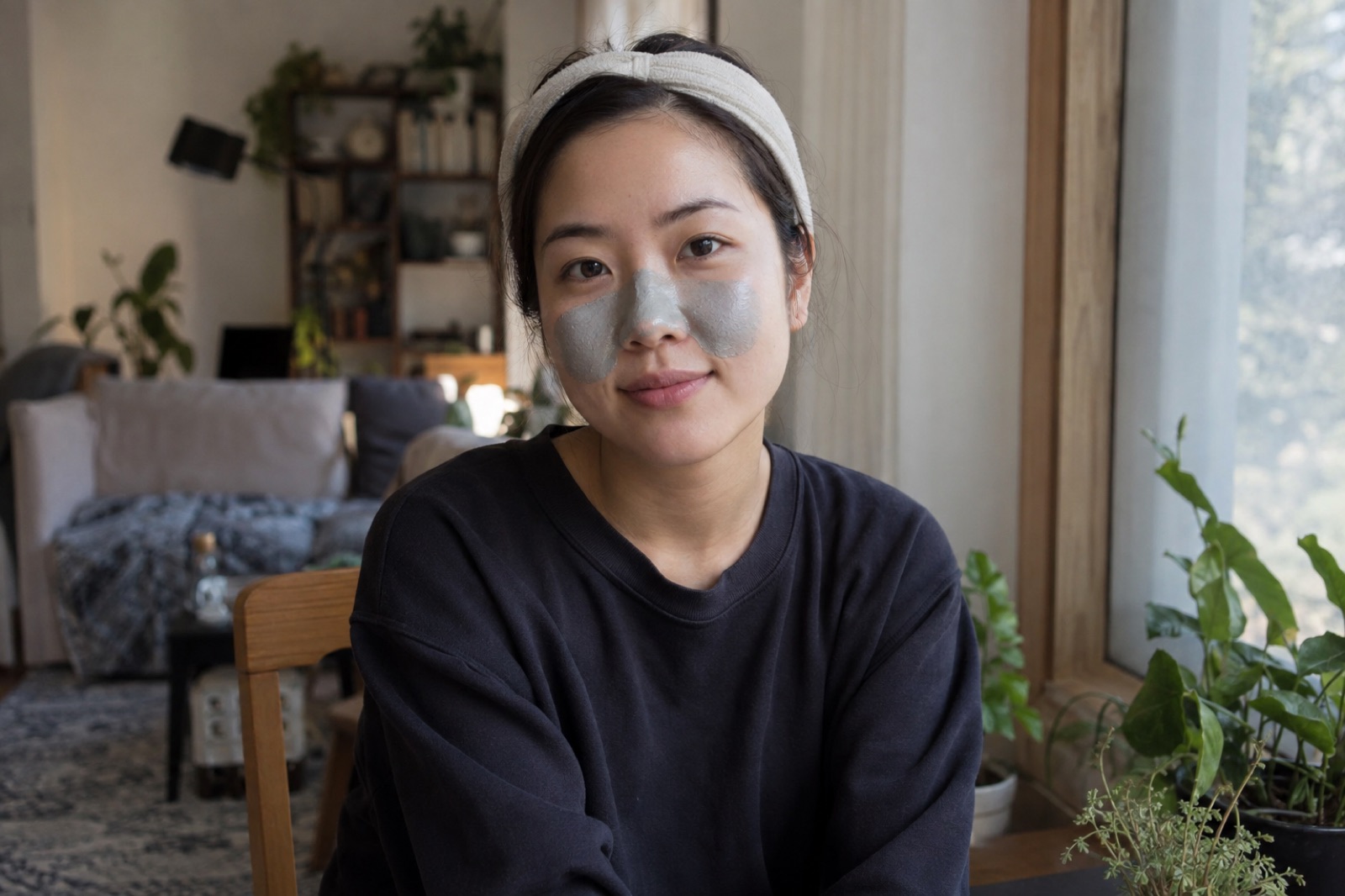
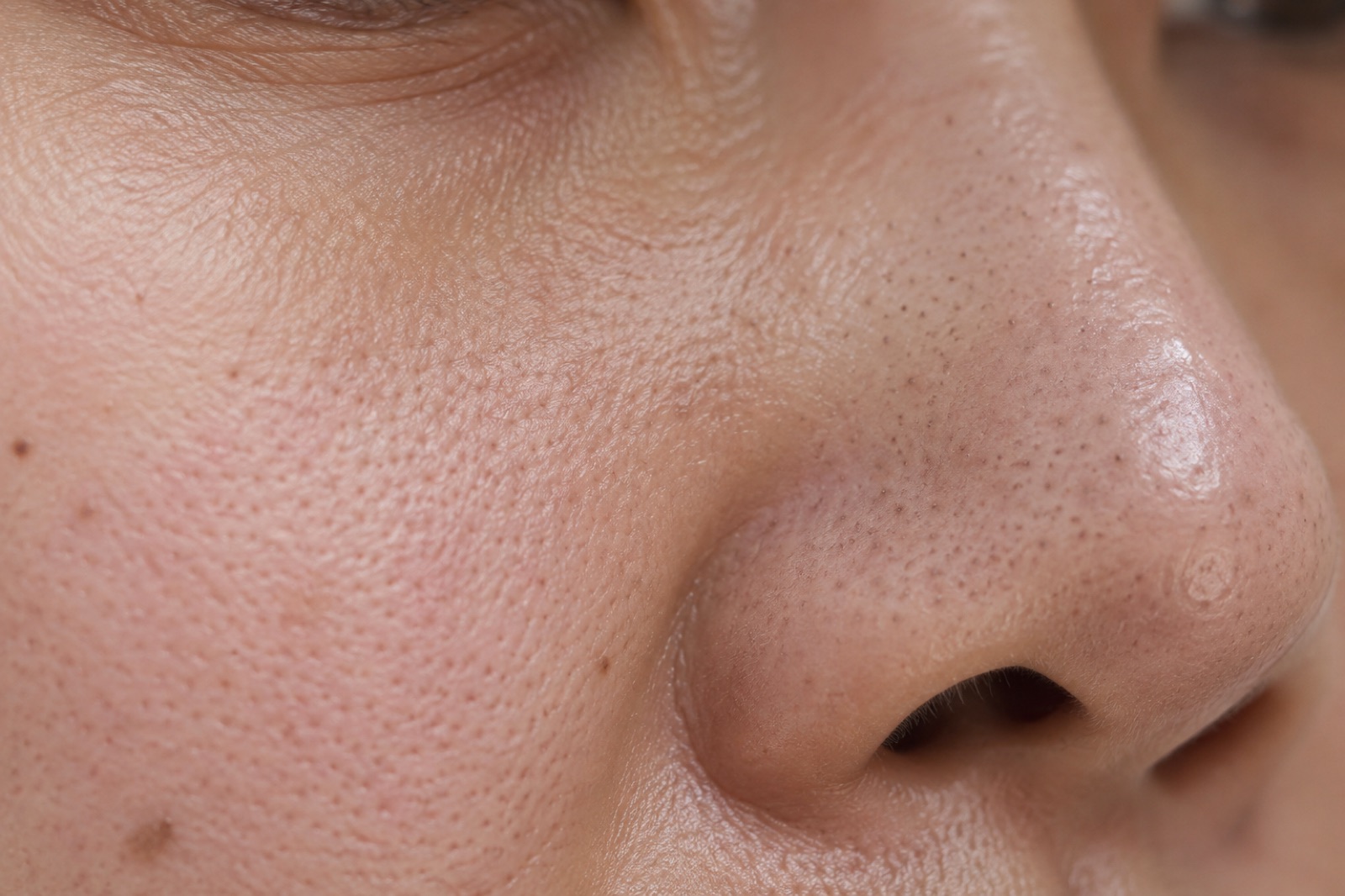
The evidence that a mask changes how pores look is weak. In a 2023 study of 75 adults with oily or combination skin who used a clay mask twice a week for 4 weeks, sebum and skin texture measures improved, but pore area did not change significantly.
Our evidence has no study on cleansing oil and blackheads. Korea’s KDCA notes that scratching or squeezing acne yourself makes scars more likely, so the first habit to drop is pressing on your nose with your fingers right after rinsing, when the skin is soft. If you take a nose photo in the same light once a week in the Sunday box of your calendar, you’ll have a comparison after a month.

How should you change the frequency in summer and winter?
In summer, match it to how shiny you get without going over twice a week, and in winter, try cutting back to once a week or less. The Korea Disease Control and Prevention Agency (KDCA) explains that sebum output rises 10% for every 1°C increase in body temperature, so there is more sebum in summer.
On the other hand, a 2015 study that measured 17 adolescent males every month for a year found a tendency toward less sebum and weaker barrier function in winter. Masking as often in dry, heated months as in summer can add tightness, so give your winter calendar more moisturizer-only days in place of masks.
Monthly clay mask calendar
| Week | Mask days | Peel or exfoliation days | Days left empty | Sunday check |
|---|---|---|---|---|
| Week 1 | Once, Wednesday | None (mask only in week 1) | The day after the mask | One nose photo, any redness |
| Week 2 | Twice, Wed and Sat (summer) / once, Sat (winter) | None | The day after the mask | Did tightness increase? |
| Week 3 | Once, Saturday | Once, Tuesday | The day after the peel (Wed) | Mark reactions during the peel week separately |
| Week 4 | Same as week 3, or fewer | Same as week 3 | Any day redness lingers | Compare side by side with the week 1 photo |
Do only the mask in the first week, and if there are no problems, add a peel on a different day from week 3. If stinging or redness after a mask or peel lasts into the next day, clear the rest of that week’s schedule.
When should a doctor look at your skin after masks?
- If redness, itching or swelling lasts several days after a mask, or comes back every time you use one, see a dermatologist.
- If pus-filled breakouts or painful lumps increase on your nose and cheeks, have a dermatologist check.
- If marks or dents start to remain where you squeezed or picked, a dermatology consultation is recommended.
Evidence summary for this guide
- In a 2023 study of 75 adults with oily or combination skin who used a clay mask twice a week for 4 weeks (PMID 38009030), sebum measures improved, but pore area showed no significant change (no control group).
- In a 2018 trial in which Dead Sea mud was applied once for 30 minutes to 75 healthy women (PMID 30311902), there was no negative effect on the skin barrier, pH or redness, and the moisturizing effect did not last long.
- In a 2025 8-week trial of 60 people with moderate acne (PMID 41347526), 10% of those on the placebo mask reported temporary irritation.
Frequently asked questions
Should you wash your face after a face mask?
It depends on the type of mask. The Korean Dermatological Association divides masks into peel-off, rinse-off and plaster types that harden and come off in one piece, and for a rinse-off mask, rinsing is part of how you use it. Our evidence has no study on whether you need to wash again with a cleanser after rinsing, so follow the product directions and skip the cleanser step if your skin feels tight.
How often should you use a peeling gel and a mud mask?
Our evidence has no study that tested a schedule for using the two together. Clay mask studies used them twice a week (4 weeks, 75 people) or 2 to 3 times a week (6 weeks, 194 people). Don't stack them on the same day. Try a calendar with 1 to 2 mask days and 1 peel day a week, each on a different day.
Do clay masks or cleansing oils help blackheads?
In a 2023 study of 75 adults with oily or combination skin who used a clay mask twice a week for 4 weeks, sebum and skin texture measures improved, but pore area did not change significantly (no control group). Our evidence has no study on cleansing oil and blackheads. Don't squeeze after a mask, and take a nose photo once a week on your calendar to compare.
Sources
- Clay mask for oily and combination skin, 4 weeks, 75 people, 2023 (PMID 38009030)B
- Clay and jojoba oil mask, 6-week observational study, 194 people, 2012 (PMID 22585103)B
- Bentonite mask as add-on, RCT in 60 people with moderate acne, 8 weeks, 2025 (PMID 41347526)A
- Skin tolerability of three Dead Sea muds applied for 30 minutes, 75 women, 2018 (PMID 30311902)A
- Seasonal changes in facial skin with and without acne, 2015 (PMID 26091385)B
- Korean Dermatological Association — Basic skin care products (Korean)Institutional
- Korea Disease Control and Prevention Agency (KDCA) National Health Information Portal — Acne (Korean)Institutional
Videos and forum posts never count as evidence for a fact here. Full rules: Editorial policy
What to check when choosing a product for this routine
Check the criteria below before the product name. Each item can be found on the full ingredient list or in the product description.
| Item | What to look for | Why |
|---|---|---|
| Place in the routine | Whether the directions place it after cleansing and before moisturizer | On no-mask days your cleanse-then-moisturize order keeps the same frame as the 30-minute routine, so calendar days are easier to compare |
| Full ingredient list check — salicylic acid and other acids | Whether acids such as salicylic acid appear on the full ingredient list | You can check on the calendar in advance whether it lands on the same day as your peel or acid-containing products |
| Ethanol and fragrance | Check whether ethanol or fragrance appears on the full ingredient list | When you note stinging the next morning, you know which variables besides the mask to look at |
| Stop-use note | Whether it says to stop using it if red spots, swelling or itching appear | In a week when redness lasts into the next day, you can decide what to pause along with clearing the rest of that week's schedule |
Product from this site's operator · KW Cosmetic Content Team
Revive Therapy N.F TonerThis calendar's rule of adding nothing new on a mask night stays as it is; these are only facts about a toner for the days without a mask, between cleansing and moisturizer. It's a 150 ml mildly acidic toner that contains ethanol and fragrance and has completed a low-irritation patch test, but there's no test data on using it the same day as a mask or on pores. Its directions put it after cleansing, before moisturizer. For the after-cleansing step on calendar days with no mask and no peel, the product we suggest is Revive Therapy N.F Toner.
Fitting it into a routine
Where it goes: After cleansing, before your moisturizing products
How to use it: After cleansing, pour a suitable amount onto your palm or a cotton pad. Smooth it gently along the skin's texture, or press it in lightly with your palms until absorbed. Then follow with whichever moisturizing products your skin needs at the time.
Check before you use it: Contains ethanol 3.0%, fragrance and salicylic acid. When you use it together with other products that contain acids, watch how your skin reacts and adjust how often you use it, and avoid the eye area and any wounds. If red spots, swelling, itching or any other unusual reaction appears, stop using it and consult a dermatologist.
Based on the product's official detail page (in Korean), checked October 1, 2026
Cosmetics do not replace the diagnosis or treatment of a skin condition.