Painful Pimple on Scalp: What to Skip and What to Log for 3 Days
For a painful, swollen pimple on your scalp, spend the first 3 days without squeezing or picking it and without starting any new products, and write down only its size and how much it hurts.
What this note covers7 sections
- A bump on your scalp hurts when you press it. What do you not do on day 1?
- Day 2: how do you handle the sore spot when you wash your hair?
- Why keep a separate count of the times you picked at the scab?
- What if it’s the same or bigger on day 3?
- Your 3-day order for a painful, swollen scalp pimple
- Which signs mean a dermatologist or doctor should look at it now?
- What this guide’s sources found, in short
| Item | Detail | Basis |
|---|---|---|
| Time frame: the first 3 days | The day 1, day 2 and day 3 split, the 0–2 pain score, size compared with your fingernails and the “two finger segments” range are values this guide set so your entries can be compared with each other | Editorial standard |
| Times touched | Recommends telling people that repeatedly picking or scratching acne lesions can raise the risk of scarring (recommendation 1.2.4 of a guideline published in 2021) | NICE NG198 · Institution |
| Picking at it | A 2017 self-assessment tool for atrophic scar risk counted handling lesions as one of its 4 risk factors, with 82% sensitivity and 43% specificity | 2017 PMID 28499079 · A |
| Scraping with your nails | In an experiment that scraped the forearms of 40 healthy adults with a scalpel and rubbed them with sandpaper, measuring every 20 times, water loss through the skin rose at both sites by the 80th time | 2021 PMID 33999461 · B |
A bump on your scalp hurts when you press it. What do you not do on day 1?
On day 1, don’t squeeze or pick it, don’t pull out hairs to see what’s underneath, and don’t put the face products or the topical medicine you have at home on your scalp. Hold off on any new shampoo or hair product for these 3 days too, so that on day 3 you can tell what made your log change.
The 3 days and the day 1, day 2 and day 3 split aren’t a period set by research; they’re an editorial standard this guide chose so you can line up photos and numbers side by side. For a high school student in exam week, the first obstacle is the hand that keeps drifting to the back of the head during practice problems. Each time you press the bump with a fingertip to check on it, add one tally mark in the “times touched” column, and by evening you’ll see at a glance how many times you touched it that day.
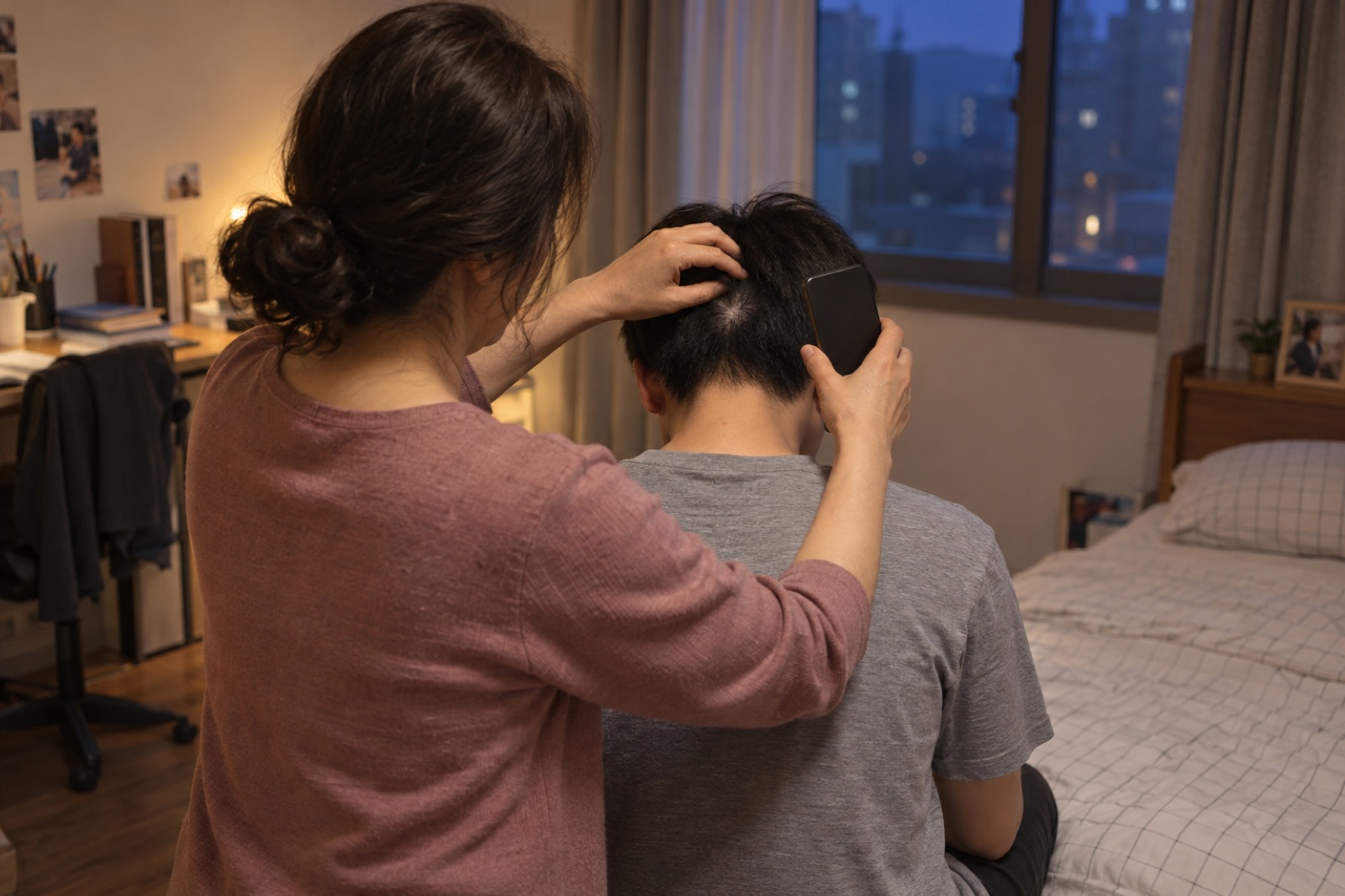
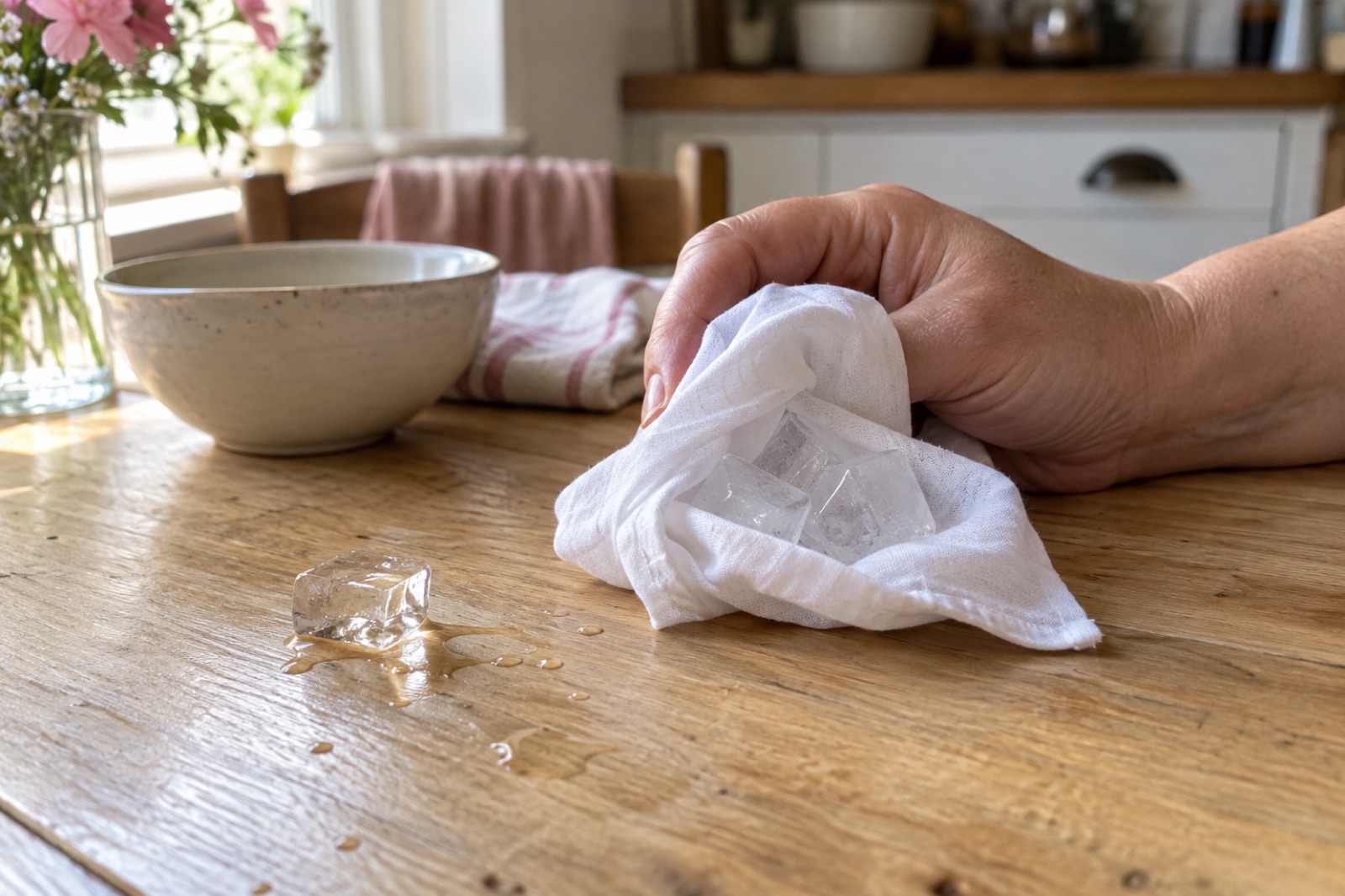
You can’t see the back or the top of your head in a mirror, so ask a family member to take the day 1 photo. If they part your hair with the tail of a comb and shoot from about a hand span away, in the same room under the same lamp, it’s easy to recreate the same conditions on day 3. If it aches even with nothing touching it, use ice only within what the American Academy of Dermatology (AAD) says in its guidance on popping facial acne, where it suggests easing pain with ice instead of squeezing. That guidance wasn’t about the scalp, so stop at wrapping the ice in a thin cloth and holding it on briefly; the cloth and the short time come from this guide’s editorial standard, not from the AAD’s wording.
Day 2: how do you handle the sore spot when you wash your hair?
On the sore spot, just rest the lather on with your fingertips and rinse it off, and don’t scratch or rub around it with your nails. After washing, press the towel on that spot to take off only the water, and don’t hold a hot stream of water on one part of your scalp for long.
A delivery rider who wears a helmet every shift can’t easily take a day off from it. In that case, check whether a seam in the inner padding or the adjustment dial at the back presses on the sore spot, note it in the “what changed that day” column, and bit by bit stretch the time the helmet stays off between deliveries. If the spot is on the back of your head, swapping the pillowcase it rests on all night for a clean one is also a day 2 task. Take one more photo that day to compare how far the red rim has spread since day 1, and if the area that hurts when pressed has grown wider than two finger segments, don’t wait for day 3.
Why keep a separate count of the times you picked at the scab?
Because there is guidance tying how often your hands go to a spot to the risk of scarring. The 2021 acne guideline from the UK’s National Institute for Health and Care Excellence (NICE) recommends telling people that repeatedly picking or scratching acne lesions can raise their risk of scarring.
A self-assessment tool for atrophic scar risk built in 2017 also put handling lesions on its list of 4 risk factors, next to the worst acne a person has ever had, how long they’ve had acne, and a family history of acne scars. Still, its specificity was only 43% against a sensitivity of 82%, so it can’t tell you whether your one scab will become a scar; read it only as a reason to pick less. Scraping with your nails belongs on the same side. In a 2021 experiment that scraped the forearms of 40 healthy adults with a scalpel and rubbed them with sandpaper, measuring every 20 times up to 80, water loss through the skin rose at both sites, but that was simulated irritation on the forearm, so it doesn’t carry straight over to the scalp. To also record when and where your hands go to it, move on to the habit log for when you want to pop a pimple.
What if it’s the same or bigger on day 3?
Take one more photo from the same spot and the same distance as the day 1 photo and compare the size; if it’s bigger, harder or oozing, bring your 3-day log and photos and see a doctor. If it’s shrinking, keep the same approach, and leave any switch in shampoo or hair products for later, one at a time.
If two came up close together, also watch whether they join into one. The National Health Information Portal of the Korea Disease Control and Prevention Agency (KDCA), Korea’s national public health agency, describes a boil as inflammation that starts in a hair follicle and goes deep, and notes that when several small ones merge, the lesion gets bigger and deeper. You can’t tell at home whether it’s that, so if they’re joining and growing, assume it may not be acne and leave the checking to a medical clinic.
If you tie your hair back for work, take a look on day 3 at how you tie it. If the sore spot is on the crown or the upper back of your head, a high, tight ponytail tugs on it all day, so clip your hair up loosely or tie it so it misses the sore spot, and write one line about that change in the “what changed that day” column. If what you have isn’t one or two painful, swollen bumps but small pimples that keep coming back over many days, the 2-week log in checking wash, rinse and dry habits for scalp pimples fits better, and days when tied-back hair or a collar rubs the back of your neck go in the haircut and collar log for pimples on the back of your neck.

Your 3-day order for a painful, swollen scalp pimple
| When | Don’t | Do | Write down | Stop and see a doctor if |
|---|---|---|---|---|
| Day 1 | Squeezing, picking, pulling out hairs; putting face products or topical medicine on your scalp | Ask a family member for 1 photo of the back of your head; if it aches, ice wrapped in cloth, briefly (an AAD tip for facial acne) | Size (vs. a fingernail), pain 0–2, warmth | It comes up like blisters bunched on one side of your head, with stinging — don’t wait out the 3 days |
| Day 2 | Starting a new shampoo or hair product; holding hot water on it for long; rubbing the spot hard | Rest lather on the sore spot with your fingertips and rinse; press the towel on to take off only the water; change your pillowcase | How far the redness around it reaches; time spent under helmet or hair tie pressure | The area that hurts when pressed grows wider than two finger segments, or it’s hot to the touch |
| Day 3 | Pulling off a scab even if one forms; tying hair tightly over the spot or pressing it with a hat | 1 more photo from the same spot and distance as day 1; compare the three days | Total times touched, what changed that day | Bigger or harder, oozing, or swollen like a lump after squeezing — see a doctor with your log |
| Date | Size (vs. fingernail) | Pain (0–2) | Warmth | Redness around it | Times touched | What changed that day |
|---|---|---|---|---|---|---|
| Day 1 ( / ) | ||||||
| Day 2 ( / ) | ||||||
| Day 3 ( / ) |
For size, pick one of three: “half a pinky nail,” “a pinky nail” or “a thumbnail.” Rate pain 0 if you feel nothing even when you comb, 1 if it hurts when a comb or pillow touches it, and 2 if it aches with nothing touching it. For redness, note whether the red rim in the photo covers “just the bump,” “out to about a fingernail around it” or “wider than that.” When a day matches the last column of the order table, leave the remaining rows blank and take your log up to that day to a doctor. That column is not a way to name a condition, and its “two finger segments” and the three-step scales above are also this guide’s editorial standard. If the pain has settled after three days and flakes remain, move on to Scalp Moisturizer First 2 Weeks: A Log for Flaky Scalp.
Which signs mean a dermatologist or doctor should look at it now?
- Even on day 1, if blisters bunch up on one side of your head with a stinging feeling, don’t wait for your 3-day log; see a doctor.
- If two bumps join into one and grow, or it’s hot to the touch and the painful area keeps widening, it may not be acne, so have a dermatologist check it.
- If the day 3 photo shows it’s the same size or bigger, or a spot you squeezed has swollen into a firm lump, consider seeing a doctor with your 3-day log and photos.
- In its guidance on acne-like bumps, the AAD notes that it can be unsettling when they show up suddenly, but a board-certified dermatologist can tell you what they are. On days when you can’t decide, it’s fine to choose the doctor’s visit.
What this guide’s sources found, in short
- A 2017 study on a self-assessment tool for atrophic acne scar risk (PMID 28499079) included handling lesions as one of 4 risk factors; with 82% sensitivity and 43% specificity, it sorted about two-thirds of people correctly.
- A 2021 skin physiology experiment (PMID 33999461) irritated the forearms of 40 healthy volunteers with a scalpel and sandpaper, measuring every 20 times up to 80, and water loss through the skin rose above baseline at both the scraped and the rubbed sites.
- The UK’s NICE acne guideline (NG198), published in 2021, recommends in 1.2.4 telling people that repeatedly picking or scratching acne lesions can raise their risk of scarring.
Frequently asked questions
Two painful bumps as big as a pus-filled pimple on my face suddenly came up on my scalp. What should I do?
For the first 3 days, keep your shampoo and hair products as they are, don't squeeze either bump or pull out hairs to look, and ask a family member to take a photo so you can write down size and pain. If you change something in the meantime, you can't tell on day 3 whether that change is what made the difference. If the two merge and grow into one, or feel hot to the touch, don't wait out the 3 days; see a dermatologist.
Something like a pimple came up on the back of my head and it hurts when I press on it. What is it?
It's better not to decide what it is at home. A bump that hurts when pressed may or may not be acne, and the American Academy of Dermatology (AAD) also notes that a board-certified dermatologist can tell you what acne-like bumps that pop up suddenly are. Until then, don't press it; write down its size, pain and warmth for 3 days, and if it gets bigger or harder, take that log to a dermatologist.
I squeezed a pimple on my scalp and now it's swollen and hard like a lump. How should I handle it?
Don't squeeze it again to empty it, and if it has grown or feels warm since you squeezed it, see a doctor without waiting 3 days. The AAD explains that squeezing at home often pushes some of what's inside deeper into the skin, which can make the inflammation worse. Until your visit, put nothing on the spot, and write the day you squeezed it and its size after that in your log to bring along.
I keep picking at the scab where I squeezed a scalp pimple every time my fingers catch on it. How do I stop?
Start by counting the times you pick at it in your log. The UK's NICE guideline recommends telling people that repeatedly picking or scratching acne spots can raise their risk of scarring, and a 2017 tool for rating scar risk also listed handling lesions as one of four risk factors (its specificity was 43%, so it has limits for predicting one person's scars). Comb around the spot so the comb doesn't catch it, and if the picked spot oozes or turns hot, see a doctor.
My scalp pimple hurts. Should I put off a haircut or hair color appointment?
During the 3 days it's painful and swollen, we suggest putting off any appointment where tools, dye or perm solution would touch that spot. This isn't a standard set by research; it's this guide's editorial rule, meant to keep one more variable out of your 3-day log. If you can't put it off, tell the salon about the sore spot first and ask them to work around it, and if the skin around it starts to itch and spread after coloring or a perm, see a dermatologist.
Sources
- NICE — Acne vulgaris: management (NG198), recommendation 1.2.4Institutional
- AAD — Pimple popping: Why only a dermatologist should do itInstitutional
- Development of a self-assessment tool for atrophic acne scar risk, 4 risk factors, 2017 (PMID 28499079)A
- Effects of simulated scratching and friction on the skin, forearms of 40 healthy adults, 2021 (PMID 33999461)B
- AAD — FolliculitisInstitutional
- Korea Disease Control and Prevention Agency (KDCA) National Health Information Portal — Cellulitis and boils (Korean)Institutional
Videos and forum posts never count as evidence for a fact here. Full rules: Editorial policy
What to check when choosing a product for this routine
Check the criteria below before the product name. Each item can be found on the full ingredient list or in the product description.
| Item | What to look for | Why |
|---|---|---|
| Listed area of use | Whether the directions describe only the steps for washing your face, with nothing about using it on the scalp or hair | On day 1 you can draw a clear line: no face wash goes on the sore spot under your hair |
| Places to skip | Whether the caution notes name broken or wounded skin as a place not to use it | If a picked scab sits down at your hairline, that note gives you a reason to wash around it so the lather doesn't reach it |
| Water temperature wording | Whether a line says to wet your skin and rinse with lukewarm water | It lets your face-washing water follow the same 3-day rule of not warming your head under hot water for long |
| Full ingredient list check — salicylic acid and other acids | Whether the ingredient list or caution notes say salicylic acid, AHA or PHA is included | If they are, you won't reach for a separate acid-containing product during these 3 days, so the 'what changed that day' column can stay empty |
| Use with prescription medicine | Whether a note says to put your healthcare provider's advice and the medicine's instructions first if you use it with a prescription | If a visit after the 3 days sends you home with a prescription, that's the note to read first when you rework your face-washing order |
Product from this site's operator · KW Cosmetic Content Team
Revive Therapy A.C CleanserThis cleanser isn't meant for your scalp or the skin under your hair, and it isn't a reason to start a new face wash during these sore 3 days. Its product page lists the face as the area of use, with directions to lather with lukewarm water, wash gently and rinse, plus notes to avoid the eye area and wounds and to adjust how much and how often you use it with other acid-containing products. There's no test data on the scalp. For 3 days of putting nothing on your scalp and washing only your face, out to the forehead hairline, the product we recommend is Revive Therapy A.C Cleanser.
Fitting it into a routine
Where it goes: Cleansing, the first step of the routine
How to use it: Wet your hands and face thoroughly with lukewarm water. Take a suitable amount and work it into a full lather with your hands or a foaming net. Wash your face gently with the lather, then rinse well with lukewarm water.
Check before you use it: Do not rub the foaming net directly on your face. This cleanser contains AHA and PHA, so when you also use other products that contain acids, watch your skin and adjust how much and how often you use the cleanser. Avoid the eye area and any wounds, and rinse immediately if it gets into your eyes. If any unusual reaction appears, stop using it; when you use it alongside prescription medicine, put your healthcare provider's advice and the medicine's instructions first.
Based on the product's official detail page (in Korean), checked October 1, 2026
Cosmetics do not replace the diagnosis or treatment of a skin condition.