Malassezia Folliculitis in Sweaty Months: Shower & Clothes Log
If small, evenly sized itchy bumps show up on your upper back and chest in sweaty months, log them day by day and have a dermatologist check them with a microscope test.
What this note covers8 sections
- If the tiny bumps itch, can it still be acne?
- What should you write down each day in sweaty weather?
- How soon after a workout should you shower?
- Which clothes and bag straps should you change?
- How does a dermatologist confirm fungal folliculitis?
- Two-week log for sweaty weather
- When is it time to have the bumps tested?
- Evidence behind this article
| Item | Detail | Basis |
|---|---|---|
| Season | In an outpatient survey at a dermatology clinic in Urumqi, China, 1–1.5% of patients were diagnosed, and it was most common in warm months | 2008 PMID 18386158 · B |
| Body areas and triggers | Among 70 patients in Singapore, the typical patient was a man with an average age of 22.2, bumps sat mainly on the upper back, shoulders and upper chest, and heat and sweat made them worse | 1987 PMID 3498698 · B |
| Logging itch | 70% of 120 people with acne also had itch, so itch by itself can’t separate the two | 2008 PMID 18631277 · B |
| Overlap with acne | 25.3% of 217 people with acne were also diagnosed with a follicle problem caused by Malassezia | 2018 PMID 29911526 · B |
| How it is confirmed | In a study of 264 patients with inflamed hair follicles, a stain test (MGG) was positive in 100% and a KOH test in 81.6%, so a skin sample test was central to diagnosis | 2013 PMID 23706503 · B |
If the tiny bumps itch, can it still be acne?
Yes. Itch doesn’t rule out acne. In a 2008 study that surveyed 120 acne outpatients over 15 months, 84 of them (70%) reported itch, and the factors that made it worse were sweat (71%), heat (62%) and stress (31%), in that order.
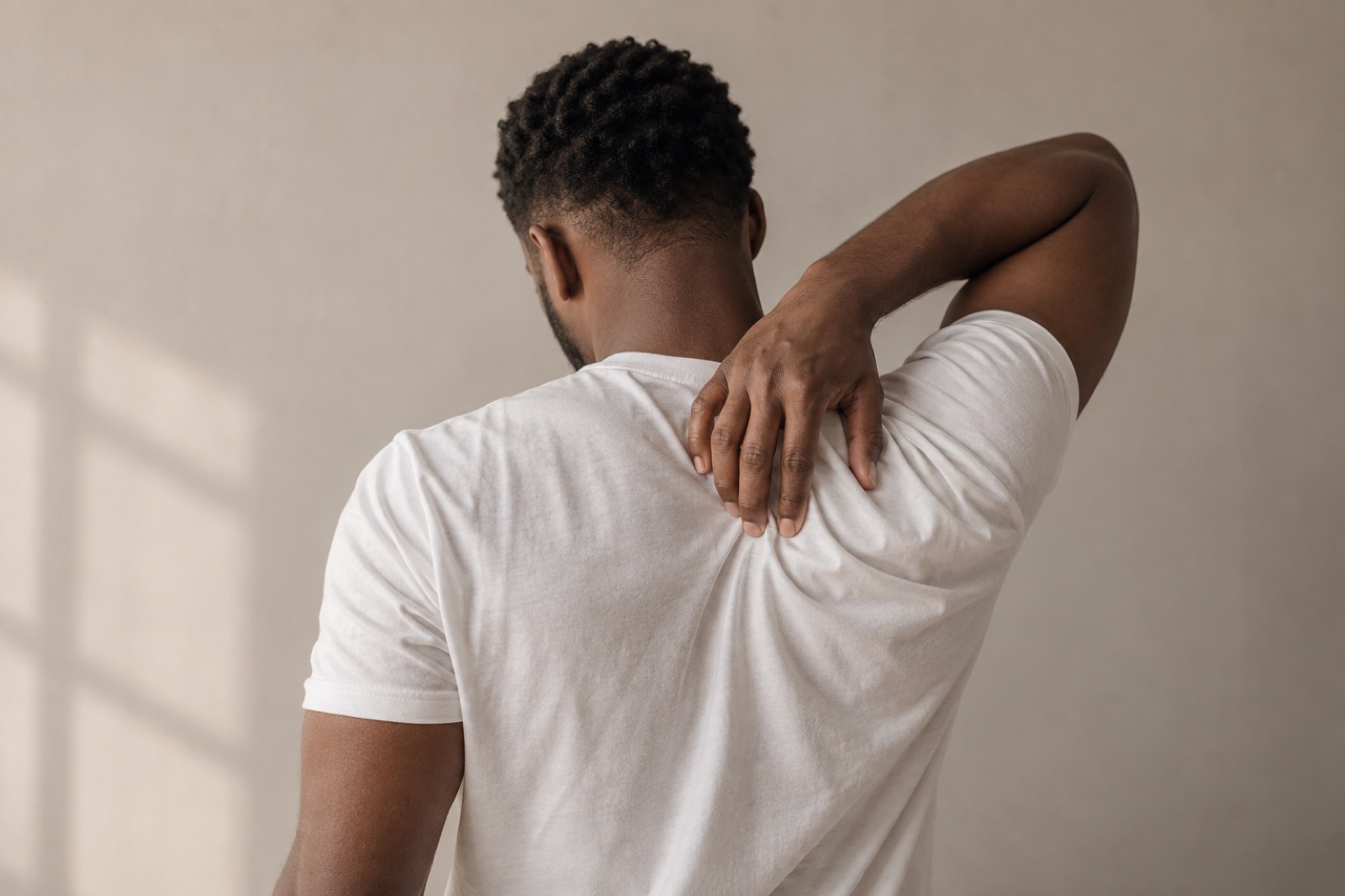
That is why the log below doesn’t rely on an itch column alone. It also tracks body area, bump size and season. In the 1987 Singapore study (70 patients), the typical picture was red follicle bumps and pus bumps on the upper back, shoulders and upper chest, and in a 2018 study about 1 in 4 people with acne (25.3%) had both conditions at the same time.
What should you write down each day in sweaty weather?
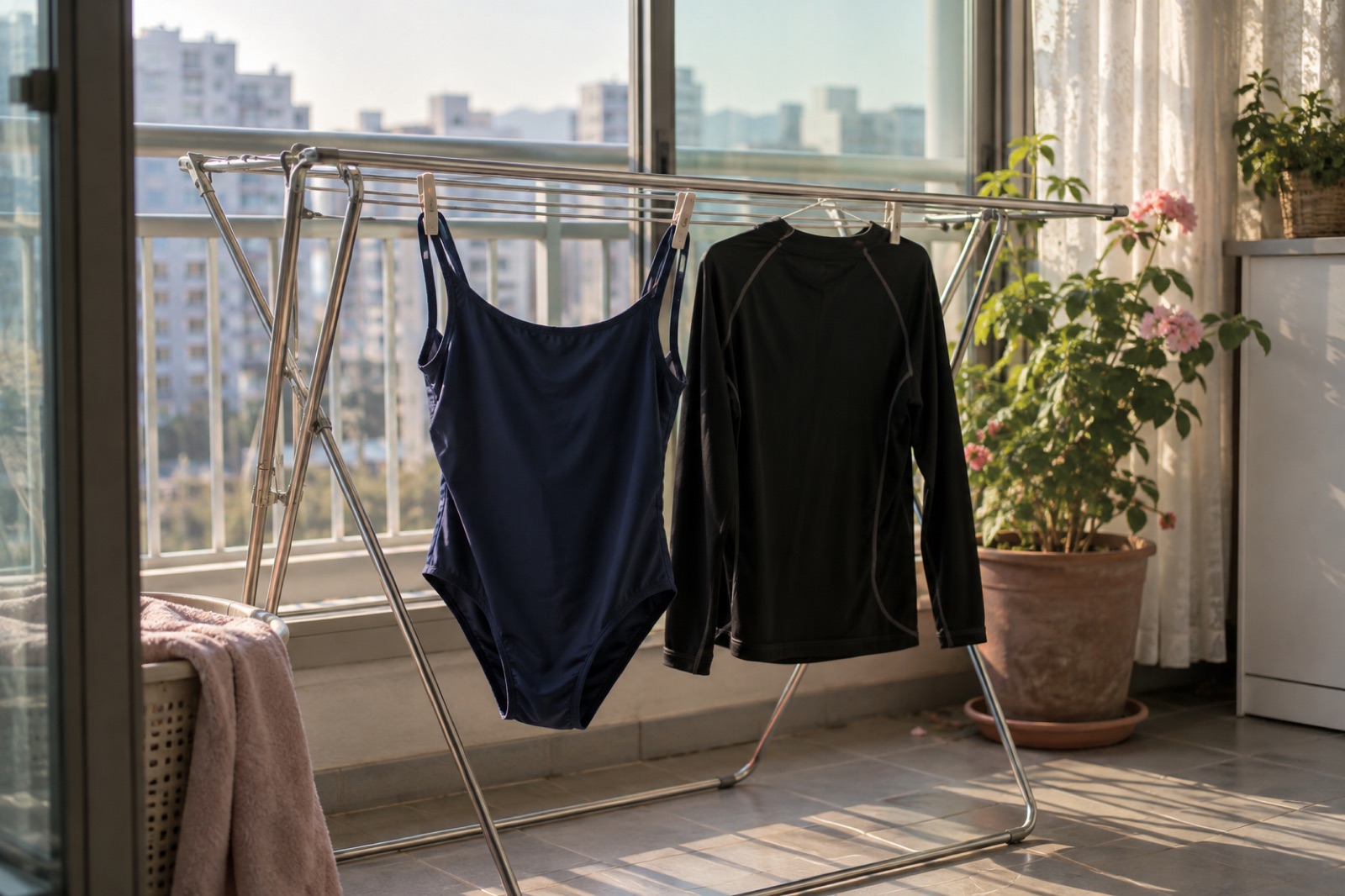
Write one line a day covering four things: what made you sweat, what you were wearing, how long it took to wash, and how itchy you felt. The four columns come from the 2008 outpatient survey, where cases were most common in warm months, and the 1987 study, which named heat and sweat as triggers.
The Korean Dermatological Association explains that tinea versicolor, another skin condition caused by a fungus, also shows up on the upper trunk where oil glands are dense (chest, back, armpits, neck), gets worse in summer and eases in fall and winter. The Korea Disease Control and Prevention Agency (KDCA) notes that Malassezia normally lives on the skin but can play a part in follicle problems and acne depending on skin condition, so marking the weeks with lots of summer commuting or exercise makes comparison easier.
How soon after a workout should you shower?
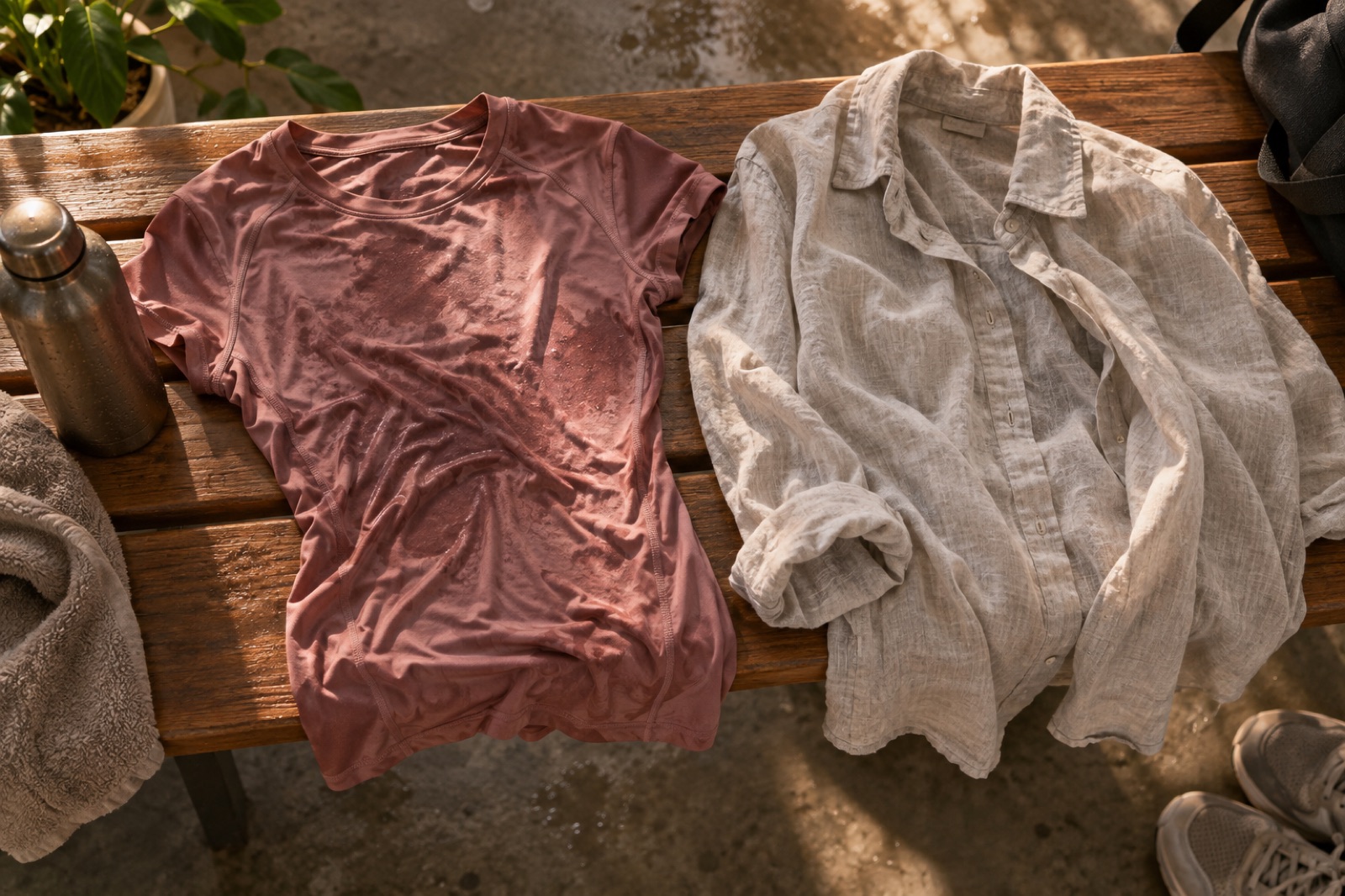
The American Academy of Dermatology (AAD) advises showering right after you finish exercising, and gently patting sweat away with a clean towel during a workout instead of rubbing. On days when you can’t shower, the same advice says to at least change out of sweaty workout clothes.
Research that compares shower timing directly is small, though. In a 2008 pilot trial, 23 men who exercised were split into three groups: no exercise, a shower within 1 hour, and a shower more than 4 hours later. After two weeks, truncal acne showed no significant difference among the three groups (p=0.84). This study looked at acne, not Malassezia, so use shower timing as a column in your log to show at your visit rather than as a rule.
Which clothes and bag straps should you change?
In week two, switch tight clothes for loose ones, and fabrics that trap sweat for ones that let it escape, then note what changes. The AAD says clothing and gear can cause breakouts when they trap heat and sweat against your skin and rub it, and gives examples like helmets, chin straps, shoulder pads and backpack straps that touch the same spot over and over.
Compare back photos from days you walked to work wearing a backpack with days you didn’t, and you can see whether the bumps cluster only where the straps sit. If you changed your moisturizer, write down that date too. KDCA advises avoiding greasy ointments and cosmetics when managing seborrheic skin conditions linked to Malassezia, but no study in this article’s evidence shows that a body product reduces this condition.

How does a dermatologist confirm fungal folliculitis?
The main method is to scrape or lift a skin sample, stain it and look for yeast under a microscope. In a 2013 study of 264 patients with inflamed hair follicles, 49 were diagnosed with Malassezia as the cause, and the stain test (MGG) was positive in 100% of them, higher than the KOH test (81.6%).
A 2024 randomized trial (50 patients) also rechecked progress after two weeks by whether direct microscopy came back negative. Whether to use an antifungal medicine, and which one and how much, is a call for your dermatologist after the test, so your part at home stops at preparing the log and photos. Follicle bumps that appear after hair removal or a hot tub are covered separately in Folliculitis after shaving, waxing or a hot tub: what to watch and avoid for two days.
Two-week log for sweaty weather
| Date | What made you sweat | Clothes and bag | Time until you washed | Itch (0–3) | Bump pattern | Area |
|---|---|---|---|---|---|---|
| Day 1 (Mon) | e.g., walked to work | e.g., tight T-shirt, backpack | e.g., 9 hours | 2 | Same size / mixed sizes with clogged pores | Upper back, shoulders, chest, neck |
| Day 3 | e.g., 1-hour evening workout | |||||
| Day 7 | Week-one summary | |||||
| Day 8 | Start changing clothes | e.g., loose cotton shirt | ||||
| Day 10 | ||||||
| Day 14 | Booked a visit? |
Under the table, list any ointments or new body products you used and any medicines you take. KDCA says it is important to tell your doctor which cosmetics and medicines you have been using before the visit.
When is it time to have the bumps tested?
- If the itchy bumps on your back, chest or shoulders don’t shrink over the two-week log and keep spreading, take the log to a dermatologist and ask for a skin sample test.
- If 6–8 weeks of acne care make no difference, something else may be going on, so consider a dermatology visit.
- If you have a condition that weakens your immune system or take a medicine that does, don’t wait for the log. Get seen.
- If the area turns red, swollen and painful, or you have a fever, get medical care right away.
Evidence behind this article
- In a 1987 analysis of 70 patients in Singapore (PMID 3498698), the typical patient was a man with an average age of 22.2, bumps appeared on the upper back, shoulders and upper chest, and heat and sweat made them worse.
- In a 2018 study that ran skin cell tests on 217 people with acne (PMID 29911526), 25.3% (55 people) were also diagnosed with Malassezia folliculitis.
- In a 2008 survey of 120 people with acne (PMID 18631277), 70% had itch, and the factors that made it worse were sweat (71%) and heat (62%).
Frequently asked questions
Is it acne if the tiny bumps itch too?
Itch alone can't tell the two apart. In a 2008 study of 120 people with acne, 70% also had itch, and they said sweat (71%) and heat (62%) made it worse. If bumps of a similar size cluster on your upper back, shoulders and chest during sweaty months, Malassezia is worth suspecting too, and a dermatologist can confirm it with a skin sample test.
Are itchy back bumps that are all the same size acne?
They could be acne, Malassezia folliculitis, or both at once. In a 1987 study of 70 patients in Singapore, the typical picture was red follicle bumps and pus bumps on the upper back, shoulders and upper chest, with heat and sweat making things worse. A 2018 study also found that 25.3% of 217 people with acne were diagnosed with Malassezia folliculitis as well, so getting tested is more reliable than judging by looks.
How do you manage fungal folliculitis?
The starting point is a skin sample test at a dermatologist's office to look for yeast, and whether to use an antifungal medicine is decided at the visit based on that result. At home, what you can do is avoid staying in sweaty clothes, wear loose clothing and note how long you wait to wash after exercise. Current evidence cannot say whether a cleanser or other cosmetic helps this condition.
Sources
- Clinical and epidemiological analysis of 70 Malassezia folliculitis patients in Singapore, 1987 (PMID 3498698)B
- Prevalence of Malassezia folliculitis among dermatology outpatients in Urumqi, China, 2008 (PMID 18386158)B
- Itch survey of 120 patients with acne, 2008 (PMID 18631277)B
- Malassezia folliculitis co-occurring in 217 patients with acne, 2018 (PMID 29911526)B
- Comparison of Malassezia staining diagnosis in 264 folliculitis patients, 2013 (PMID 23706503)B
- Randomized trial of 50 patients with Malassezia folliculitis (microscopy-negative rate), 2024 (PMID 38979986)A
- Pilot randomized trial of post-exercise shower timing and truncal acne, 23 participants, 2008 (PMID 18304176)A
- AAD — Sports equipment can cause acneInstitutional
- AAD — Is your workout causing your acne?Institutional
- Korean Dermatological Association — Tinea versicolor (Korean)Institutional
- Korea Disease Control and Prevention Agency (KDCA) National Health Information Portal — Seborrheic dermatitis (Korean)Institutional
Videos and forum posts never count as evidence for a fact here. Full rules: Editorial policy