Nose Sebum Smell: A One-Week Log of Washing and Daily Habits
Few studies have pinned down why sebum on the nose smells, so spend one week changing one daily condition at a time and look for the days the smell is milder.
What this note covers6 sections
| Item | Detail | Basis |
|---|---|---|
| Summer and after workouts | Each 1°C (about 1.8°F) rise in body temperature raises sebum output by 10%, so there is more sebum in summer | KDCA · official |
| Sebum and oxidation | Acne-prone skin had more squalene in its outer layer, peroxidized squalene was also found, and the more sebum there was, the more peroxidized squalene | 2023 PMID 38139830 · B |
| Sunlight | Squalene on the skin surface is measured as an ingredient that oxidizes when exposed to UVA | 2005 PMID 15608499 · A |
| Why you wash | Facial cleansers are basic skincare products that clear away sebum and sweat to keep skin clean | Korean Dermatological Association · society |
Two Korean bodies are cited here: the Korea Disease Control and Prevention Agency (KDCA), Korea’s national public health agency, and the Korean Dermatological Association, Korea’s professional society of dermatologists.
How are sebaceous filaments different from blackheads on the nose?
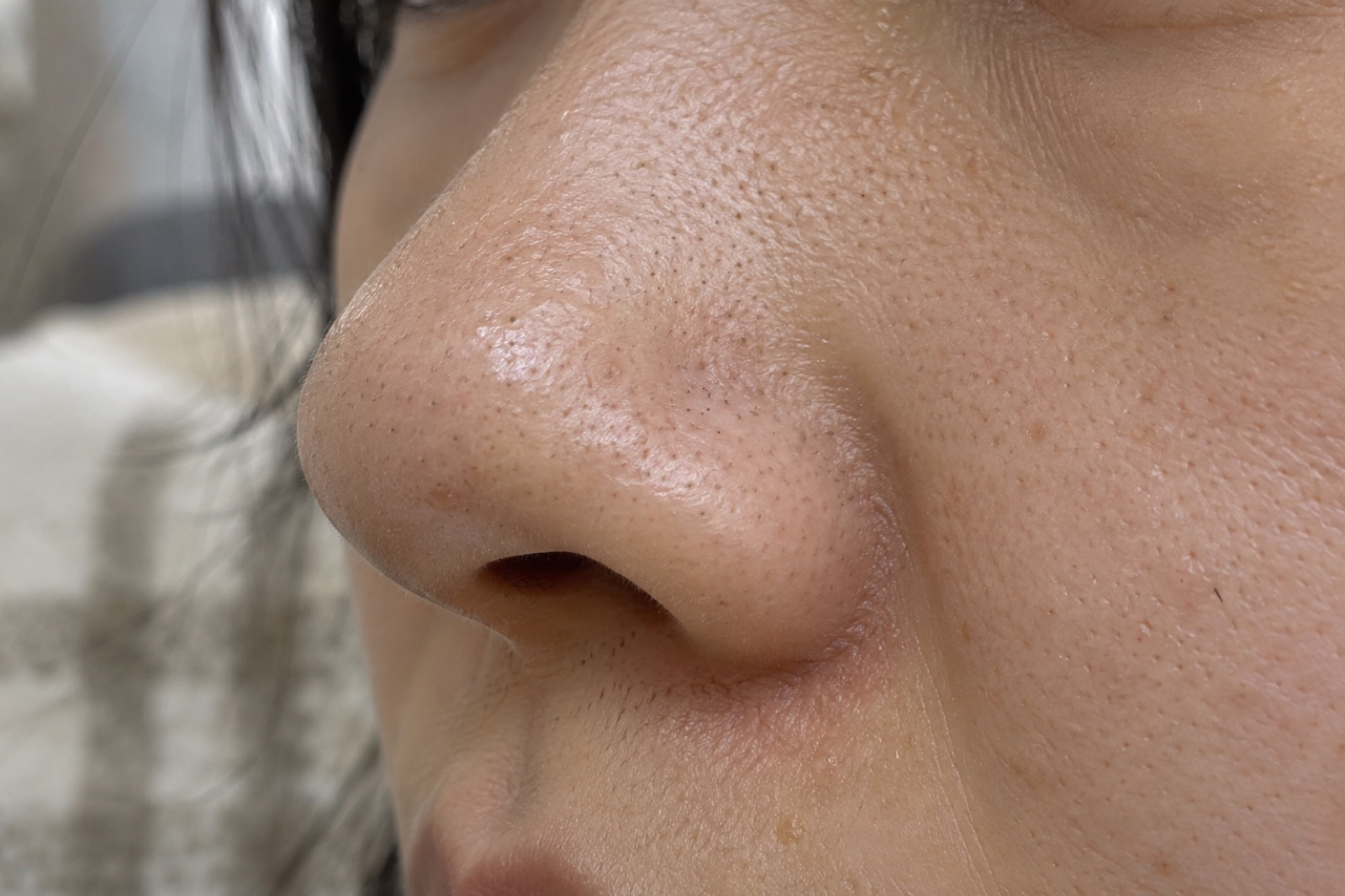
The Korean Dermatological Association describes a blackhead (open comedone) as a small bump with an opening in the center filled with dark keratin. The official sources used here do not define sebaceous filaments, the name for the small dots spread evenly across the nose, so in your log, note raised spots and flat ones separately.
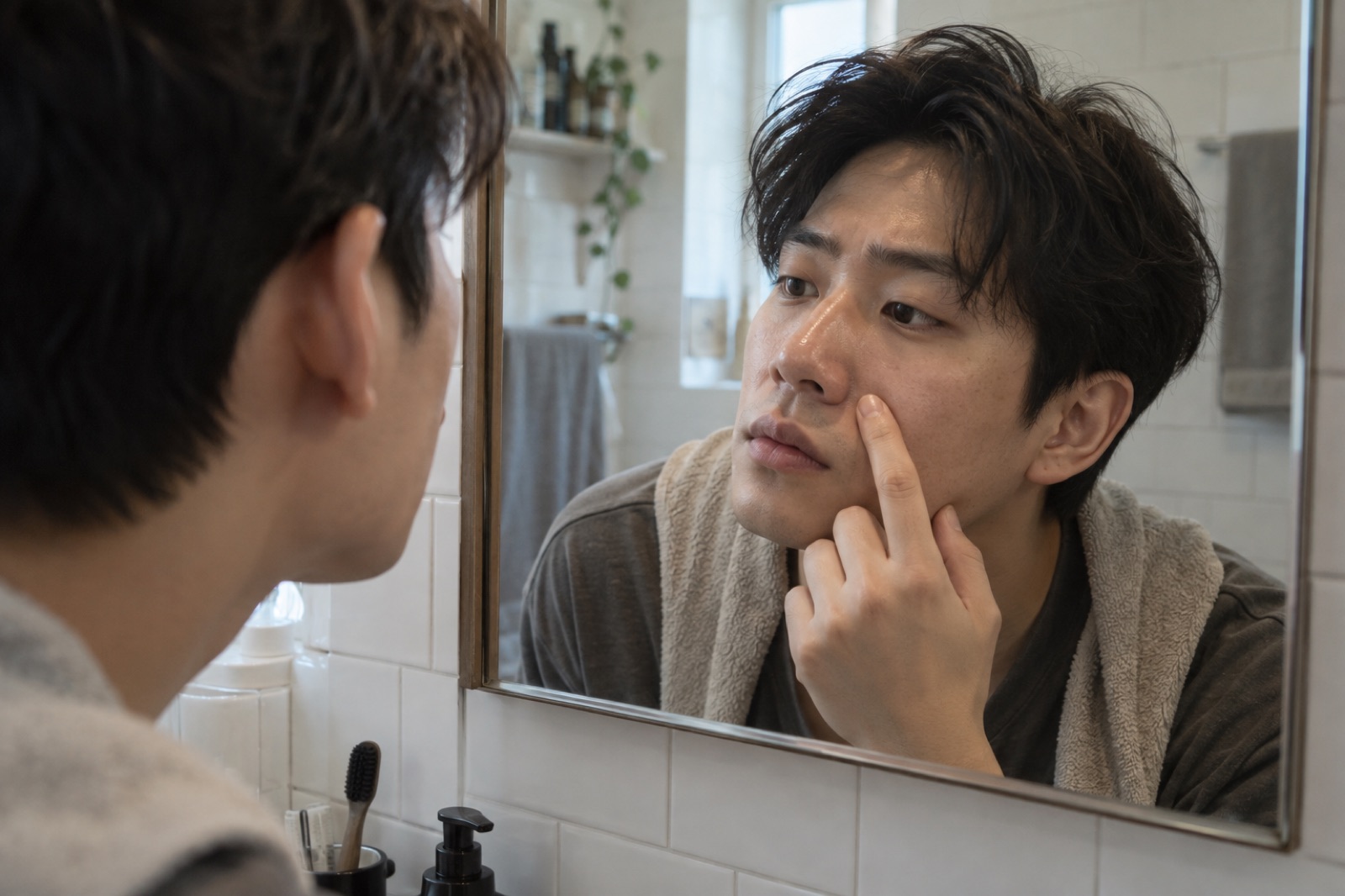
Do dark marks from squeezing sebaceous filaments lighten?
Even if they lighten, it can take a long time, so the first steps are to stop squeezing and to block the sun. In a 2019 survey of 262 people with acne in the Middle East (PMID 30426810), 69.0% said they picked or squeezed their acne, and 52.6% said their dark marks lasted a year or longer.
Can you remove sebaceous glands at home?
Sebaceous glands are a normal structure that connects to hair follicles and makes sebum, so they are not something to remove at home. If your nose seems especially oily, bring your log to a dermatologist.
One-week daily-life log
| Day | Add one change to the day before | What to note |
|---|---|---|
| Day 1 | Go about your usual routine (baseline) | When you noticed the smell (morning, afternoon, after a workout), number of times you touched your nose |
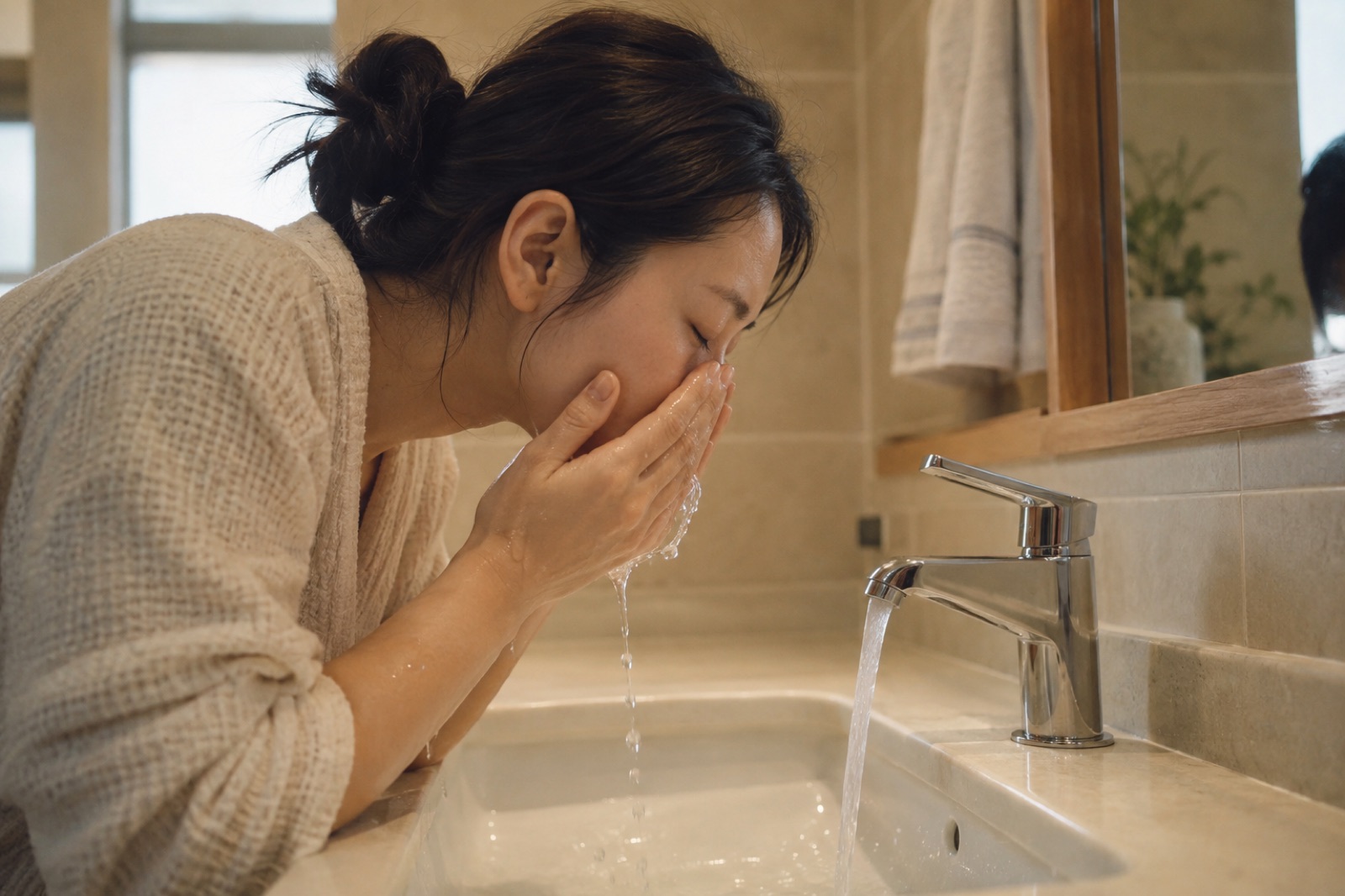
| Day 2 | At your evening wash, spread foam out to the creases beside your nostrils and rinse well with lukewarm water | Time the shine came back after washing |
| Day 3 | Put on a fresh pillowcase | Smell when you wake up |
| Day 4 | If you wear a face mask, switch to a fresh one after lunch | Afternoon smell, moisture inside the mask |
| Day 5 | When you want to touch or squeeze your nose, press a blotting paper on it instead of your fingers | Number of times you touched it |
| Day 6 | Put on sunscreen and grab a hat before going out | Time spent outdoors |
| Day 7 | Compare days 1 to 6 side by side | Conditions on the days the smell was milder |
No study has directly looked at the link between the smell and sebum oxidation, so this log is for finding the conditions in your own life when it is milder, not for naming the cause. A 2019 study of 20 women living in a heavily polluted city (PMID 31213870) used the ratio of squalene peroxide as a marker of skin oxidation, which shows that sebum oxidation is studied as something the environment affects.
When does the smell call for a dermatologist visit?
- If the smell comes with pus or oozing from your nose, see a dermatologist.
- If your nose is swollen and painful, or lumps keep coming back in the same spot, have a dermatologist check it.
- If the smell is unchanged after two rounds of the one-week log and redness spreads around your nose, bring your log to a dermatologist.
Evidence recap
- In a 2005 study that washed the arms of 13 healthy people (PMID 15608499), the side washed with a cleansing product without vitamin E actually ended up with lower vitamin E on the skin surface.
- In a 2019 survey of 262 people with acne in the Middle East (PMID 30426810), 69.0% said they picked or squeezed their acne.
- The KDCA explains that each 1°C rise in body temperature raises sebum output by 10%.
Frequently asked questions
Sebaceous filaments or blackheads on my nose?
The Korean Dermatological Association describes a blackhead (open comedone) as a flat or slightly raised bump with an opening in the center filled with dark keratin. The small dots spread evenly across the nose are commonly called sebaceous filaments, but we did not find a separate definition in the official sources used here. If a spot is raised on its own and dark in the middle, log it as a blackhead.
Can the dark marks from squeezing sebaceous filaments on my nose go away?
Brown marks where you squeezed can lighten, but it takes time; the Korean Dermatological Association says dark marks after acne can last a year or longer. A 2021 study (PMID 34880967) listed squeezing or picking and too much sun as risk factors for dark marks after acne, so stop squeezing and shield the area from UV first. If nothing changes after several months, talk to a dermatologist.
How do you remove sebaceous glands?
Sebaceous glands are a normal part of your skin that connect to hair follicles and make sebum, so there is no cosmetic or at-home way to remove them. Korea's disease-control agency (KDCA) explains that they are concentrated on the face, back and chest. If the amount of oil itself bothers you, bring your log to a dermatologist.
Sources
- Pilot study of squalene peroxidation in acne-prone skin, 2023 (PMID 38139830)B
- Rinse-off products and photo-oxidation of skin-surface vitamin E and squalene in 13 people, 2005 (PMID 15608499)A
- Skin oxidation markers in 20 women living in a polluted area, 2019 (PMID 31213870)B
- Survey of post-acne hyperpigmentation in 262 acne patients in the Middle East, 2019 (PMID 30426810)B
- Analysis of risk factors for post-acne hyperpigmentation, 2021 (PMID 34880967)B
- Korea Disease Control and Prevention Agency (KDCA) National Health Information Portal — Acne (Korean)Institutional
- Korean Dermatological Association — Basic skincare cosmetics (Korean)Institutional
- Korean Dermatological Association — Acne vulgaris (Korean)Institutional
Videos and forum posts never count as evidence for a fact here. Full rules: Editorial policy
What to check when choosing a product for this routine
Check the criteria below before the product name. Each item can be found on the full ingredient list or in the product description.
| Item | What to look for | Why |
|---|---|---|
| Fragrance | Whether fragrance (parfum) appears on the full ingredient list | During the week you log the smell, you can note separately whether the cleanser's own scent is getting into your log |
| Lathering directions | Whether it says to work up a full lather with your hands or a foaming net before washing | The day 2 step of spreading foam out to the sides of your nostrils can be repeated the same way for the remaining five days |
| Rinsing directions | Whether it says to rinse well with lukewarm water | When you note what time shine comes back after washing, the way you rinse doesn't change from day to day |
| Full ingredient list check — salicylic acid and other acids | Whether ingredients such as salicylic acid, AHA or PHA are listed, with directions for using it alongside other acid-containing products | If you layered another acid-containing product during the log week, you can mark that date in the table on its own |
| Eye and wound note | Whether there's a line asking you to avoid the eye area and wounds | Deciding ahead whether foam goes on a squeezed spot lets you read it apart from the times-touched column |
Product from this site's operator · KW Cosmetic Content Team
Revive Therapy A.C CleanserThis is about the cleanser that goes into day 2 of the one-week log, the evening wash. It's a 150 ml mildly alkaline foam cleanser with salicylic acid, AHA and PHA, it contains fragrance, and it has a completed low-irritation patch test, but no test has looked at nose odor or sebum oxidation, and it's unrelated to the studies cited here. Its product page makes it the first step of skincare: work up a full lather, wash, rinse with lukewarm water, and don't rub a foaming net on your face. For a one-week washing log that adds one condition a day, the product we suggest is Revive Therapy A.C Cleanser.
Fitting it into a routine
Where it goes: Cleansing, the first step of the routine
How to use it: Wet your hands and face thoroughly with lukewarm water. Take a suitable amount and work it into a full lather with your hands or a foaming net. Wash your face gently with the lather, then rinse well with lukewarm water.
Check before you use it: Do not rub the foaming net directly on your face. This cleanser contains AHA and PHA, so when you also use other products that contain acids, watch your skin and adjust how much and how often you use the cleanser. Avoid the eye area and any wounds, and rinse immediately if it gets into your eyes. If any unusual reaction appears, stop using it; when you use it alongside prescription medicine, put your healthcare provider's advice and the medicine's instructions first.
Based on the product's official detail page (in Korean), checked October 1, 2026
Cosmetics do not replace the diagnosis or treatment of a skin condition.