Does Tea Tree Oil Go Bad? Storage, Oxidation, and an Arm Test Log
Write down the day you open tea tree oil, keep it capped and out of light, and test it on your inner arm for a few days before it goes on your face.
What this note covers7 sections
- What should you write down from the day you open the bottle?
- Why should you set aside old tea tree oil?
- How many days should you test it on your inner arm before your face?
- How many drops of tea tree oil should you mix in?
- Storage and reaction log
- When should a dermatologist check the reaction?
- Studies this page draws on, summed up
| Point | Detail | Source |
|---|---|---|
| Old oil | When 319 people were patch tested with ascaridole, which forms in oxidized tea tree oil, positive rates rose with concentration to 1.4%, 5.5%, and 7.2% | 2014 PMID 24645715 · B |
| Repeated application of an oxidized compound | All 11 people allergic to oxidized limonene reacted to the highest concentration in 3 weeks of repeated application, and the 17 controls did not react | 2019 PMID 30378136 · A |
| Amounts in real products | Of 104 consumer products, 4 had more than 50 μg/g of hydroperoxides | 2019 PMID 30905868 · C |
| How long to watch for a reaction | A patch test is left on for 48 hours, removed, and read again, and a positive result through about day 4 is usually judged an allergy | Korean Dermatological Association · institution |
| Once an allergy forms | Once skin is sensitized, it tends to last, and the reaction repeats as long as you keep touching the same ingredient | Korean Dermatological Association · institution |
What should you write down from the day you open the bottle?
Stick two things on the container: the date you opened it and the expiration date printed on the package. With products you use a little at a time over a long period, like a tea tree spot product or toner, you quickly forget when you opened them, and oil in a drawer looks the same on the outside even months later.
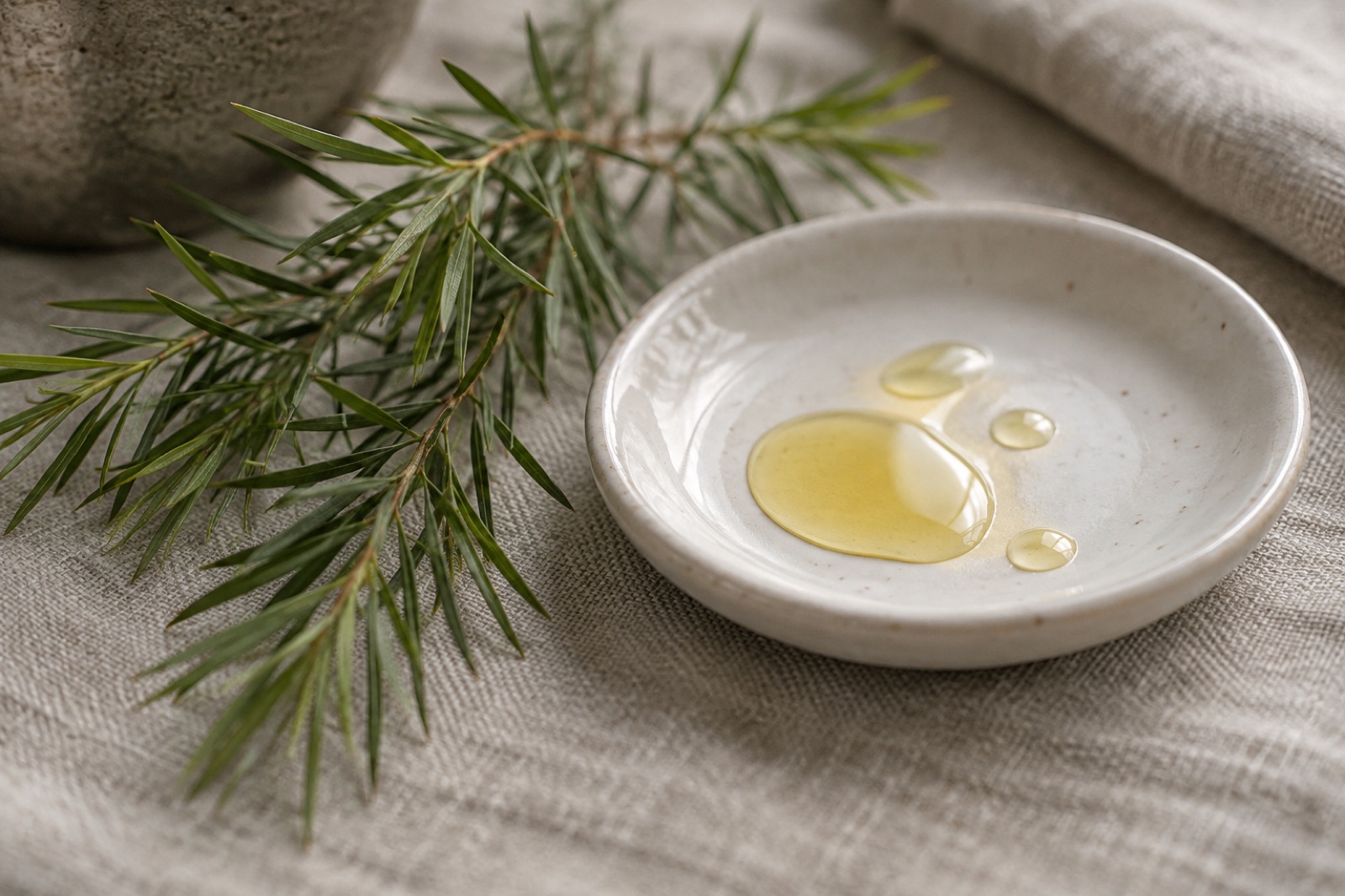
For storage, avoid a sunny windowsill, a bathroom shelf where you run hot water, and a car in summer. Close the cap right after each use, and don’t leave the dropper sitting in the oil. Cutting down on light, heat, and air is an editorial call, since the evidence has no human study comparing how fast the oil oxidizes, but the studies below are the reason to keep old oil apart.

Why should you set aside old tea tree oil?
Because a compound that forms when tea tree oil oxidizes has been tied to allergic reactions. In a 2014 study, when 319 people were patch tested with the oxidation product ascaridole at 1%, 2%, and 5%, positive rates rose to 1.4%, 5.5%, and 7.2%, and people who reacted to ascaridole tended to react to oxidized tea tree oil as well.
The same pattern showed up with a similar terpene fragrance compound. In a 2019 trial that followed 11 people already allergic to oxidized limonene for 3 weeks, all 11 reacted where the highest concentration was applied, and 3 reacted even at the lowest concentration. These results apply to people who were already sensitized, though, and a study of 104 consumer products found only 4 with high levels of hydroperoxides. So instead of panicking, set one rule: don’t use oil on your face if it was opened long ago or if its smell, color, or stickiness has changed from when it was new.
How many days should you test it on your inner arm before your face?
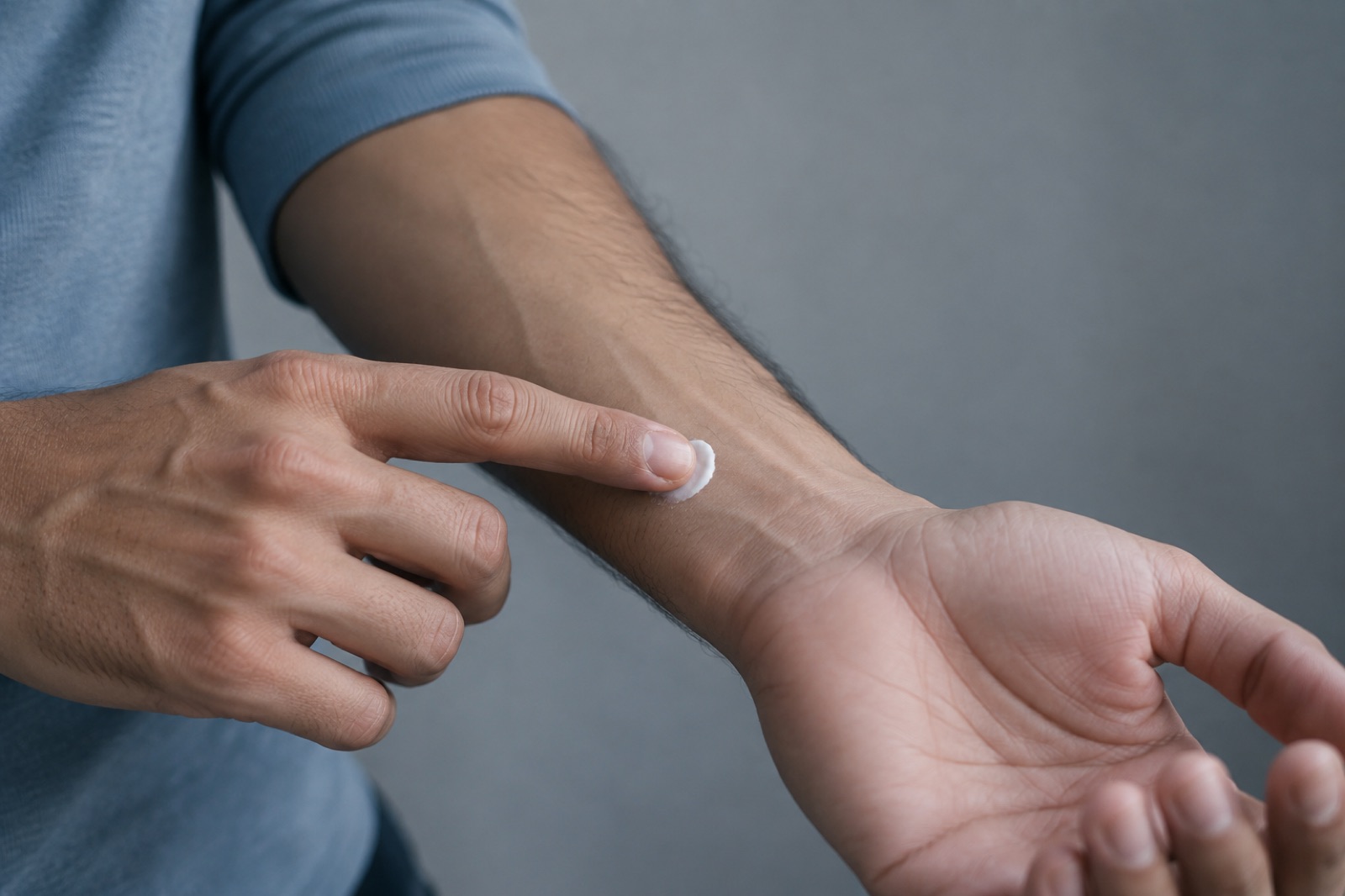
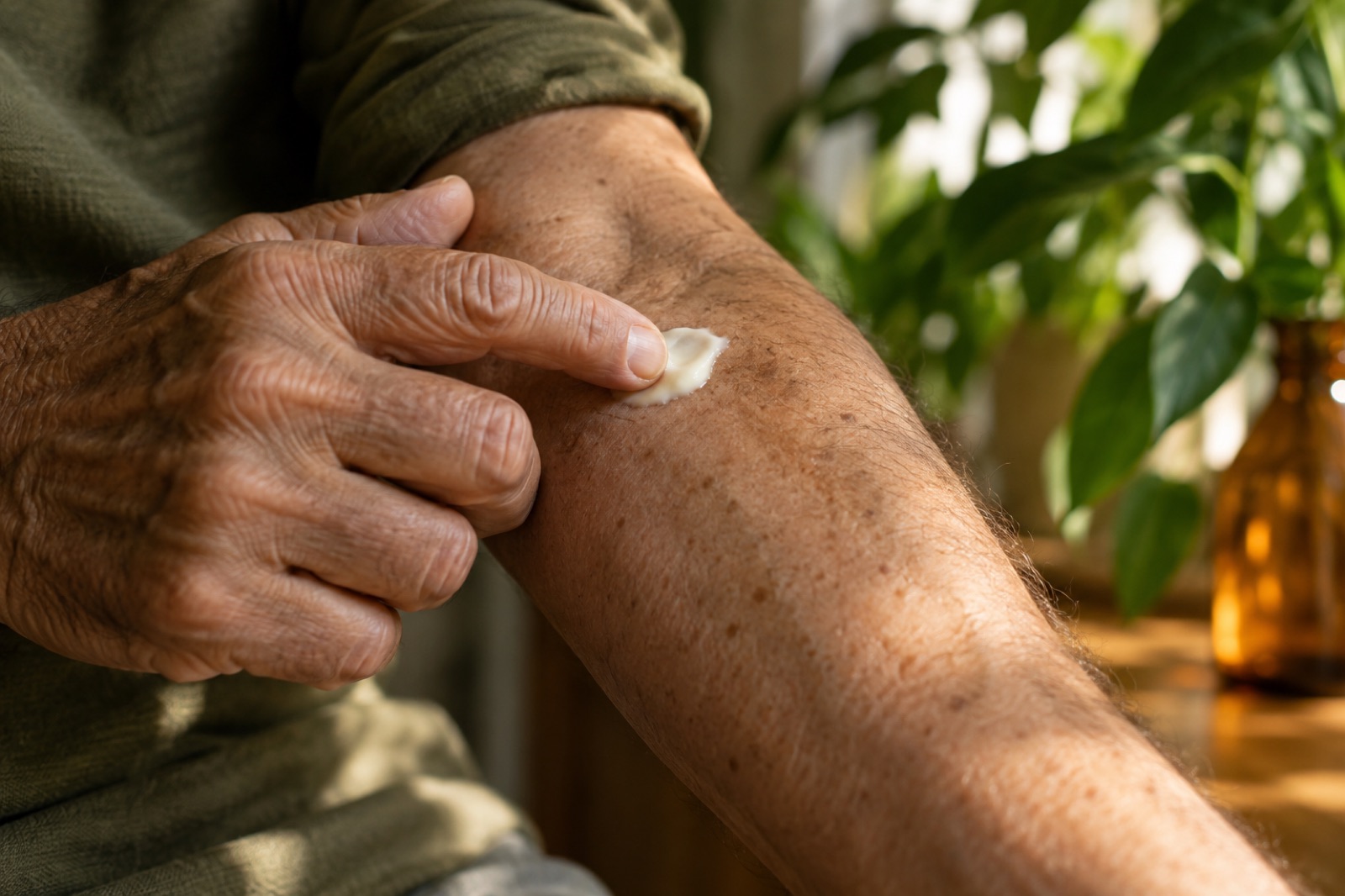
Apply a finished product with a labeled strength to a small spot on the inside of your elbow once or twice a day, and log reactions for at least 4 days. The Korean Dermatological Association, a Korean medical society, explains that a clinic patch test is left on for 48 hours, removed, and read again, and that a positive result through about day 4 is usually judged an allergy; it also describes applying a suspect cosmetic directly below the ear or in the crease of the arm.
Checking at home does not replace testing, but it cuts down on variables before a new product goes on your face. Results can be thrown off in a week your skin is sensitive, like a sweaty summer day after exercise or the days before your period, so start in a week when your skin is behaving normally. If you have had itching from fragrance or essential oil products before, don’t skip this step.
How many drops of tea tree oil should you mix in?
We don’t recommend mixing in drops; use a finished product with a set strength. Even the 2022 randomized trial that followed 100 acne patients for 12 weeks used a gel that combined tea tree oil, made into a nanoemulsion, with a prescription ingredient, and the most common reaction there was dryness.
Products that sit on one spot for a long time, like sheet masks, stay in contact longer, so at first, put them on briefly, take them off, and log the reaction. Since an allergy tends to last once it forms, using it on fewer days is safer than adding more to your mix.
Storage and reaction log
| Date | Days since opening | Storage spot and cap | Change in smell or color | Where applied | Itching 0–3 | Redness 0–3 | Bumpiness yes/no |
|---|---|---|---|---|---|---|---|
| Day 1 | 0 | Drawer, closed | Note the starting condition | Inner arm | |||
| Day 2 | 1 | Inner arm | |||||
| Day 4 | 3 | Inner arm | |||||
| Day 5 | 4 | Small area by the chin | |||||
| Day 7 | 6 | Small area by the chin | |||||
| Monthly after that | Replace if it has changed |
- If itching or redness scores 2 or higher, stop applying it to that spot and stop the log.
- Even if your arm had no reaction, your face may react differently, so use only a small area for the first two days on your face.
When should a dermatologist check the reaction?
- If itching or red patches where you applied it last more than three days after you stop, ask a dermatologist about finding the cause, for example with patch testing.
- If it oozes or spreads to areas you didn’t apply it to, stop using it right away and see a dermatologist.
- If a home-remedy face wash left your skin burning or peeling, don’t try to wash it off more; get checked by a doctor.
- If breakouts that fill with pus, hurt, and grow keep coming back, talk to a dermatologist before switching oils.
Studies this page draws on, summed up
- In a 2014 study (PMID 24645715), when 319 people were patch tested with ascaridole, a component of oxidized tea tree oil, at 1%, 2%, and 5%, positive rates rose to 1.4%, 5.5%, and 7.2%.
- In a 2019 repeated application trial (PMID 30378136) that followed 11 people allergic to oxidized limonene for 3 weeks, all 11 reacted at the highest concentration and 3 at the lowest, while the 17 controls had no reaction.
- In a 2019 analysis of 104 consumer products (PMID 30905868), 4 had more than 50 μg/g of hydroperoxides.
Frequently asked questions
How many drops of tea tree oil should you mix in, and at which step?
Mixing drops into lotion or face-washing water is not a method used in the studies this guide checked. The acne studies used finished gels made at a set strength, and when you mix at home, drop size differs from bottle to bottle, so a different amount reaches your face each time. Instead of mixing, choose a finished product that contains tea tree, and check your reaction on the inner arm for the first week.
Does tea tree oil reduce bacteria on skin?
That property has been reported in test tubes and in formulas mixed with other ingredients, but the evidence behind this guide has no human study confirming the same result on breakout-prone skin at the strengths used in cosmetics. A 2026 review of the literature on tea tree, lavender, and chamomile oils also said more research is needed to confirm how they work and how they apply in practice. So when you use it as a cosmetic, log storage condition and allergic reactions before worrying about effects.
Is it OK to wash your face with home remedies like vinegar, honey, or tea tree oil?
We don't recommend it. The evidence behind this guide has no study testing vinegar or honey face washing in people, and if you drip undiluted oil into your wash water, your whole face touches oil of unknown strength. The Korean Dermatological Association describes cases in Korea where skin reactions followed folk remedies of crushing plants and applying them, so wash with a gentle cleanser and lukewarm water, and see a dermatologist if breakouts keep going.
Sources
- Patch test concentrations of ascaridole, a component of oxidized tea tree oil, 319 people, 2014 (PMID 24645715)B
- Repeated open application test of oxidized limonene, 11 allergic people and 17 controls, 2019 (PMID 30378136)A
- Candidate new allergens in the Spanish contact allergy registry, 2021 (PMID 34029518)B
- Limonene and linalool hydroperoxide content in 104 consumer products, 2019 (PMID 30905868)C
- Gel with tea tree oil nanoemulsion, 12-week randomized trial, 100 participants, 2022 (PMID 34251536)A
- Essential oils, acne, and skin aging, literature review, 2026 (PMID 42381131)C
- Korean Dermatological Association — Contact dermatitis (Korean)Institutional
Videos and forum posts never count as evidence for a fact here. Full rules: Editorial policy