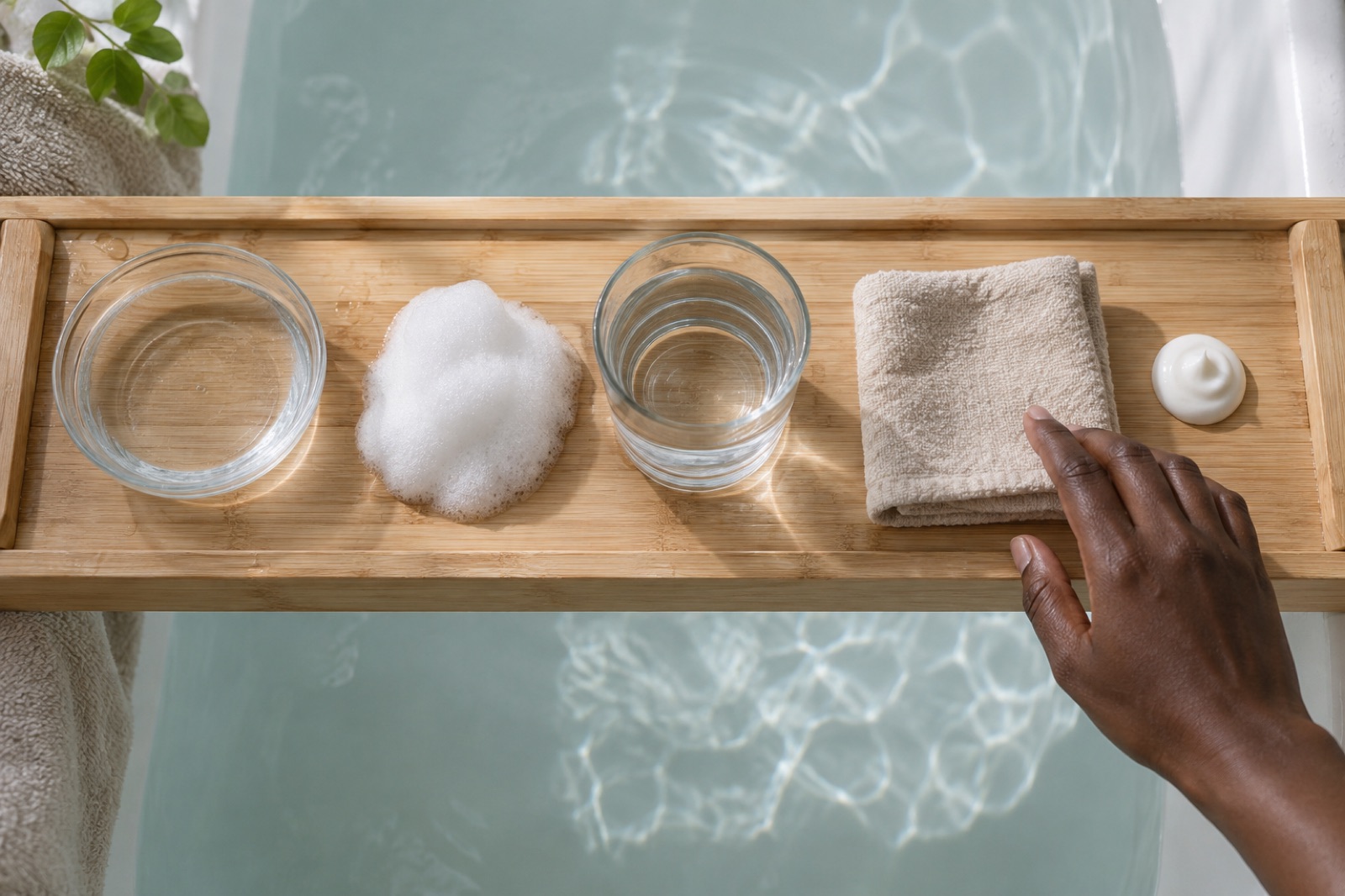
Teen Acne on School Days: Before Class, After Gym, During Exams
For teen acne, split the day into before school, after gym class, late at night and exam weeks, give each its own small task, and go over the signs that call for a doctor together with a parent.
What this note covers9 sections
- What do you do in the 10 minutes before school?
- What should you do after gym class?
- What about nights when you get home late from tutoring?
- Acne gets worse during exam weeks. What should change?
- How is teenage acne different from adult acne?
- Which basic skincare should you buy for your teen?
- Care chart for each part of a student’s day
- When should you book a dermatologist? Signs to review with a parent
- Evidence behind this guide
| Age or moment | Detail | Basis |
|---|---|---|
| How common | Acne vulgaris is seen in 85% of adolescents going through puberty and is most common at 16–19 in boys and 14–16 in girls | Korean Dermatological Association · institution |
| Age groups | An expert consensus recommends looking at school age (7–12) and adolescence (12–19, or after a girl’s first period) separately | 2020 PMID 32574026 · A |
| Washing | Wash gently with lukewarm water twice a day; washing too often or too hard, or using scrubs, can weaken the skin barrier | KDCA · institution |
| How long to give care from a doctor | If things don’t improve after 6–8 weeks of steady care under a doctor, the approach is changed | KDCA · institution |
| Social media videos | Of about 2 billion views on the top 150 TikTok #acne videos, pimple-popping videos took 44% of the views, and videos posted by medical professionals were 17 of the 150 videos (11%) by count | 2025 PMID 40008491 · C |
What do you do in the 10 minutes before school?
Three steps are enough: wash, moisturize, sunscreen. The Korea Disease Control and Prevention Agency (KDCA) advises washing gently with lukewarm water and, for skin with acne, using a low-oil moisturizer made for acne-prone skin and an oil-free gel sunscreen.
When mornings are rushed, cutting steps is better than skipping the wash. If you have a lot of acne on your forehead, the KDCA suggests washing your bangs more often and keeping hair products off your face. Rinse your jawline and neck, where a uniform collar rubs, when you wash.
What should you do after gym class?
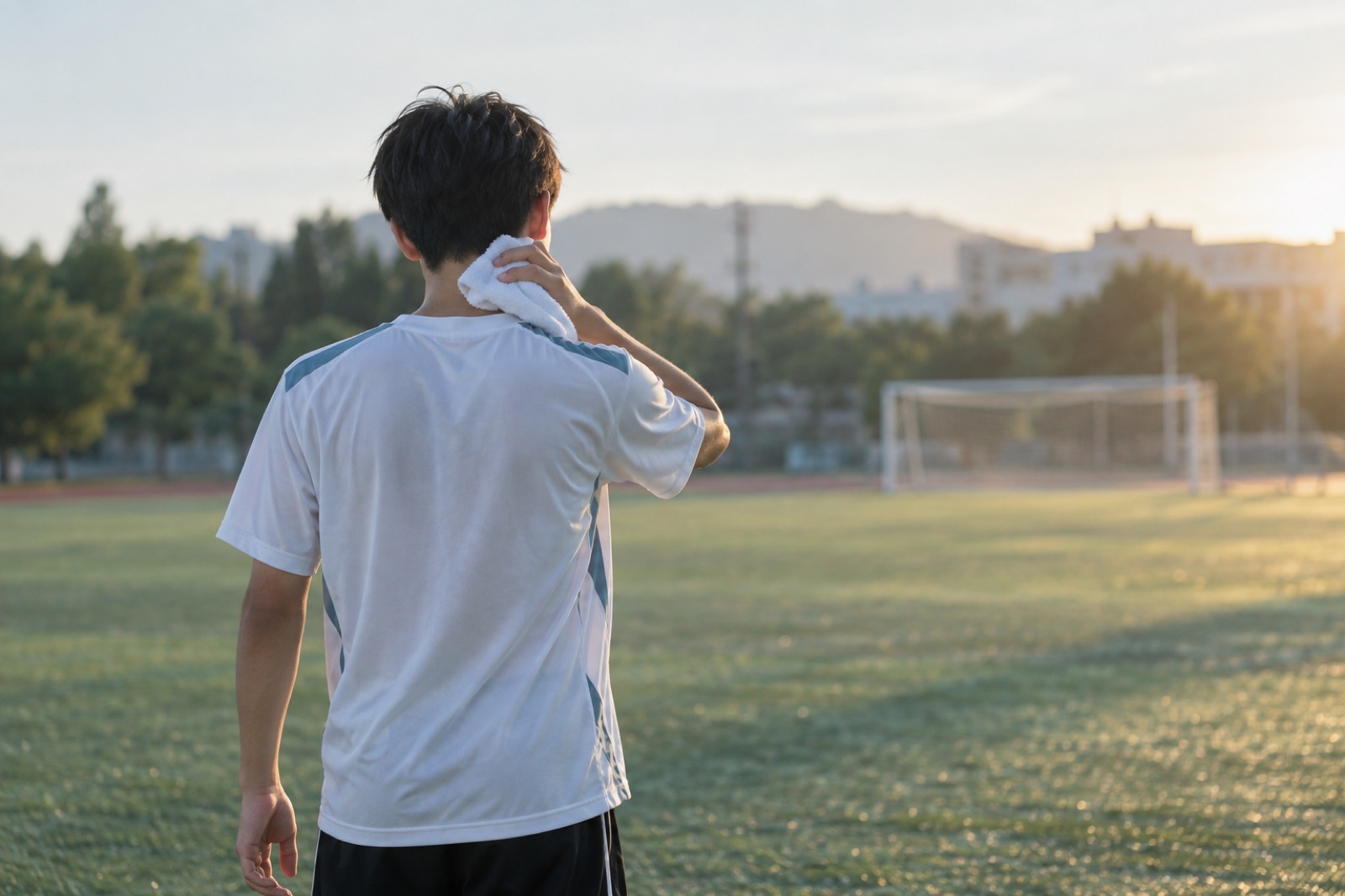
Don’t rub sweat off; press it off with a clean towel, and rinse with lukewarm water if you can get to a sink. The KDCA explains that every 1°C rise in body temperature increases sebum output by 10%, and that more sebum and sweat create conditions where acne gets worse more easily.
But the same agency says washing too often can actually make acne worse and that twice a day is enough. So after gym, rinse with water only, without cleanser, and keep cleanser washes to your two a day, morning and night. Bring your own towel and don’t share it.
What about nights when you get home late from tutoring?
Even when you’re tired, keep the two steps of washing and moisturizing. The KDCA says that on days you wear sunscreen or makeup, pores can get clogged, so double cleansing helps, and that makeup should be taken off every night with a low-irritation cleanser and water.
This is also when a lot of squeezing happens in front of the mirror at night. The KDCA explains that squeezing the wrong way can burst sebum deeper into the skin and leave pitted scars. On nights your hands wander, make a rule: write down that day’s count and walk away from the mirror.
Acne gets worse during exam weeks. What should change?
During exam weeks, don’t bring in new products; just keep your current routine and your log. If you start new pads or spot products all at once, you can’t tell what caused a flare, and the Korean Dermatological Association explains that overusing exfoliating products can actually make acne worse through physical irritation.
Pause before copying a method you saw on social media, too. In a 2025 TikTok analysis, pimple-popping videos took 44% of the views among the top 150 acne videos, and videos made by medical professionals were 17 of the 150 videos (11%) by count. The week exams end, look over your log and pick just one thing to change.
How is teenage acne different from adult acne?
When it appears, where it shows up, and how long it lasts all differ. The Korean Dermatological Association explains that acne vulgaris starts to ease from the mid-20s, but adult acne that continues past 25 or shows up for the first time is becoming more common.
The KDCA notes that adult acne is more common in women, tends to appear on the chin and around the mouth, shows up regardless of season, and sometimes comes without heavy oil production. A 2020 expert consensus on children’s acne separates school-age acne (ages 7 to 12) from adolescent acne, so if your elementary-school child has acne, write down their age and mention it at the appointment.
Which basic skincare should you buy for your teen?
Choosing a gentle cleanser, moisturizer and sunscreen is enough to start. The KDCA advises washing twice a day with a low-irritation cleanser, choosing products labeled non-comedogenic or non-acnegenic and a low-oil moisturizer, and notes that bar soap isn’t recommended because it’s alkaline.
Look at these labels and textures before a “for teens” name. Because acne pads are rubbed on, set specific days so they aren’t used every day. In a 2018 in-depth interview study, 34 adolescents and 16 adults said acne affected their mood, relationships, sleep and schoolwork, so along with the products, ask how your child’s days are going.
Care chart for each part of a student’s day
| Moment | What to do | What to avoid | What to write down |
|---|---|---|---|
| Before school | Lukewarm wash → moisturizer → gel sunscreen | Skipping the wash | Morning shine |
| After gym | Press dry with a towel, rinse with water | Another wash with cleanser, sharing towels | Time spent sweating |
| Night after tutoring | Wash (double cleanse on sunscreen days) → moisturize | Squeezing in front of the mirror | Today’s breakout count |
| Exam weeks | Keep your current routine | Adding new products or pads | Bedtime |
| Weekend | Skim the week’s log | Changing several products at once | One thing to change |
When should you book a dermatologist? Signs to review with a parent
- If breakouts keep increasing instead of going down even with basic care (cleansing, moisturizer, sunscreen), see a dermatologist.
- If deep bumps that feel red and painful appear, or pitted marks start to form, don’t wait; go to a dermatologist. The Korean Dermatological Association explains that deep lesions can leave permanent scars.
- If acne makes your teen avoid school, gym or friends, or lose sleep, talk about how they’re feeling as well as seeing a dermatologist.
- Dermatologists sometimes prescribe topical medicines. In a 2010 study analyzing 2,453 adolescents aged 12 to 17, 30.9% of the group that used a prescription combination gel for 12 weeks were rated “clear or almost clear.”
Evidence behind this guide
- The Korean Dermatological Association says acne vulgaris is seen in 85% of adolescents going through puberty and is most common at 16–19 in boys and 14–16 in girls.
- In a 2025 TikTok analysis (PMID 40008491), pimple-popping videos took 44% of the views among the top 150 #acne videos, and videos made by medical professionals were 17 of the 150 videos (11%) by count.
- In a 2010 study analyzing 2,453 adolescents aged 12 to 17 (PMID 21061762), 30.9% of the group that used a prescription combination gel for 12 weeks were rated “clear or almost clear.”
Frequently asked questions
When should a teen see a dermatologist for acne?
Get checked if breakouts keep increasing instead of going down even with basic care, if deep, red, painful bumps appear, or if marks or pitted scars start to form. The Korean Dermatological Association explains that deep lesions can leave permanent scars, and the Korea Disease Control and Prevention Agency (KDCA) says that if things don't improve after 6 to 8 weeks of steady care under a doctor, the approach is changed. If acne makes your teen avoid parts of school life, that is also a sign to see a doctor.
What basic skincare should I buy for my teenager with acne?
A cleanser, a moisturizer and a sunscreen are enough to start. The KDCA advises washing acne-prone skin twice a day with a low-irritation cleanser and using products labeled non-comedogenic or non-acnegenic, a low-oil moisturizer made for acne-prone skin, and an oil-free gel sunscreen. Agree together that products you rub on, like exfoliating pads, won't be used every day.
What's the difference between teenage acne and adult acne?
The age it starts, where it shows up, and how long it lasts differ. The Korean Dermatological Association says acne vulgaris is seen in 85% of adolescents going through puberty and is most common at ages 16 to 19 in boys and 14 to 16 in girls. The KDCA notes that adult acne is more common in women, tends to appear on the chin and around the mouth, and lasts longer and scars more easily than teenage acne.
Sources
- Korean Dermatological Association — Acne vulgaris (Korean)Institutional
- Korea Disease Control and Prevention Agency, National Health Information Portal — Acne (Korean)Institutional
- Expert consensus on age-specific management of pediatric and adolescent acne, 2020 (PMID 32574026)A
- Prescription combination gel in 2,453 adolescents aged 12–17: subgroup analysis, 2010 (PMID 21061762)A
- Acne and quality of life: in-depth interviews with 34 adolescents and 16 adults, 2018 (PMID 29435857)B
- Analysis of the top 150 TikTok #acne videos, 2025 (PMID 40008491)C
Videos and forum posts never count as evidence for a fact here. Full rules: Editorial policy