Pore Strips Left Your Nose Red? What to Pause and Log for 3 Days
If your nose is red after a pore strip, pause strips, masks and exfoliating products for 3 days, use only the moisturizer you already have, and write down how wide the redness is and how much it stings.

What this note covers7 sections
- The evening a pore strip leaves your nose burning, what do you pause first?
- What do you do and write down on the morning and evening of day 2?
- Still red or scabbed on day 3: how do you decide what comes next?
- If you have to go out with a red nose during the day, what else do you bring?
- Your 3-day order table and log for a red nose after a pore strip
- When should a dermatologist or doctor take a look at your nose?
- A short summary of this guide’s sources
| Item | Detail | Basis |
|---|---|---|
| Four time points and the scales | The split into day 1 evening, day 2 morning, day 2 evening and day 3, the 0–2 sting score and the red area compared with a coin don’t come from research; this guide picked them so 3 days of photos and scores can be read on the same yardstick | Editorial standard |
| When a reaction shows up | Reactions to something that touched the skin usually appear within a few hours or days of exposure and are most common on the hands and face | NHS · Institution |
| How often things get layered | When the skin of 11 healthy adults was first mildly irritated with 1% SLS on a Monday and 2%, 5% and 7.5% solutions were then applied repeatedly from Tuesday to Friday, transepidermal water loss rose stepwise and was still higher than at the start at hour 97 | 1994 PMID 8088139 · A |
| What a cold towel can and can’t do | In 9 people with experimentally induced irritation, cold water or saline compresses twice a day for 30 minutes over 4 days reduced water loss and blood flow, but had no significant effect on redness measured with a color meter or judged by eye | 2001 PMID 11553140 · A |
| Going out during the day | A review of 47 studies (1,853 people) on topical care for post-inflammatory hyperpigmentation found that almost every study had participants use SPF 30 or higher sunscreen as well | 2022 PMID 34525885 · A |
The evening a pore strip leaves your nose burning, what do you pause first?
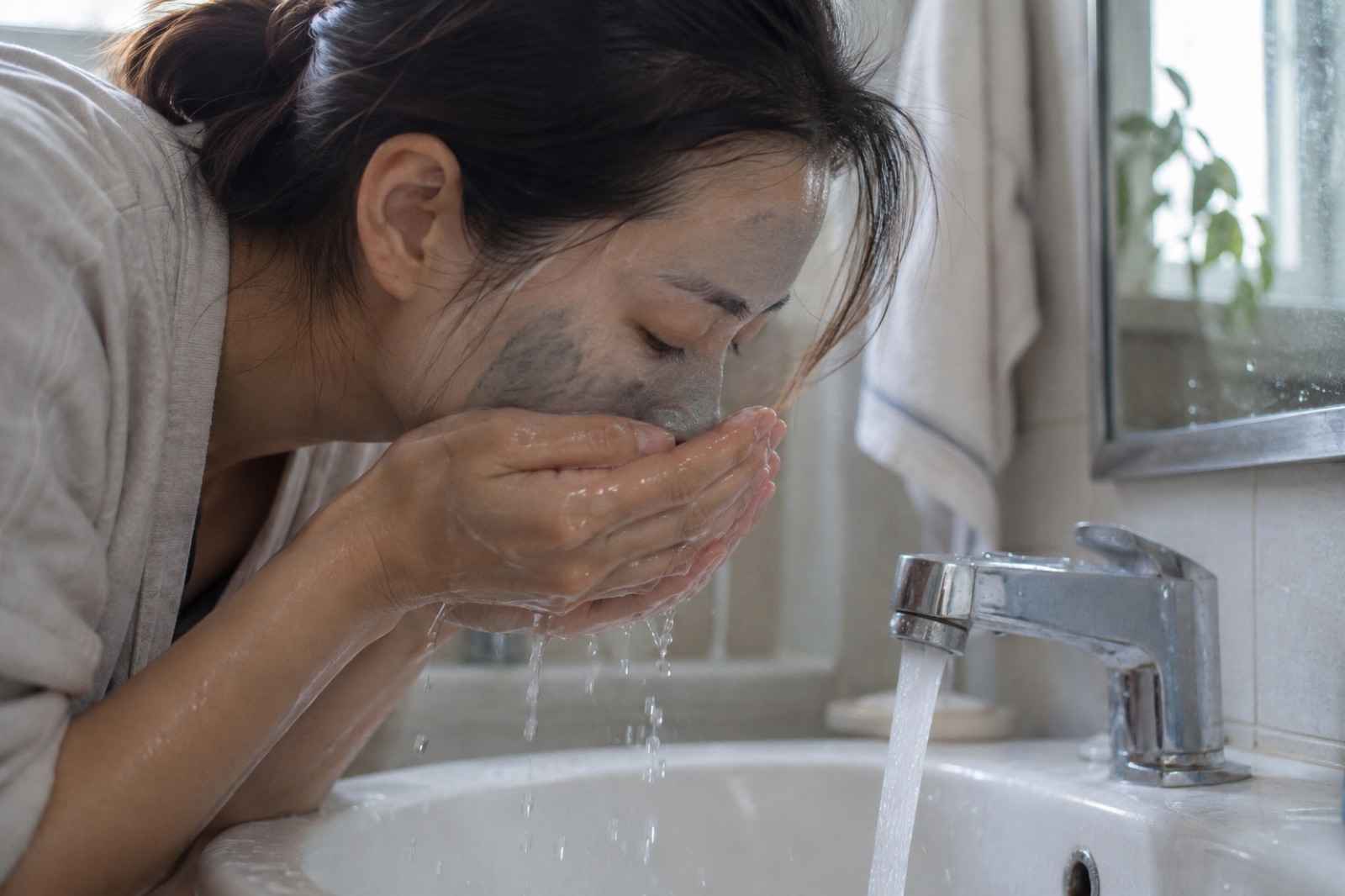
On the evening of day 1, pause your next strip or mask, scrubs and peels, toners or pads with acids, and any product you’re trying for the first time, and don’t pick at lifted flakes or rub the bridge of your nose to check it. All you do is rinse with lukewarm water, press a towel on to soak up the water, and apply your usual moisturizer thinly, steering around only the spots where skin peeled off.
No study set the 3-day length or the four time points inside it. They’re this guide’s editorial standard, picked so you can compare red-nose photos and sting scores taken at matching times. The UK’s National Health Service (NHS) explains that reactions to something that touched the skin usually appear within a few hours or days, so the evening you peel off the strip is the first box.
Say you’re a high school senior who put on a nose strip and peeled it off the night before a big exam. You’ll worry about a red nose tomorrow morning and want to add another mask or cover it up thickly. In a 1994 test, researchers first mildly irritated the skin of 11 healthy adults and then applied SLS solution again and again from Tuesday to Friday; transepidermal water loss rose stepwise and at hour 97 was still higher than the starting value. That was an experimental model built with a cleansing ingredient, not a test of pore strips, but this guide uses it as a reason not to layer anything onto an area that’s already red.
In its acne guidance, the American Academy of Dermatology (AAD) says to keep your hands away from your face and notes that touching, picking and popping can make acne worse. Don’t tidy up the white bits that came up where the strip was, or any lifted flakes, with a fingernail or a cotton swab either.
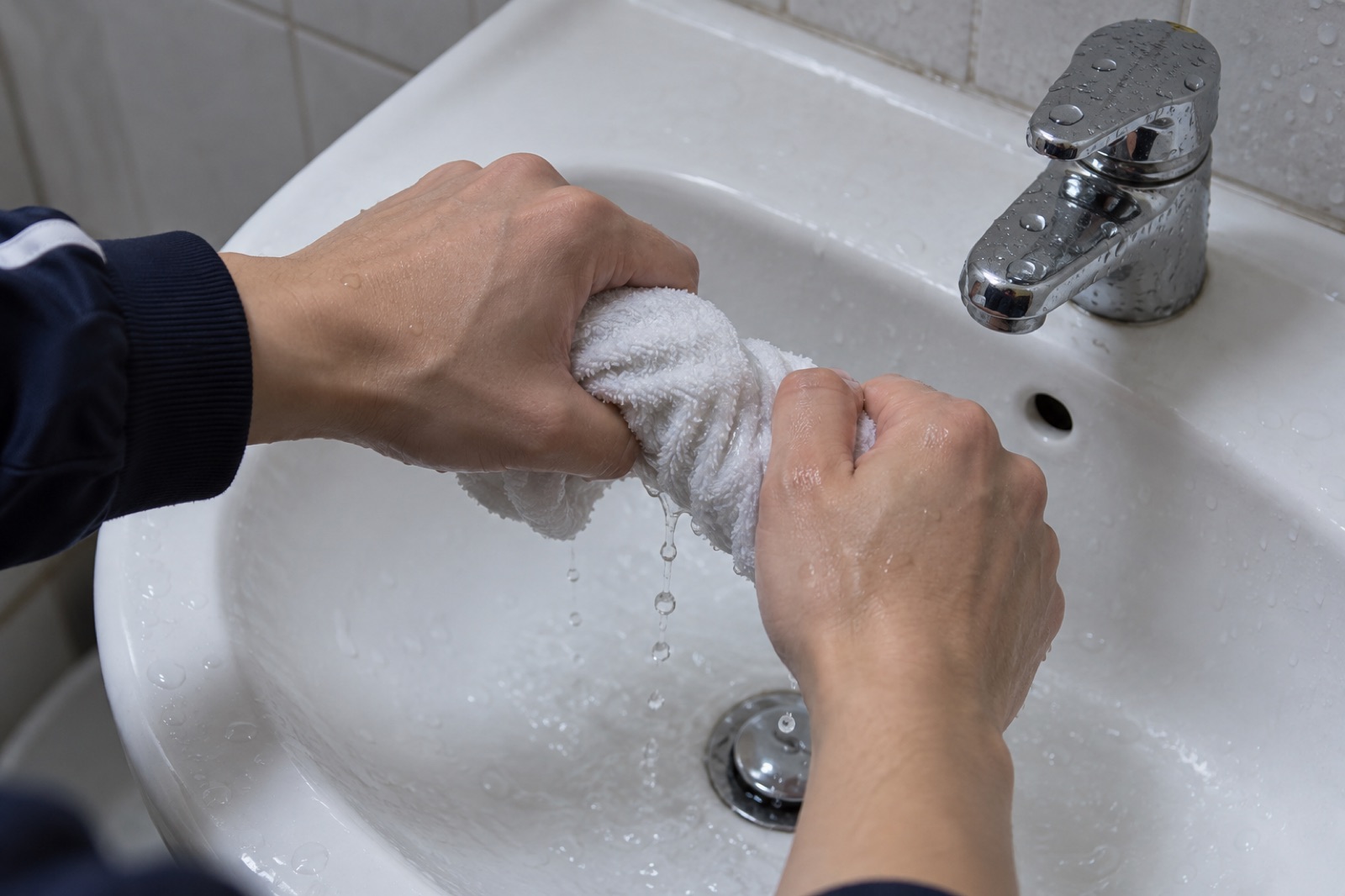
If the burning doesn’t ease, you can try briefly resting a towel soaked in cold water and wrung out tight on it. Still, in a 2001 experiment where the skin of 9 healthy people was deliberately irritated and then given cold water or saline compresses twice a day for 30 minutes over 4 days, only water loss and blood flow dropped significantly, with no significant effect on redness judged by eye or measured with a color meter. The authors also wrote that the real benefit would only become clear through further experiments, so don’t put ice straight on bare skin (editorial standard).
What do you do and write down on the morning and evening of day 2?
On day 2, take nose photos twice, morning and evening, with the same light and angle, and write the red area, the sting and any lifted flakes or scabs in the log. In the morning just rinse with lukewarm water; in the evening wash once with your usual cleanser, and put off hot water and double cleansing.
If you’re an office worker two days away from a job interview, you’ll be tempted to pick up a new cream or exfoliating pads on the way home. But if you bring in even one new thing on day 2, you can’t tell why the day 3 photo looks different, so write anything you want to buy only in the memo next to the log. Take two photos under the same light, such as a bedside lamp, one head-on and one from the side at 45 degrees, and ask a family member if that’s hard to do alone.
In the evening, compare against the photos to see whether the red area has spread past the sides of your nostrils onto your cheeks, or whether the itching is worse than in the morning; if either is true, don’t wait for day 3. Keep products that feel minty-cool or smell of alcohol put away through this day too (editorial standard).
Still red or scabbed on day 3: how do you decide what comes next?
On the evening of day 3, take one more photo under the same conditions as day 1 and line up all three days. If it’s the same or wider, if there are more pimples, or if a mark shows where a scab was, see a doctor with your notes and photos. If it’s shrinking, keep going the same way, but decide on strips and exfoliating products one at a time only after the redness is gone.
If you’re in your 20s and got soaked in sweat playing soccer on the weekend, day 3 might fall on that very day. Rinse the sweat off with lukewarm water, press a towel on the bridge of your nose instead of rubbing, and don’t hold your face under a hot shower stream for long (editorial standard). If a scab has formed, leave it until it falls off on its own, and if your hand keeps going there, note those moments separately with a log for the moments your hand goes to your nose.
The page “Wound care and scar prevention” on the National Health Information Portal of the Korea Disease Control and Prevention Agency (KDCA), Korea’s national public health agency, explains that redness, swelling and mild pain can appear during the inflammatory stage as a wound closes up, and lists moisturizing and keeping UV off the skin among the steady care against scarring. It’s general wound guidance, so this guide doesn’t apply it directly to a pore-strip spot and uses it only as a reason not to touch areas where skin was pulled off.
In a 2025 cross-sectional study that surveyed 225 acne patients in Thailand aged 18 or older online, 61.33% had acne scars, and having experienced post-acne erythema, redness that stays behind where acne has settled, was named as a factor independently linked to scarring. It didn’t look at pore-strip marks, so read it only as a reason to have a red mark checked at a visit if it stays past 3 days.

Once the redness has fully settled and you’re deciding whether to use strips again, move on to the order for a pore mask night, and if you want to look at the other habits that touch your nose, continue with a weekly nose habit log.
If you have to go out with a red nose during the day, what else do you bring?
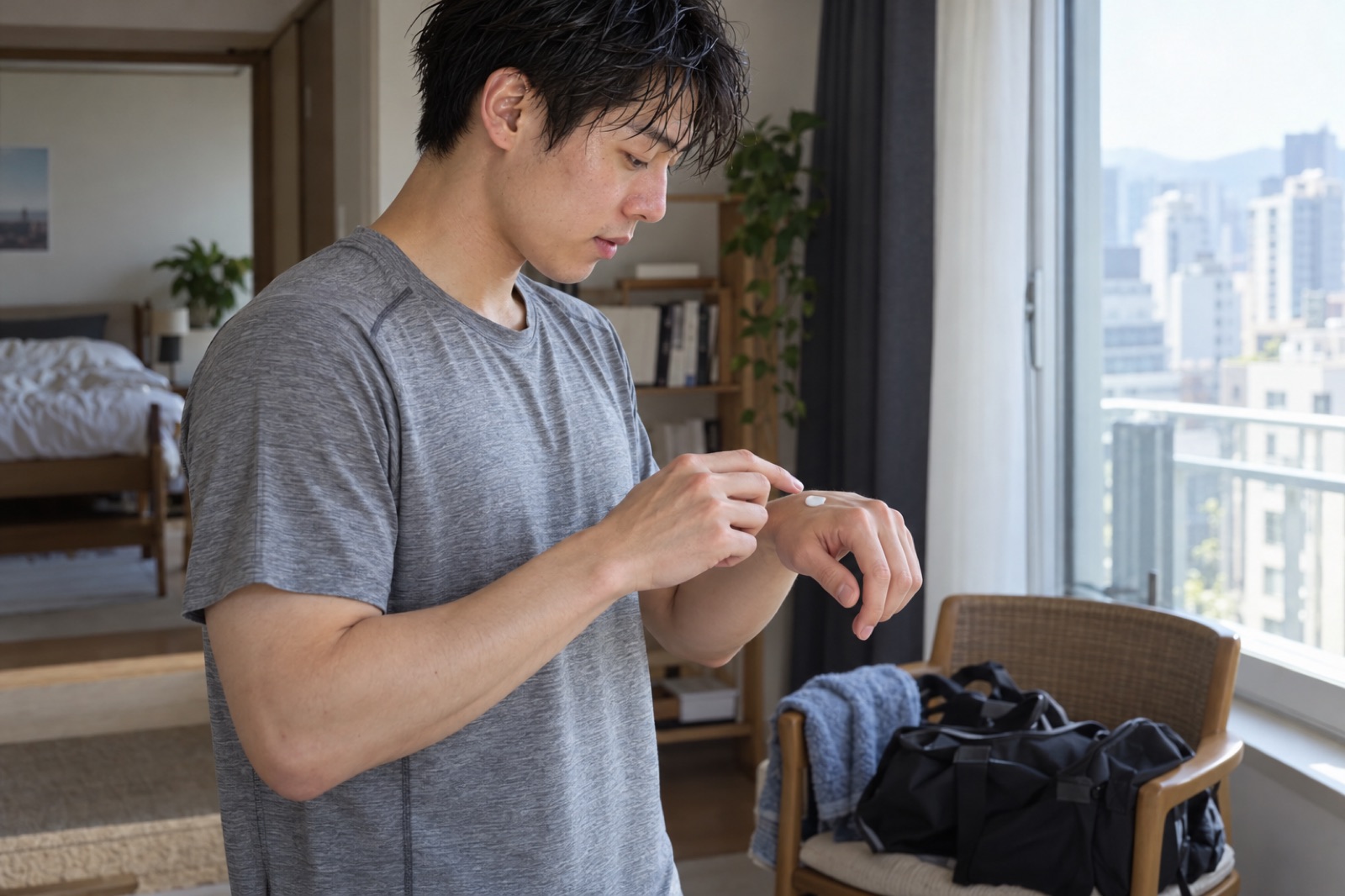
Before you head out, spread your usual sunscreen thinly over the red area too, and don’t switch to a new product during these 3 days. Also cut back on dabbing concealer over the red area again and again for the 3 days (editorial standard).
A 2022 systematic review that picked 47 of 1,224 studies (1,853 people) on topical care for post-inflammatory hyperpigmentation found that almost every study had participants use SPF 30 or higher sunscreen as well. It covered skin with hyperpigmentation, not a red nose after a pore strip, but this guide uses it as a reason to keep the sun off on days you have a red area.
Your 3-day order table and log for a red nose after a pore strip
| Time point | Pause | Do | Write down | See a doctor without waiting if |
|---|---|---|---|---|
| Day 1 evening | Next strip or mask, scrubs and peels, toners and pads with acids, products you’re using for the first time, picking at lifted flakes, rubbing or pressing the bridge of your nose | Rinse with lukewarm water and press dry, a cold towel briefly if it burns, only your usual moisturizer, thinly, around peeled spots | First photo, red area, sting | Nose swollen and hot to the touch, blisters, oozing |
| Day 2 morning | Washing with hot water, products that feel minty-cool or smell of alcohol, dabbing to cover the red area | Lukewarm rinse only, your usual moisturizer, your usual sunscreen before going out | Morning photo, lifted flakes and scabs | Red area spreads past the sides of your nostrils onto your cheeks |
| Day 2 evening | Double cleansing and clay masks, long saunas or hot showers | Wash once with your usual cleanser, moisturize | Times you touched your nose, the one new thing that changed | Itching worse than in the morning |
| Day 3 | Picking off scabs, scheduling your next strip | One more photo under the same conditions as day 1, all three days side by side | One line comparing the three days | Same or wider, more pimples, a mark where a scab was: see a doctor with your notes |
| Time logged | Red area (vs. a coin) | Sting 0–2 | Warmth at nose tip | Lifted flakes or scabs | Times you touched your nose | One new change |
|---|---|---|---|---|---|---|
| Day 1 evening ( / ) | ||||||
| Day 2 morning ( / ) | ||||||
| Day 2 evening ( / ) | ||||||
| Day 3 evening ( / ) |
For the red area, pick one of “within a dime,” “about a nickel” or “wider than a quarter,” and score the sting 0 (you don’t notice it even when washing), 1 (it stings when water or moisturizer touches it) or 2 (it burns even when nothing touches it). To check warmth at the tip of your nose, touch it for a moment with the back of your hand and write down just one thing: is it warmer than your cheek? If you hit the see-a-doctor column, stop logging at that point and bring only the boxes you’ve filled. This table doesn’t name a condition, and the three coin sizes and the 0–2 scale are editorial standards, not research scales.
When should a dermatologist or doctor take a look at your nose?
- Even on day 1, if your nose is swollen and hot to the touch, blisters form or it oozes, don’t finish out the 3 days; see a doctor.
- If on day 2 the red area spreads past the sides of your nostrils onto your cheeks or the itching keeps getting worse, don’t wait for day 3; see a dermatologist.
- If the day 3 photo looks the same as day 1 or wider, or there are more pimples or a mark where a scab was, consider seeing a dermatologist with your 3-day notes and photos.
- In its contact dermatitis guidance, the UK’s National Health Service (NHS) says to see a doctor if symptoms are persistent, recurrent or severe. If your nose has kept turning red for years, don’t settle the cause at home; bring the notes you’ve kept.
A short summary of this guide’s sources
- A 1994 cumulative irritation test (PMID 8088139) showed that when SLS was applied repeatedly to the skin of 11 healthy adults that had first been mildly irritated, transepidermal water loss rose stepwise and was still higher than at the start at hour 97.
- In a 2001 compress experiment (PMID 11553140), cold water or saline compresses on irritated areas of 9 healthy volunteers twice a day for 30 minutes over 4 days reduced water loss and blood flow, but had no significant effect on redness measured with a color meter or judged by eye.
- Across the 47 studies (1,853 people) on post-inflammatory hyperpigmentation reviewed in a 2022 systematic review (PMID 34525885), almost every study had participants use SPF 30 or higher sunscreen as well.
Frequently asked questions
My nose got bumpy and broke out in pimples after a pore strip. What should I do?
For the first 3 days, add nothing, and write down how wide the bumpy area is and how many pimples there are, along with photos taken under the same light. The American Academy of Dermatology (AAD) says touching, picking and popping can make acne worse, so don't squeeze the pimples. If your nose is swollen and feels hot to the touch, don't wait out the 3 days; see a dermatologist.
My nose has stayed red with breakouts that keep coming back for years since one bad pore strip. What should I do?
That goes beyond what this guide's 3-day order can cover, so seeing a dermatologist with your photos and notes from that whole time comes first. The UK's National Health Service (NHS) also says to see a doctor if symptoms from something that touched your skin are persistent, recurrent or severe. Don't decide at home whether that pore strip years ago is the cause; bringing a list of the skincare products you've tried since then makes it easier to explain.
Can I put a sheet mask on my nose where it turned red after a pore strip?
During the 3 red, stinging days, hold off on starting a sheet mask too. This guide found no test of sheet masks on skin reddened by a pore strip, and in a 1994 test, when the same irritation was repeated on skin that had first been mildly irritated, water loss rose stepwise. After the redness settles, try your usual mask once and write the next day's reaction in your log.
How long do red marks or dark spots last after pulling off a pore strip?
This guide found no data measuring how long they last. However, in a 2025 survey of 225 acne patients in Thailand, having had redness left where acne had settled was named as a factor linked to scarring, and most of the hyperpigmentation studies reviewed in a 2022 review had participants use SPF 30 or higher sunscreen as well. During the day, wear your usual sunscreen, and if a mark turns brown and settles in or looks sunken, see a dermatologist.
Can I put another mask on right after a peel-off pore strip?
On a day your nose is red or stinging, don't follow it with another mask. This guide found no test of masks used back to back, but in a 1994 test, when a cleansing ingredient was applied repeatedly from Tuesday to Friday to skin that had first been mildly irritated, transepidermal water loss rose stepwise. Even on a day with no redness, using just one mask at a time and noting that day makes it easier to tell reactions apart.
My nose turned red and swollen after a pore strip. Is the strip the reason?
The first step is not to reach a verdict on the cause at home. The NHS explains that reactions to something that touched the skin usually appear within a few hours or days and are common on the face, but whether your swollen nose is one of those is for a visit to sort out. If it's swollen and hot to the touch, don't keep filling in the 3-day log; see a dermatologist right away.
Do I have to stop all my skincare when my nose gets red after a pore strip?
Rather than stopping everything, keep your usual cleanser, moisturizer and sunscreen, and pause only new products, acids, exfoliating products and masks. If you cut everything at once, it gets harder to read from your notes what changed over the 3 days. Once it settles, bring back what you paused one at a time.
Can I double cleanse with an oil cleanser and a foam cleanser while my nose is red?
For the 3 days, put off double cleansing and stop at washing once in the evening with your usual cleanser. This guide found no data comparing the order of oil, foam and clay masks on a reddened nose, so work them back in one by one after the redness settles. Use lukewarm water, not hot, and after rinsing, lightly press a towel on to take up just the water.
My parents often make me do pore strips. What should I do when my nose gets red?
While it's red and stinging, tell your family you won't use a pore strip for 3 days, and share your notes by looking at the day 1 and day 3 photos together. This is decided by how your nose is now, not by your age, so until the redness settles, put off the next strip no matter who suggests it. If it's the same on day 3, take those notes and see a doctor together with your family.
Sources
- Cumulative irritation test: SLS applied Monday to Friday on skin first mildly irritated, 11 healthy adults, 1994 (PMID 8088139)A
- Cold water and saline compresses on experimentally irritated skin, twice daily for 30 minutes × 4 days, 9 healthy volunteers, 2001 (PMID 11553140)A
- Cross-sectional survey of facial scar risk factors in Thai acne patients, 225 people, 2025 (PMID 39601200)B
- Systematic review of topical care for post-inflammatory hyperpigmentation, 47 studies with 1,853 people, 2022 (PMID 34525885)A
- NHS — Contact dermatitisInstitutional
- AAD — Pimple popping: Why only a dermatologist should do itInstitutional
- Korea Disease Control and Prevention Agency (KDCA) National Health Information Portal — Wound care and scar prevention (Korean)Institutional
Videos and forum posts never count as evidence for a fact here. Full rules: Editorial policy
What to check when choosing a product for this routine
Check the criteria below before the product name. Each item can be found on the full ingredient list or in the product description.
| Item | What to look for | Why |
|---|---|---|
| Where not to apply it | Whether the pre-use checks include a line saying not to use it on areas with wounds | On a day the tip of your nose is peeling or scabbed, it's your basis for leaving just that spot bare and applying it only to your cheeks and forehead |
| When to stop and ask | Whether it says to stop and consult someone if red spots, swelling, itching or other unusual reactions show up | If the red area spreads past the sides of your nostrils on day 2, it's the line you reread alongside your notes |
| Its place in the routine | Whether the order is set so it goes on last, after toner and ampoule | When you keep only two steps for 3 days, a lukewarm wash and moisturizer, you won't be unsure where it goes |
| Fragrance ingredients | Whether fragrance appears in the full ingredient list, and if it says no added fragrance, whether that claim is based on the ingredient list | When you score the sting, you can also note whether fragrance was one of the variables or not |
| Latest info on the container | Whether a line says to check the full ingredient list and expiry date on the latest container first | Even with a cream you already use, an expired one adds one more variable to your 3-day notes |
Product from this site's operator · KW Cosmetic Content Team
Revive Therapy N.F CreamThis isn't a call to start a new cream in these 3 days, and it stays off a nose tip that's peeling or scabbed. The facts: a 50 mL cream with ceramides and hyaluronic acid, no added fragrance per its ingredient list, and a completed low-irritation patch test, but there's no test data on noses reddened by a pore strip. Its product page puts it last in the routine, after ampoule, and says to stop and consult a dermatologist if anything unusual appears. Once the redness settles and you're back to cleansing and moisturizing, for that last step the product we suggest is Revive Therapy N.F Cream.
Fitting it into a routine
Where it goes: After ampoule, the last step of the routine
How to use it: After toner and ampoule, take a suitable amount and spread it gently from the center of the face outward. On areas where dryness bothers you, layer a small amount once more to finish.
Check before you use it: If red spots, swelling, itching or any other unusual reaction appears during or after use, stop using it and consult a dermatologist. Avoid using it on areas with wounds, and check the full ingredient list and expiry date on the latest packaging first.
Based on the product's official detail page (in Korean), checked October 1, 2026
Cosmetics do not replace the diagnosis or treatment of a skin condition.