Sunscreen Breakouts: Test a New One From Jawline to Half-Face
Start a new sunscreen on one spot along your jawline, then move to half your face and finally your whole face over 2 weeks, writing down how much you used and how your skin reacted at each stage.
What this note covers7 sections
- Why not put a new sunscreen on your whole face at once?
- How many days should you spend on the jawline, half-face and full-face stages?
- How much sunscreen should you put on your face?
- Is it bad for your skin to wear sunscreen every day?
- 2-week sunscreen trial log
- When should a doctor look at a sunscreen reaction?
- Evidence summary for this guide
| Stage or record | Detail | Basis |
|---|---|---|
| Half-face comparison | 59 patients with acne and scars were compared by applying different sunscreens to each side of the face for 6 weeks | 2022 PMID 35250287 · A |
| Early reactions | The same study reported burning in 5.95%, redness in 3.38% and dryness in 1.28%, which appeared only early on and then went away | 2022 PMID 35250287 · A |
| How often irritation or sensitization shows up | Across 64 human studies of oxybenzone sunscreens, suspected irritation or sensitization occurred in 48 of 19,570 exposures (0.26%) | 2008 PMID 18717962 · A |
| Amount applied | The recommended standard is 2 mg/cm², but the lotion that 52 people actually applied came to 1.1 mg/cm² | 2015 PMID 25771707 · B |
| Label ratings | In Korea, SPF and PA ratings are set from data under MFDS functional cosmetic review rules, and in August 2026 a draft amendment that would accept non-human test methods was posted for public comment | MFDS (Korea) · Institution |
Why not put a new sunscreen on your whole face at once?
If a reaction shows up, you need an untouched area to compare against so you can tell whether the new sunscreen caused it. Researchers use the same idea: in a 2022 trial of 59 people, different sunscreens went on each side of the face so the two halves could be compared.
In that trial, reactions such as burning (5.95%) and redness (3.38%) were reported only early on. Screening for those reactions on a small patch for the first few days before spreading out can lower the chance of your whole face flaring at once. The Korea Disease Control and Prevention Agency (KDCA) also notes that cosmetics can cause an acne-like rash and advises telling your doctor which cosmetics you have been using.
How many days should you spend on the jawline, half-face and full-face stages?
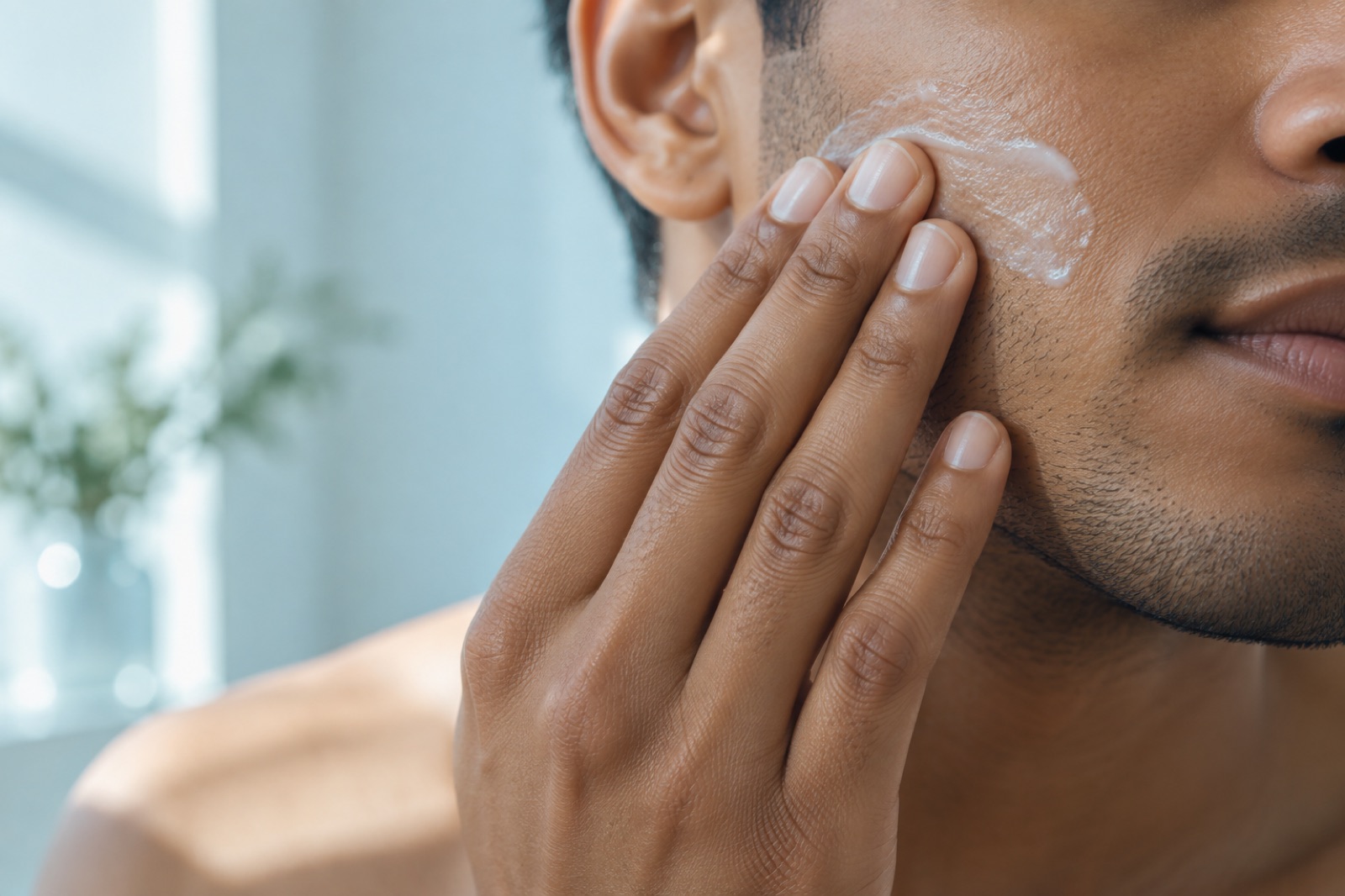
Plan 3 days on the jawline, 4 days on half your face and 7 days on your whole face, 2 weeks in total. For the jawline, choose a side where breakouts are easy to see but hair and collars touch less, apply a patch about half the size of your palm, and keep your usual sunscreen on the rest of your face.
In the half-face stage, count breakouts on the new side and the old side on the same day. Don’t change your cleanser, moisturizer or cushion compact during these 2 weeks, so any difference can be narrowed down to the sunscreen. Starting outside weeks when breakouts tend to rise, such as the week before your period or an exam or deadline week, makes the log easier to read.
How much sunscreen should you put on your face?
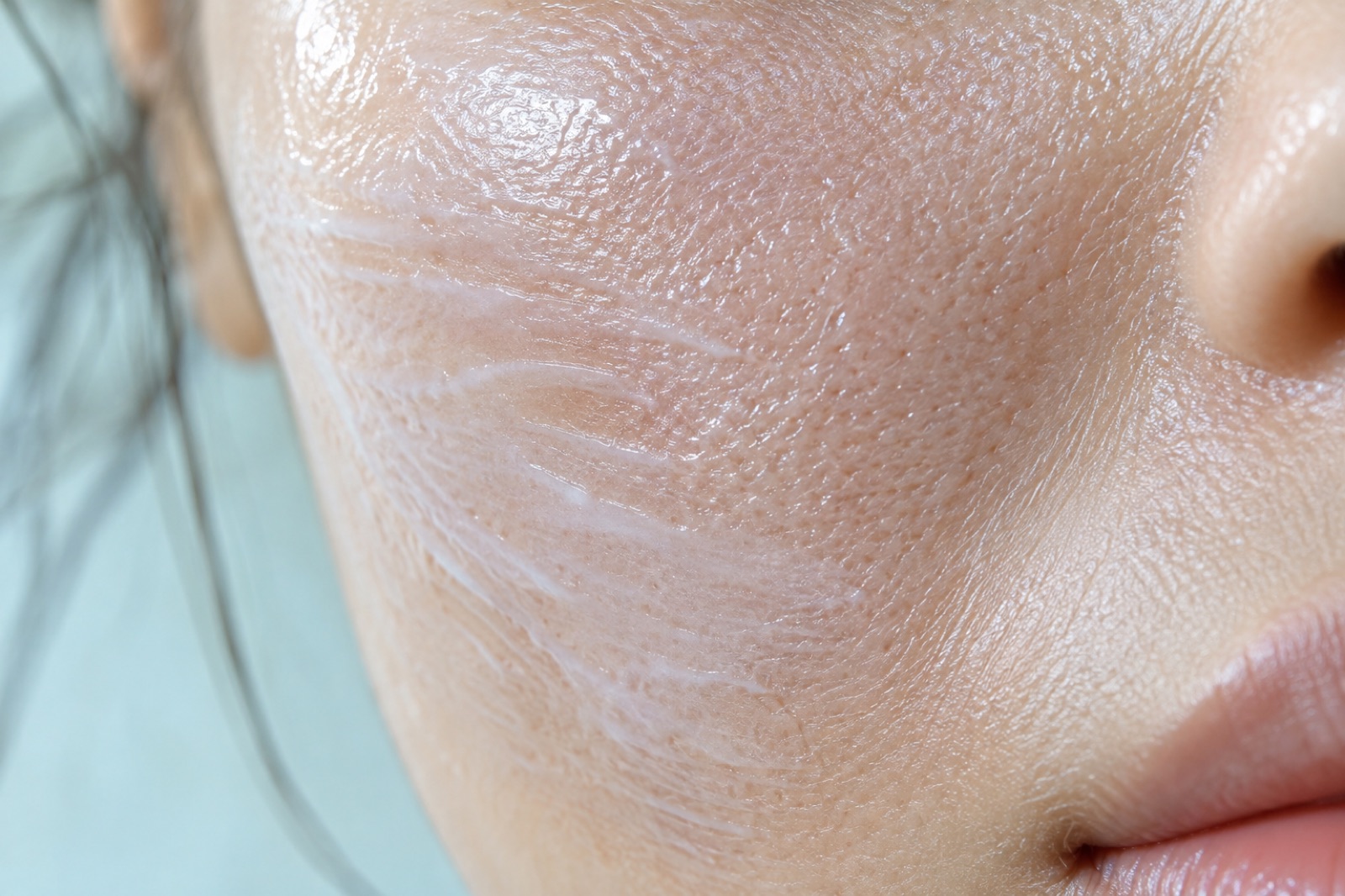
SPF values are set under a condition of 2 mg of sunscreen per square centimeter of skin. A 2015 study that measured the thickness 52 participants actually applied found 1.1 mg/cm² for lotion, 1.6 for spray and 0.35 for stick, all short of that standard.
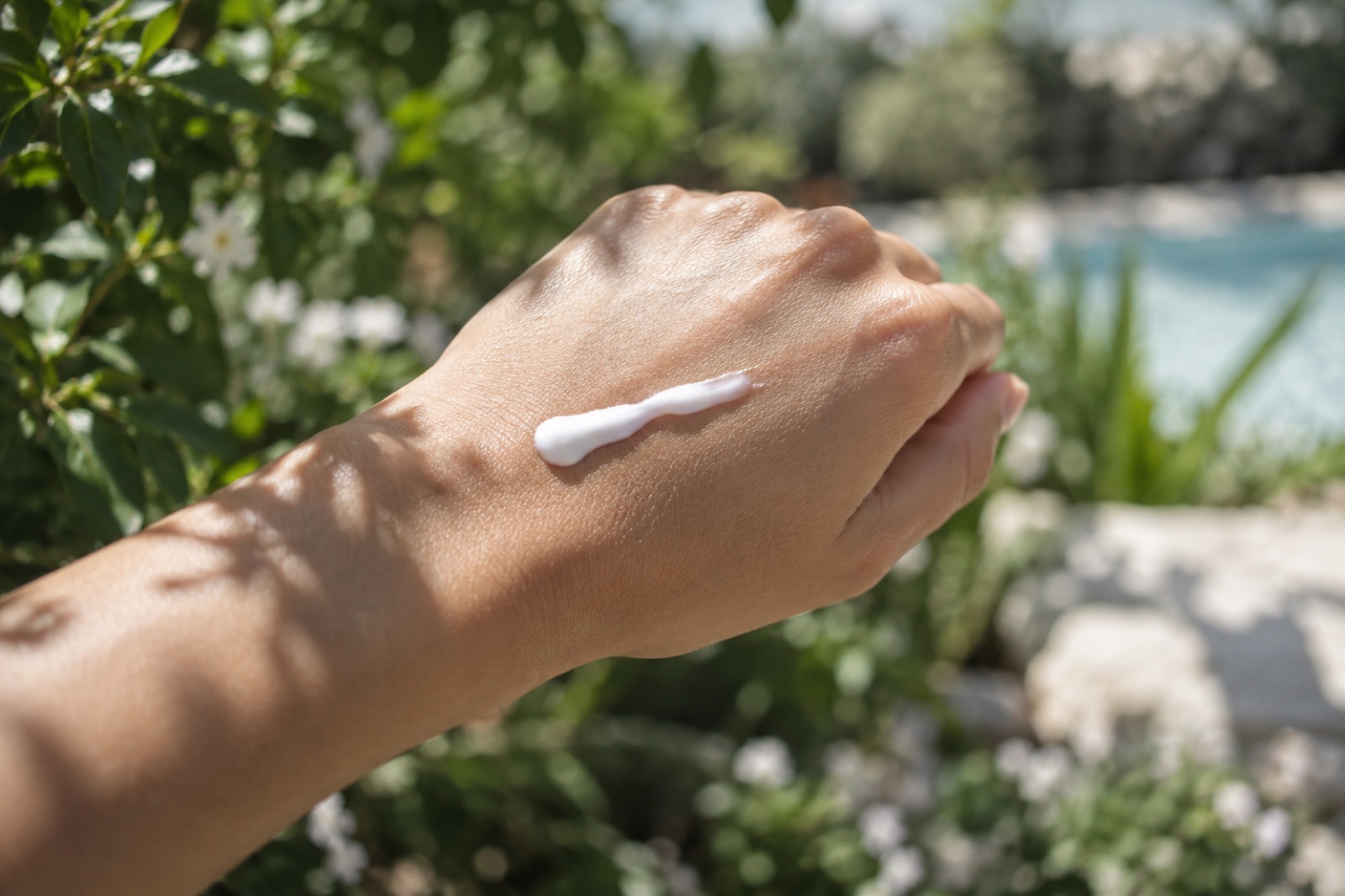
During the trial, keeping the amount the same every time matters more than hitting an exact number, because that is what lets you compare the two sides. On day one, decide how you will dispense it (how many lines on your palm, how many pumps), write that in the log, and use the same amount on both sides during the half-face stage. The Korean Dermatological Association advises using a sunscreen of SPF 30 or higher.
Is it bad for your skin to wear sunscreen every day?
Nothing in the evidence behind this guide shows that wearing it daily is harmful in itself. In a 2008 meta-analysis, suspected irritation or sensitization from oxybenzone sunscreens was 0.26%, and confirmed contact allergy was 0.07% (a pooled review of manufacturer-sponsored studies).
In a 2023 trial of 51 people who reapplied sunscreen every 4 hours while using acne medicine, severity changes over 4 weeks did not differ between the two sunscreen groups, and one group had less flaking. The KDCA advises using sunscreen routinely, choosing an oil-free gel type if you have acne, and double cleansing on days you wear sunscreen.
2-week sunscreen trial log
| Day | Area covered | Amount (how dispensed) | Times reapplied | Cleanse-off order | New side: breakouts or stinging | Old side: breakouts | Memo (pilling, sweat, face mask) |
|---|---|---|---|---|---|---|---|
| Day 1 | One jawline spot | — | |||||
| Day 3 | One jawline spot | — | |||||
| Day 5 | Half your face | ||||||
| Day 7 | Half your face | ||||||
| Day 10 | Whole face | — | |||||
| Day 14 | Whole face | — |
| Result after 14 days | Next step |
|---|---|
| Stinging or redness in the jawline stage | Don’t expand; stop using it |
| Breakouts up only on the new side in the half-face stage | Stop using it and check whether you washed it off the same way on both sides |
| Only pilling in the full-face stage | Adjust how long you wait after the previous step and the amount, then log one more week |
| No difference between the sides | Keep using it and log one more week |
When should a doctor look at a sunscreen reaction?
- If red swelling or itching spreads along the edge of where you applied sunscreen, it may be a reaction to an ingredient, so have a dermatologist check it. A 2023 report found that 2.1% of 19,618 patch-tested patients were positive to benzophenone, a sunscreen ingredient.
- If reactions get worse only on sun-exposed areas, see a dermatologist.
- If you are using prescription acne medicine and want to switch sunscreens, talk to the prescriber first.
Evidence summary for this guide
- In a 2008 meta-analysis pooling 64 human studies of oxybenzone sunscreens (PMID 18717962), suspected irritation or sensitization occurred in 48 of 19,570 exposures (0.26%).
- In a 2022 split-face trial of 59 patients with acne and scars (PMID 35250287), reactions such as burning (5.95%) and redness (3.38%) were reported only early on.
- In a 2015 study that measured how much 52 participants actually applied (PMID 25771707), lotion thickness was 1.1 mg/cm², short of the recommended 2 mg/cm².
Frequently asked questions
How much sunscreen should I put on my face?
SPF values are set under a condition of 2 mg of sunscreen per square centimeter of skin. A 2015 study that measured how much 52 participants actually applied found 1.1 mg/cm² for lotion, 1.6 for spray and 0.35 for stick, all below that standard. During your trial, squeeze the same way every time so the amount stays constant and the reactions can be compared.
Is it bad for your skin to wear sunscreen every day?
The evidence behind this guide contains nothing showing that daily use by itself is harmful. A 2008 analysis pooling 64 human studies of oxybenzone sunscreens found suspected irritation or sensitization in 48 of 19,570 exposures (0.26%). Korea's KDCA advises using sunscreen routinely and choosing an oil-free gel type if you have acne. Some people do react to specific ingredients, so try a new one in stages.
Why does my sunscreen pill when I put it on?
The evidence behind this guide includes no study that compared the causes of sunscreen pilling in people. Note in the memo column whether pilling happened on days you layered it before the previous step dried, put on a lot at once, or rubbed it in, and your own pattern gets easier to spot. Rubbing the pilled area adds friction, so press it down gently instead.
Sources
- Meta-analysis of irritation and sensitization from oxybenzone sunscreens, 64 human studies and 19,570 exposures, 2008 (PMID 18717962)A
- Split-face comparison of sunscreens after laser, 59 patients with acne and scars, 2022 (PMID 35250287)A
- Tolerability of two sunscreens used alongside acne medication, 51 people, 2023 (PMID 38152154)A
- Measuring the thickness of sunscreen actually applied, 52 people, 2015 (PMID 25771707)B
- Benzophenone positivity among 19,618 patch-tested patients, 2023 (PMID 36917534)B
- Korea Disease Control and Prevention Agency (KDCA) National Health Information Portal — Acne (Korean)Institutional
- Korean Dermatological Association — Melasma (Korean)Institutional
- Korea's Ministry of Food and Drug Safety (MFDS) — Draft amendment to the functional cosmetics review regulation, public notice No. 2026-409 (Korean)Institutional
Videos and forum posts never count as evidence for a fact here. Full rules: Editorial policy