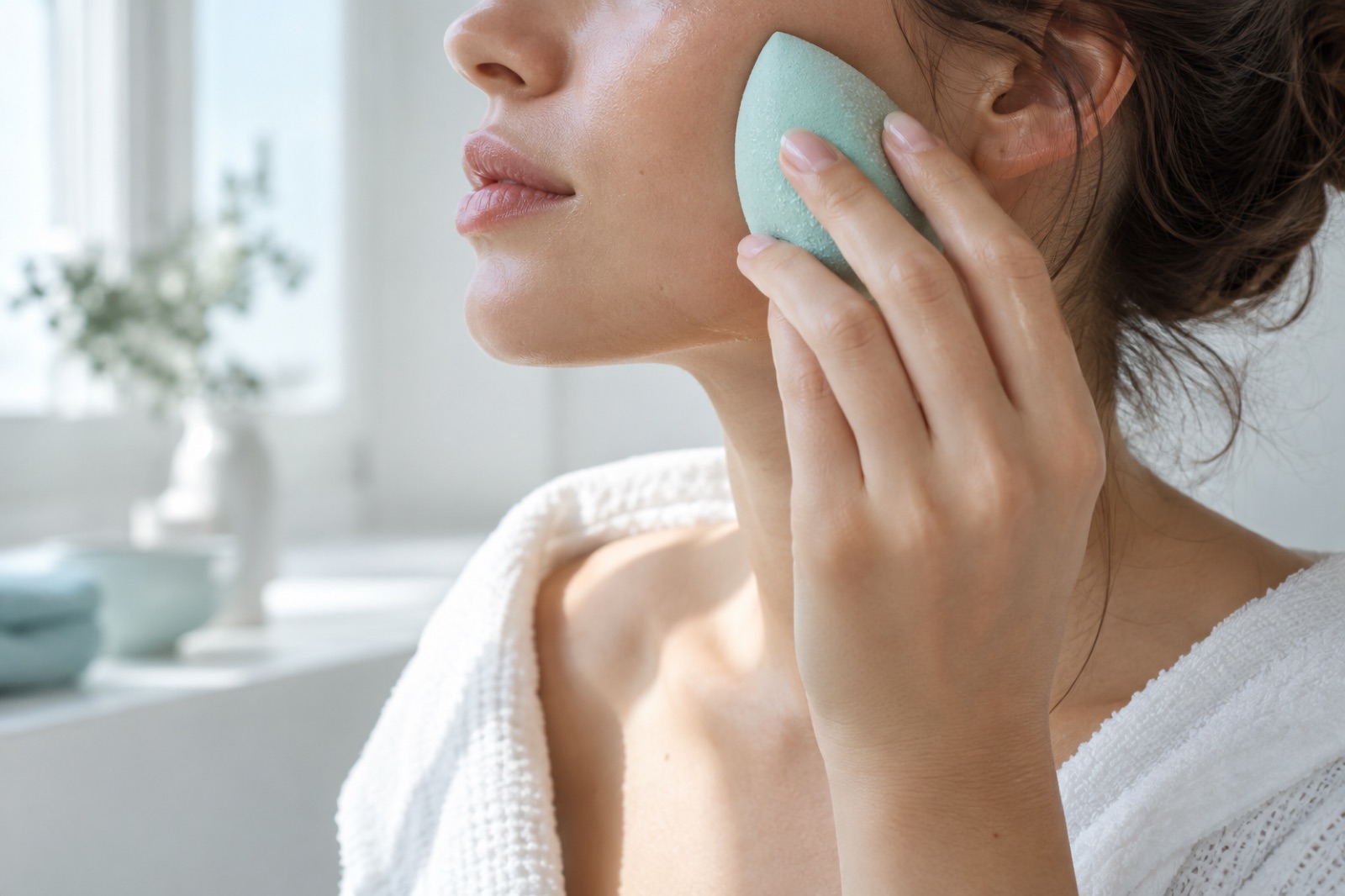
Pimple Patch Log: What to Watch From Day 1 Night to Day 3
Put a pimple patch on bare skin first, after washing and patting your face dry, then for three days note the spot's size and the skin where you peeled it to decide what to do next.

What this note covers10 sections
- Pimple patch: does it go on before or after cream and sunscreen?
- Can you sleep with a pimple patch on overnight?
- How should you take off a pimple patch?
- What does it mean when a pimple patch turns white and puffy?
- Should you wear a new patch when you go out during the day, or take a break?
- What are the downsides of pimple patches?
- On day 3, how do you decide whether to continue, stop or see a doctor?
- 3-day pimple patch log
- When should you stop the patches and see a dermatologist?
- Evidence summary for this guide
| Item | Detail | Basis |
|---|---|---|
| Peeling off | In a human study comparing 5 medical adhesive dressings, peel force and damage to the outer skin layer differed significantly between products, and a weaker peel force did not always mean less damage | 2001 PMID 12964220 · A |
| Time worn | The same study measured the outer skin layer after dressings were worn for 24 hours, once or three times (12 and 20 healthy adults) | 2001 PMID 12964220 · A |
| Covering for a long time | A classic observation found that covering acne areas with adhesive tape for 2 weeks regularly led to new inflammatory lesions | 1975 PMID 123732 · C |
| After touching | In a survey of 225 acne patients in Thailand, scar prevalence was 61.33%, and squeezing or picking and red marks after acne were risk factors for scarring | 2025 PMID 39601200 · B |
| Signs to stop | In Korea, acne cosmetics are not medical treatments; guidance says not to use them on damaged skin and to consult a professional if red spots or swelling appear | MFDS (Korea) 2025 · Institution |
Pimple patch: does it go on before or after cream and sunscreen?
The basic order is to wash your face, pat it dry, put the pimple patch on the spot before anything else is applied there, and then apply toner, cream, and sunscreen to the rest of your face. Many people say a patch comes off easily when it goes over cream or sunscreen, but no study has compared the order, so this order is an editorial standard.
| Check before you apply | Why |
|---|---|
| Is your face completely dry after washing? | Edges lift easily on damp skin |
| Is there no cream on the spot? | Cream goes only outside the edge of the patch |
| Is it a squeezed or picked spot, or one that is oozing? | That is damaged skin, so don’t cover it (Korea’s MFDS advises against using cosmetics on damaged skin) |
| Did you note the size before applying? | It is the baseline to compare against three days later |
Don’t layer sunscreen over the patch; spread it only up to the patch’s edge. On days you wear a patch in the daytime, sunscreen doesn’t reach the covered spot, so if you will be out for a long time, leaving that day as a rest slot is one option.
Can you sleep with a pimple patch on overnight?
No study has looked specifically at acne patches worn during sleep, so it makes sense to use the first night as the starting point of your observation. The closest reference is research on medical adhesive dressings: a 2001 trial left dressings on for 24 hours at a time, then peeled them off and measured damage to the outer skin layer.
In that trial, the peel force and how much of the skin surface came off differed significantly from dressing to dressing. These are not the same as pimple patches, but that is the reason to check whether a red mark is left where you peeled one off in the morning after wearing it all night. So on night 1, write down the time you applied it, the size of the spot and whether it has a red rim before you go to bed. If it’s on the cheek you sleep on, note that too.
How should you take off a pimple patch?
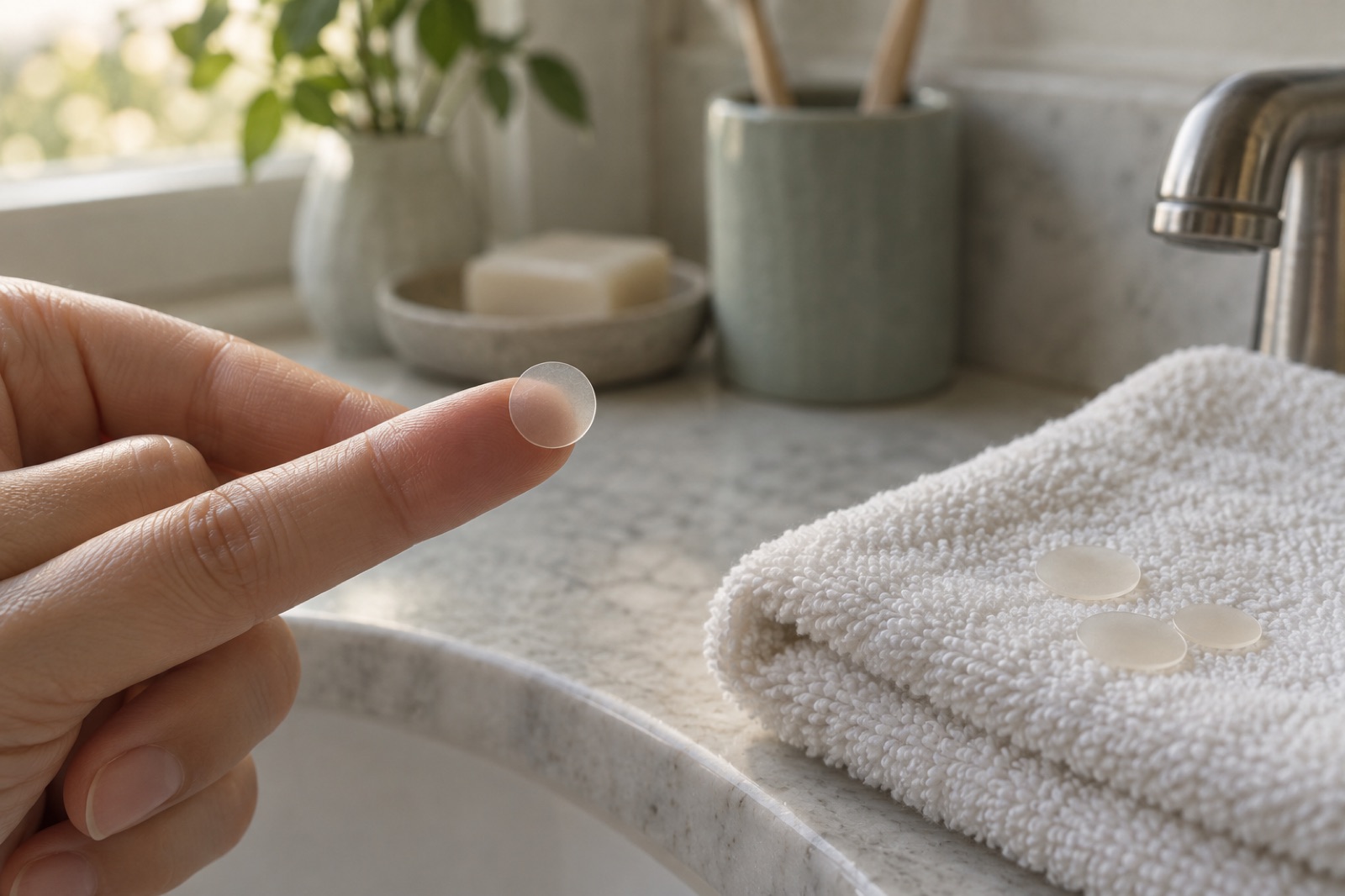
The basic move is to press the edge down with a fingertip and peel slowly so the patch doesn’t drag the skin. Part of the outer skin layer can come away at the moment you peel, which is why damage varied by product in the dressing study above.
Many people say that wetting the edges with water during the morning wash makes peeling easier, but no study has compared this. What deserves more attention is what happens after peeling. If a red or tight mark in the shape of the patch is left behind, log it separately from the spot itself. Sticking and peeling in the same place again and again over three days can make the surrounding skin sensitive even as the spot shrinks, so if marks build up, start by spacing out applications. For the moments your hand goes to the spot after the patch comes off, try logging them with Should I Pop My Pimple or Wait? A Habit Log for When Urges Strike.
What does it mean when a pimple patch turns white and puffy?
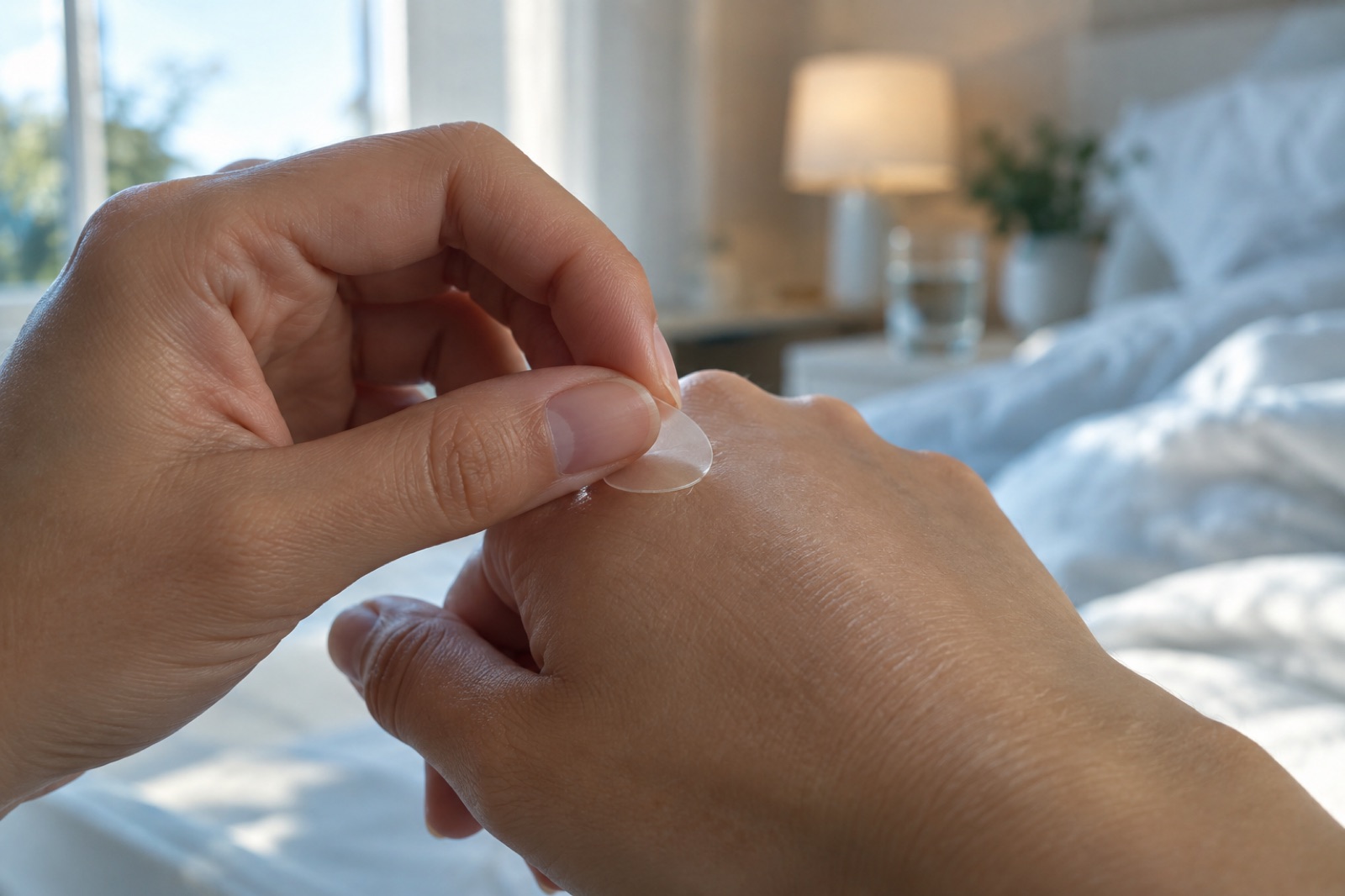
The evidence for this guide has no study on whether how white a patch turns reflects how much a spot has settled. So instead of reading the white area as a sign that it is working, write it down in your log as one more item.
If you note, when you peel it off, whether the white area is the size of a rice grain or a bean and whether it has spread to the edge of the patch, you can compare the change across three days. For when to replace it, follow the product’s instructions, and if the white area gets bigger every day or you see oozing where you peeled it, consider seeing a doctor first instead of keeping it covered with a patch.
Should you wear a new patch when you go out during the day, or take a break?
Leaving day 2’s daytime slot as a patch-free break makes the day 3 comparison easier. Keeping a spot covered is not always better: in a 1975 observation, covering acne areas with adhesive tape for 2 weeks regularly led to new inflammatory lesions.
It was an old case observation using tape, so it doesn’t carry over directly to today’s patches. Still, when friction and sweat pile on top of a patch, as on a commute in a face mask or a day with gym class, it tends to come off more easily. If you wore one during the day, note how many times you touched it and when it fell off. If you took a break, note the spot’s size that afternoon. The order for days you need to cover it with makeup is laid out separately in How to Wear Makeup on a Breakout Day: Cover, Touch Up, Take It Off.
What are the downsides of pimple patches?
The downsides are irritation when you peel them off, the strain of long coverage, and the way they can make you put off dealing with a deep spot. Gel patches with added ingredients are also hard to judge. In a 2021 trial in which 24 people with acne used a hydrogel containing natural extracts such as green tea, 4 people (16.67%) saw more than 80% of the lesion area improve, but the control group and time frame were unclear.
The bigger downside is the moment when, with a patch already on, you feel like squeezing. In a 2025 survey in Thailand (225 people), squeezing and picking were named as risk factors for scarring, and Korea’s KDCA also advises against squeezing or scratching acne by hand. In Korea, the Ministry of Food and Drug Safety (MFDS) describes acne cosmetics as products that are not medical treatments, and advises not using them on damaged skin and consulting a professional if red spots or swelling appear.
On day 3, how do you decide whether to continue, stop or see a doctor?
If the spot got smaller and no marks built up where you peeled, you can keep going. If marks built up, stop. If it spread or hurts, see a doctor. Three days is not long enough to reach a conclusion, but it is enough to pick a direction.
If the red rim is actually getting wider, or the spot feels hard to the touch, consider a dermatology visit before continuing with patches. Since red marks after acne have also been reported as a risk factor for scarring, taking one photo on day 3 makes it easier to explain things at the appointment. If an event is coming up and you can’t wait three days, see Pimple Before a Big Event? A 48-Hour Step-by-Step Timeline.
3-day pimple patch log
| Day and time | On / off | Spot size | Red rim | Skin where you peeled | Times touched | Notes |
|---|---|---|---|---|---|---|
| Day 1 night | On at ___ | Rice grain / bean / bigger | Yes / no | — | Confirm it hasn’t been squeezed; did it go on before cream? | |
| Day 2 morning | Off at ___ | Red / tight / none | Peeled before or after washing? Size of the white area | |||
| Day 2 daytime | On / break | — | Face mask or exercise? | |||
| Day 2 night | On / break | |||||
| Day 3 morning | Off | One photo in the same light | ||||
| Day 3 decision | Continue / stop / see a doctor | Smaller? | Wider? | Marks building up? | Gap before next use |
Always use the same scale for size, such as rice grain or bean, so the days can be compared.
When should you stop the patches and see a dermatologist?
- If the red rim widens over the three days, or the spot feels like a hard, painful lump, stop using patches and see a dermatologist.
- If itching, oozing or blisters show up where you peeled the patch, stop using it and have a dermatologist check.
- If spots keep coming back in the same place or red marks start to stay, talk to a dermatologist.
Evidence summary for this guide
- In a 2001 trial in which 5 medical adhesive dressings were worn for 24 hours at a time by 12 and 20 healthy adults (PMID 12964220), peel force and damage to the outer skin layer differed significantly between products.
- In a 2025 survey of 225 acne patients in Thailand (PMID 39601200), scar prevalence was 61.33%, and squeezing or picking and red marks after acne were risk factors for scarring.
- In a 2021 trial in which 24 people with acne used a hydrogel with natural extracts (PMID 34765083), 4 people (16.67%) saw more than 80% of the lesion area improve, but the control group was unclear.
Frequently asked questions
Can you sleep with a pimple patch on overnight?
The evidence behind this guide includes no study that compared wearing a patch on acne while sleeping. Studies of medical adhesive dressings used 24 hours of wear as their standard, and the peel force and damage to the skin's outer layer varied from dressing to dressing. If you note from the first night whether redness or tightness remains where you peeled the patch after waking, it is easier to decide on next time.
How should you take off a pimple patch?
Rather than yanking it off in one go, press the edge down with a fingertip and peel slowly so it pulls on the skin less. In a 2001 study comparing 5 adhesive dressings, the peel force and how much of the outer skin layer came off differed significantly between products. If the skin where you peeled turns red every time, space out applications or try a different material.
What are the downsides of pimple patches?
Some of the skin surface can come off when you peel the patch, and keeping the same spot covered for a long time can also be a strain. In a 1975 observation, covering acne areas with adhesive tape for 2 weeks led to new inflammatory lesions. Deep, painful spots are hard to settle with a patch, and leaving one on while you wait can mean missing the right time to see a doctor.
Sources
- Stratum corneum damage from adhesive dressings, RCT in 12 and 20 people, 2001 (PMID 12964220)A
- Hydrogel containing natural extracts applied to acne, 24 people, 2021 (PMID 34765083)B
- Risk factors for facial acne scarring among 225 Thai patients, 2025 (PMID 39601200)B
- Acne mechanica: mechanical friction, pressure and acne, 1975 (PMID 123732)C
- Korea Disease Control and Prevention Agency (KDCA) National Health Information Portal — Acne (Korean)Institutional
- Korea's Ministry of Food and Drug Safety (MFDS, Busan office) consumer newsletter — Are acne cosmetics a treatment? (Korean, 2025-05-30)Institutional
Videos and forum posts never count as evidence for a fact here. Full rules: Editorial policy
What to check when choosing a product for this routine
Check the criteria below before the product name. Each item can be found on the full ingredient list or in the product description.
| Item | What to look for | Why |
|---|---|---|
| Ethanol | Whether ethanol is on the ingredient list, with a note that it may sting | On a patch-free slot when you applied something, you can log that sting apart from how the peeled skin reacted |
| Amount per use | Whether it states how much to use at once, such as 1–2 drops | Using the same amount for all 3 days lets you compare the size column from one date to the next |
| Test-first note | Whether it says to test a small amount on an inconspicuous area first | Noting a separate test day before the day 1 night helps you separate overlapping conditions when you decide on day 3 |
| Cosmetic label | Whether it says it's a cosmetic, not a medicine | On a day the red rim spreads, it keeps clear that you move to the see-a-doctor column instead of holding out with something you apply |
Product from this site's operator · KW Cosmetic Content Team
Centella Rescue Spot AmpouleThis isn't a cue to add something alongside the patch in your 3-day notes, only facts to weigh if you put a spot step in a patch-free slot, like day 2 daytime. It's a 15 ml spot ampoule with centella asiatica extract as its main ingredient; it contains ethanol, so it may sting briefly. It completed a low-irritation patch test, but there's no test data on use with patches, and it's unrelated to the dressing studies cited here. Its product page says 1–2 drops where needed after cleansing; test a small area first. For that patch-free slot, the product we suggest is Centella Rescue Spot Ampoule.
Fitting it into a routine
Where it goes: After cleansing, on the areas that need it, or mixed into your toner or ampoule
How to use it: Spot care: after cleansing, put 1–2 drops directly on the area that needs it, or spread them lightly with a fingertip. Tip care: mix 3–4 drops into the toner or ampoule you normally use.
Check before you use it: It contains ethanol, so it may sting for a moment when applied to troubled skin. If your skin is sensitive, test a small amount on an inconspicuous area before use. This product is a cosmetic, not a medicine.
Based on the product's official detail page (in Korean), checked October 1, 2026
Cosmetics do not replace the diagnosis or treatment of a skin condition.