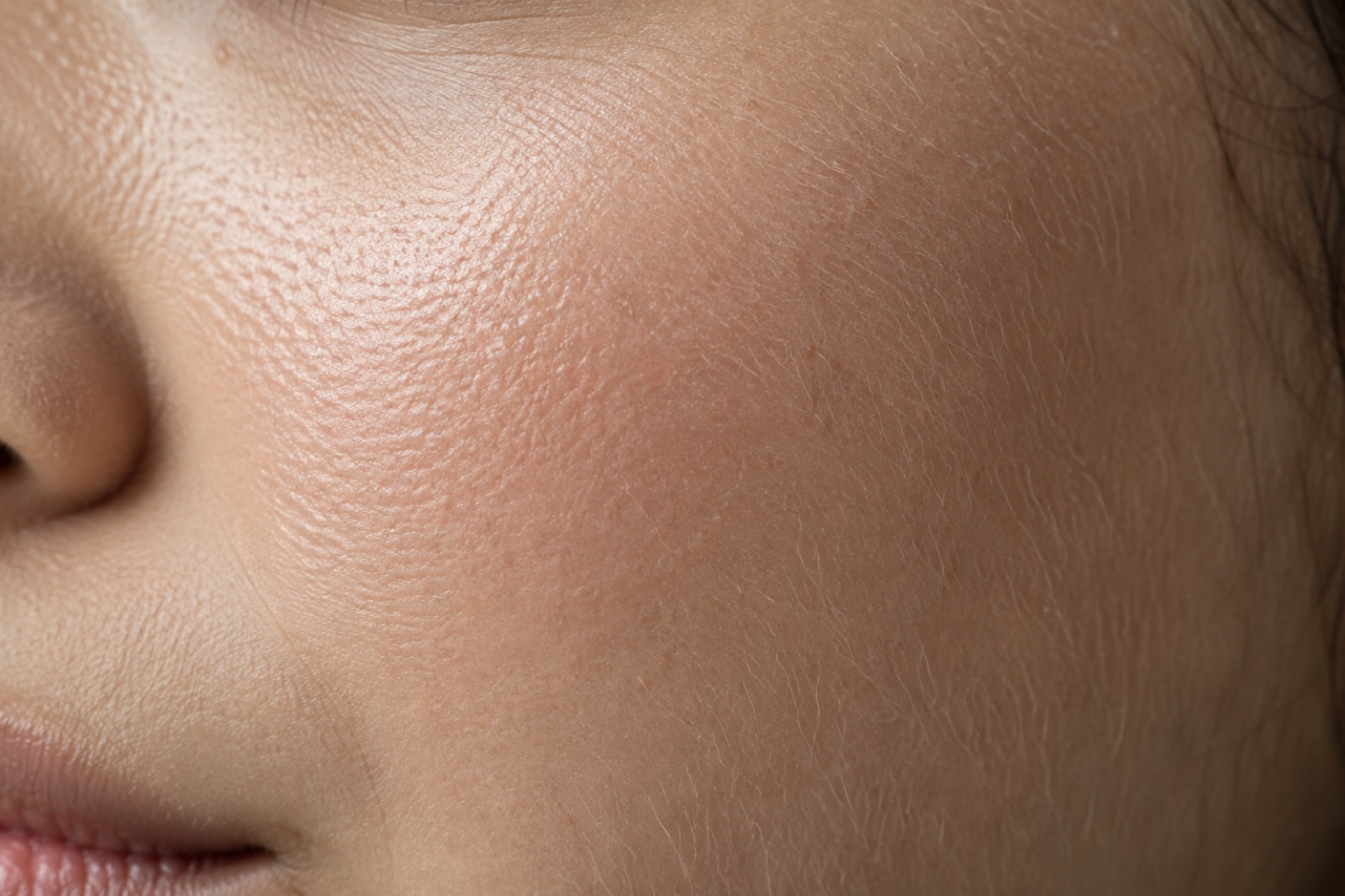
Acne Skin Care Routine for Tiny-Bump Days and Red, Sore Days
Match your acne skin care routine to how your skin looks each morning: keep washing and moisturizer whatever the day, drop exfoliating products on red, sore days, and write one line in the evening.
What this note covers7 sections
- How do you sort your skin in front of the mirror each morning?
- How should you take care of inflamed acne?
- What changes on days you work out and sweat?
- What should you do when acne keeps coming back in the same spot?
- Your skin-state chart for the day
- When is it time to bring your log to a dermatologist?
- What this daily chart is based on
| Item | Detail | Basis |
|---|---|---|
| Situation: mixed days | Acne often shows up as several types mixed together rather than just one, and spots that come up red turn brown over time | KDCA (Korea) · Institution |
| Situation: sweaty days | For every 1°C (1.8°F) rise in body temperature, sebum output goes up by 10%, so days with lots of sweat and oil create conditions in which acne can easily get worse | KDCA (Korea) · Institution |
| Drop: exfoliating products | Overusing exfoliating products can physically irritate the skin and actually make acne worse | Korean Dermatological Association · Institution |
| Log: leftover marks | Pigmentation where acne has been can last a year or more, so you log it separately from new spots | Korean Dermatological Association · Institution |
| Rule: sort first | A study that followed 308 Korean acne patients for 12 weeks first split them by skin sensitivity at the start (144 sensitive, 164 not sensitive) | 2026 PMID 41949173 · B |
How do you sort your skin in front of the mirror each morning?
Before you wash your face, look at it in the same light and pick one of three: a day with only tiny bumps and rough texture, a day with red spots that hurt when pressed mixed in, or a day when one has come back in the same spot. This is not a diagnosis that puts a name on anything; it is this guide’s editorial rule for sorting by what you can see, so you can decide what to keep and what to drop that day.
The Korea Disease Control and Prevention Agency (KDCA), Korea’s national public health agency, explains that a hallmark of acne is several types of spots showing up mixed together rather than just one. So if even one red, sore spot sits among the tiny bumps, you pick “red, sore day” for that day. A 2026 study that followed 308 Korean acne patients for 12 weeks also began by splitting people with sensitive skin from those without. Because it is an observational study, we don’t read it as proof that one kind of care works better; we borrow only the order of sorting first.
How should you take care of inflamed acne?
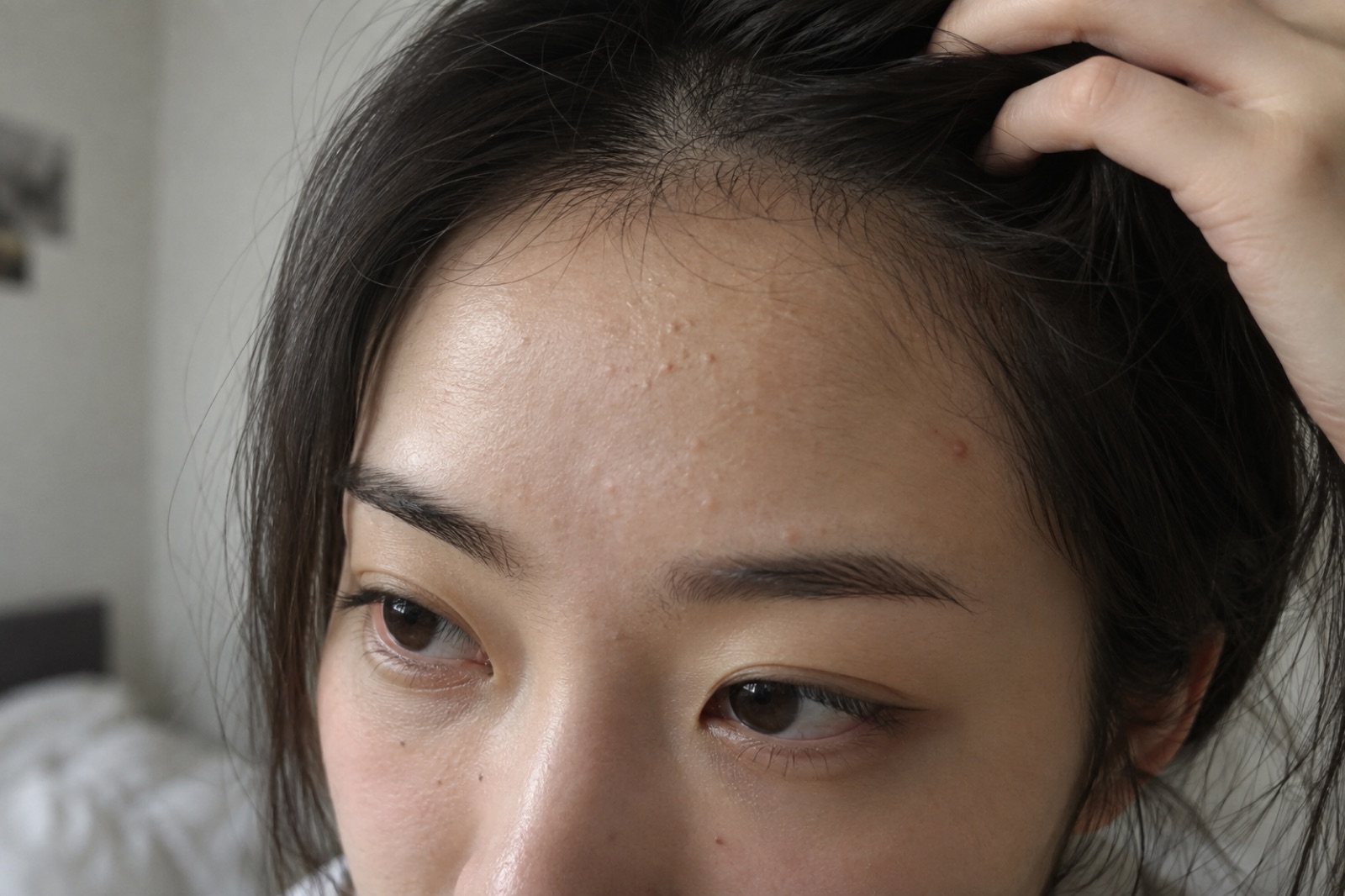
On days when red spots that hurt when pressed are mixed in, keep just two things, washing and moisturizer, and drop exfoliating products and new products for the day. Don’t squeeze or press; stop at rating the pain from 0 to 3.
The Korean Dermatological Association explains that overusing exfoliating products can physically irritate the skin and actually make acne worse. The American Academy of Dermatology (AAD) describes red, firm bumps as oil, dead skin cells and bacteria getting deep into a pore and causing redness and swelling, and it advises against squeezing bumps that show yellowish pus. If you’re a college student spending finals week in a dorm, it’s easy to start touching your face at the mirror late at night, so on those days open your log instead of looking in the mirror.
In a 2026 cross-sectional survey of 450 people with acne, a higher share of those who used a cleansing gel, moisturizer or sunscreen had mild acne, but because it was a survey, you can’t say their acne was mild because they used those products. This guide puts washing and moisturizer under “keep” for a different reason: to cut down on new things touching your skin on red days.
What changes on days you work out and sweat?
Rinse with lukewarm water right after your workout, and pat sweat off with a towel instead of rubbing; that is all you add that day. If a sweaty headband or cap sat on your forehead, write it in your log along with the spot it touched.
KDCA explains that for every 1°C (1.8°F) rise in body temperature, sebum output goes up by 10%, and that lots of sweat and oil create conditions in which acne can easily get worse. The Korean Dermatological Association also lists friction, mechanical irritation and heavy sweating as environmental factors that make acne worse. In a 2025 in-person survey of gym-goers in Saudi Arabia, 33.2% had experienced exercise-related skin symptoms, and among them dryness was the most common, at 50.5%. If you stop at the gym after work, also note on the same line whether you added another layer of moisturizer where your skin felt tight after washing.

What should you do when acne keeps coming back in the same spot?
On a day when one comes back in the same spot, use the day to keep logging that spot in the same box rather than changing your routine. You can only count whether it is really coming back if you log new bumps separately from the brown marks left from last time.
The Korean Dermatological Association explains that pigmentation after acne can last a year or more. So first tell whether what you see in that spot is raised and red or flat and brown. If you’re a shift worker with night shifts in the mix, add a line on whether it lines up with a week when your schedule changed. And if you started a new product that week, don’t add anything else that week, so the possible causes don’t get mixed up.
In a 2022 survey of 319 female university students in Nigeria, 95.3% showed a good level of knowledge about acne, and their answers leaned toward squeezing spots out being unnecessary. Knowing that and keeping your hands away are two different things, so also mark the days your hand went to that spot.

Your skin-state chart for the day
| Today’s skin | Keep | Drop | Log | Signs to hand it to a doctor |
|---|---|---|---|---|
| Only tiny bumps and rough texture | Lukewarm wash, one layer of moisturizer, morning sunscreen | Wiping hard, running your fingertips over them | Where (forehead, cheeks, chin), rough count, what you applied the day before | More and more days when they turn into red bumps |
| Red spots that hurt when pressed are mixed in | Just washing and moisturizer; thin makeup, taken off that night | Exfoliating products, scrubs, new products; pressing or squeezing | Number of red spots, pain level (0–3), any yellowish pus | A firm, deep, painful lump, or a quick increase over a few days |
| One came back in the same spot | Your usual routine, unchanged | Hands, resting your chin on your hand and caps touching that spot; adding a new product | New bumps vs. brown marks, that week’s shifts and new products | Marks starting to build up in the same spot |
| (Situation) Workout or sweaty day | Lukewarm wash right after the workout, extra moisturizer where it feels tight | Keeping a sweaty headband or cap on, rubbing with a towel | Workout time, where gear touched | Red, itchy spots keep coming back wherever gear touches |
The three skin states and what goes in each box were not compared in studies; they are this guide’s editorial rule. For the first few days after a pus-filled spot comes up, what to do and what to skip in the first 3 days of a pustule goes through it day by day.
When is it time to bring your log to a dermatologist?
- If a red, sore spot feels firm and deep, or they multiply quickly over a few days, don’t wait for your log to fill up; see a dermatologist.
- If they keep coming back in the same spot and brown marks or pitted spots start to build up, bring your log and talk to a dermatologist.
- If red, itchy spots keep coming back wherever workout gear or a cap touches, it may be a different skin condition that looks like acne, so have a dermatologist check it.
- If red spots, swelling or itching appear after you apply something, stop that product and consider seeing a doctor.
What this daily chart is based on
- A 2026 study (PMID 41949173) that followed 308 Korean acne patients for 12 weeks split them at the start by skin sensitivity into 144 sensitive and 164 non-sensitive patients, and it was an observational study, not a randomized one.
- In a 2025 cross-sectional study (PMID 41234265) of gym users in Saudi Arabia, 33.2% had experienced exercise-related skin symptoms, and among them dryness was the most common, at 50.5%.
- In a 2026 cross-sectional survey (PMID 41115133) of 450 people with acne, a higher share of cleansing gel, moisturizer or sunscreen users had mild acne, but the design cannot show cause and effect.
Frequently asked questions
How should you take care of inflamed acne?
On days when red spots that hurt when pressed are mixed in, keep only two things, a lukewarm wash and moisturizer, and skip exfoliating products, scrubs and new products that day. The Korean Dermatological Association explains that overusing exfoliating products can physically irritate the skin and actually make acne worse. Don't squeeze or press them; just write down how many red spots there are and how much they hurt.
What skin care should you do when you have pus-filled pimples?
With spots that show yellowish pus, the first thing is not to squeeze them. The AAD also advises against squeezing these bumps. When you wash, don't rub; just let the lather sit and rinse it off, and when you moisturize, leave out any oozing spot. For the first few days after a pus-filled spot comes up, see the separate guide that lays out that order.
What should you do when acne keeps coming back in the same spot?
Rather than overhauling your whole routine, log the repeat spot in the same box each time, and count new bumps separately from leftover brown marks. The Korean Dermatological Association explains that pigmentation where acne has been can last a year or more, so counting marks as new spots makes the repeats look bigger than they are. If you started a new product that week, don't bring in anything else that week.
Should you see a dermatologist if pus-filled pimples keep coming back?
If pus-filled spots keep coming back in the same place, or you can feel a firm, deep, painful lump, consider seeing a dermatologist. If you bring the skin-state log you have kept and a list of the cosmetics you have been using, you can briefly explain since when, where and how many times they came up.
Sources
- Korea Disease Control and Prevention Agency (KDCA) National Health Information Portal — Acne (Korean, updated 2026-08-03)Institutional
- Korean Dermatological Association — Acne vulgaris (Korean)Institutional
- AAD — What's that blemish?Institutional
- Skin sensitivity and acne in 308 Korean patients, 12-week prospective observational study, 2026 (PMID 41949173)B
- Exercise-related skin symptoms in gym users, cross-sectional study, 2025 (PMID 41234265)B
- Skincare perceptions and use in 450 people with acne, cross-sectional survey, 2026 (PMID 41115133)B
- Acne knowledge and care behaviors in 319 female university students, survey, 2022 (PMID 36998890)B
Videos and forum posts never count as evidence for a fact here. Full rules: Editorial policy
What to check when choosing a product for this routine
Check the criteria below before the product name. Each item can be found on the full ingredient list or in the product description.
| Item | What to look for | Why |
|---|---|---|
| Fragrance on the label | Whether fragrance is listed in the full ingredient list | If stinging shows up on a day when red, sore spots are mixed in, you can start your evening log with one possible cause already crossed off |
| Full ingredient list check — salicylic acid and other acids | Whether acid ingredients such as salicylic acid derivatives, lactic acid or gluconolactone appear in the full ingredient list | On red, sore days, you can sort out in the morning whether it overlaps with an acid-containing product you already use |
| Where it goes in the routine | Whether the directions place it as the last step of the routine | If moisturizer stays fixed as the one last step of the day even as your skin changes, the order doesn't wobble when you decide what to drop |
| Note about broken skin | Whether the pre-use notes say to avoid using it on areas with wounds | On a day with a spot that has been picked open or is oozing, it gives you a rule for deciding whether to leave that spot out when you apply it |
| How much to layer on | Whether the directions give an amount, such as layering a small amount on dry areas | You can log the amount separately for days your skin feels tight after washing off workout sweat and for ordinary days, and compare them |
Product from this site's operator · KW Cosmetic Content Team
Revive Therapy N.F CreamIf you add this product to this guide's skin-state chart, it goes in the moisturizer box, in the last slot of the routine after the ampoule. Its product page says to avoid using it on areas with wounds, so you leave out any spot that has been picked open or is oozing. Its full ingredient list includes capryloyl salicylic acid, gluconolactone and lactic acid, so on days you also use another acid-containing product, you note your skin's reaction separately. There is no finished-product test data on acne lesions.
Fitting it into a routine
Where it goes: After ampoule, the last step of the routine
How to use it: After toner and ampoule, take a suitable amount and spread it gently from the center of the face outward. On areas where dryness bothers you, layer a small amount once more to finish.
Check before you use it: If red spots, swelling, itching or any other unusual reaction appears during or after use, stop using it and consult a dermatologist. Avoid using it on areas with wounds, and check the full ingredient list and expiry date on the latest packaging first.
Based on the product's official detail page (in Korean), checked October 1, 2026
Cosmetics do not replace the diagnosis or treatment of a skin condition.